
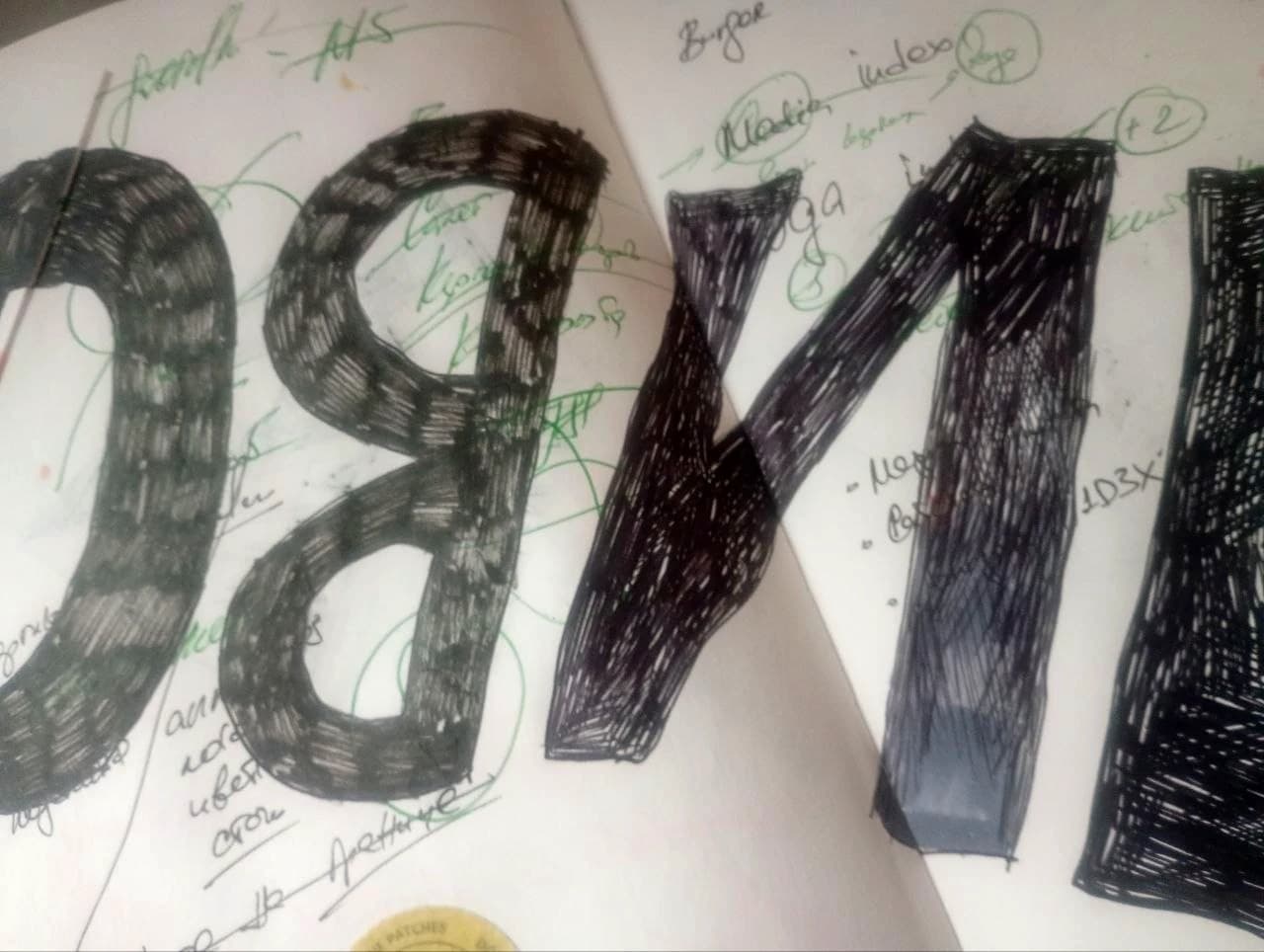
Cover artwork by Anton Biletskyi-Volokh, from an unpublished reusable sketchbook in progress.
A thematic selection of translated notebook fragments.
Assignments after a session can sometimes be apt. But wanting an assignment is often a wish to relieve anxiety rather than encounter it and find out where it comes from.
Hidden hostility means having a great deal of anger but being afraid to act openly. It often takes the form of useful advice and instructions on how to live properly.
The problem is that power does not resolve an inner conflict; it only intensifies it.
Suffering is camouflage for desire.
People who constantly want new experiences often lack not the experiences themselves but receptiveness to a moderate range of feelings. They tend to replace a lack of inner movement with external bustle.
A tendency to inform on people reveals a belief in an ideal parent who knows better and will decide for you.
The imaginary external observer who somehow looks at you the wrong way is actually an internal observer projected outwards by imagination.
Of course it would be nice if the world changed and responded to all our demands, taking our wishes into account. But the world usually says: I am not your mother!
Repeating the same destructive pattern does not leave you standing still; it leads to progressively worsening dynamics.
Replacing life plans and consistent action towards them with momentary passions inevitably leads to a loss of resources and ruin in every area.
A manipulator seems cunning until you see how pitiful and deprived of living interaction the manipulator is.
Taking no consistent action towards change and waiting for everything to sort itself out is a path that toughens you and teaches you to endure the unbearable. Just put up with it a little longer, and then it will definitely all happen by itself.
Touchiness is a currency accepted by people who cannot cope with guilt. With everyone else, it converts not into action towards the offended person but into a healthy wish to keep their distance.
Accepting the diversity of the world is a good sign of inner calm. The stronger the sense of threat, the more you want a simple world.
Resentment gives you a sense of being right.
It is astonishing how fiercely, decisively and courageously people sometimes defend the image of the poor little thing.
Suffering is an activity you can always arrange. ‘I want everything to be the way I want!’ ‘You should have done it earlier; I do not want it any more!’
To support adaptation, having inner and outer resources is not enough. What matters is how quickly you can access them and whether you can manage them.
Pseudo-adaptation can mean that, when faced with a problem, someone does not look for a solution but downplays the problem’s importance or denies its existence altogether.
Achieving a goal requires the ability to act consistently and not trade yourself away for little goodies instead of getting the big goodie.