
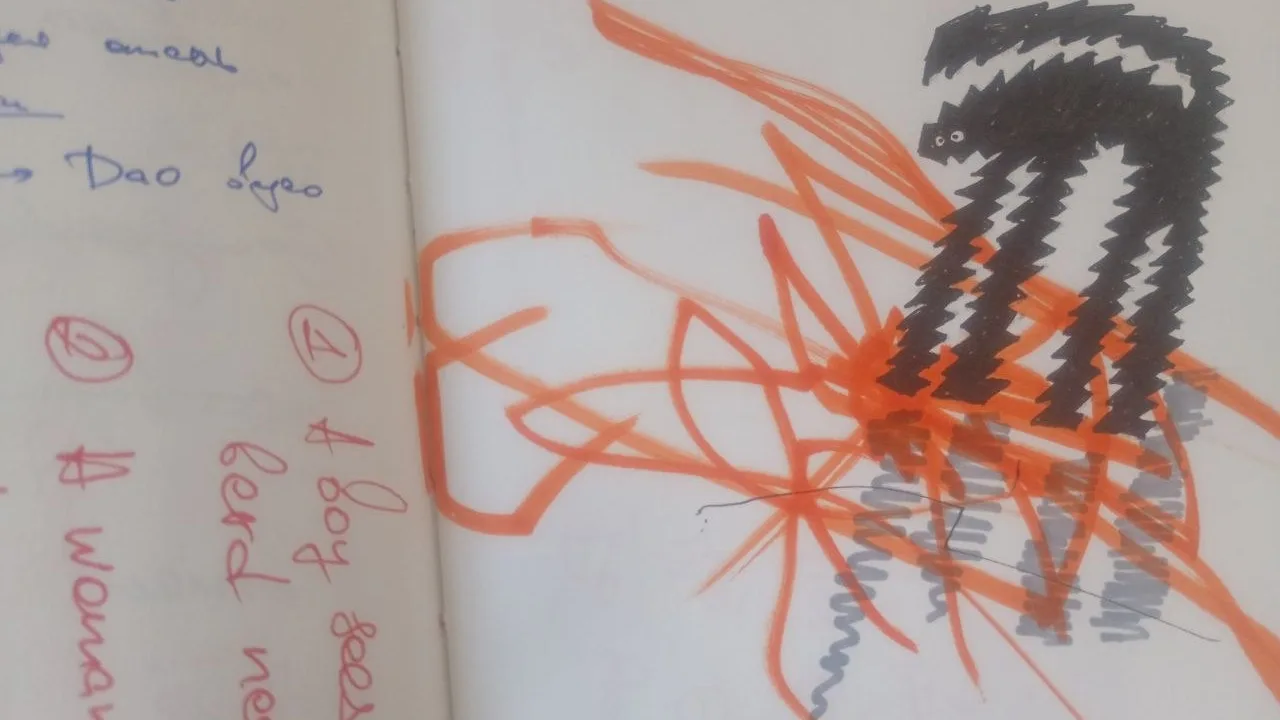
Cover artwork by Anton Biletskyi-Volokh, from an unpublished reusable sketchbook in progress. Other work from my sketchbook practice.
A thematic selection of translated notebook fragments.
Getting out of the misery loop isn't like — ta-da! — swapping misery for euphoria and constant happiness. It's about staying on an even keel instead of setting the emotional swings in motion. And that's the hardest part.
For many people, drama and suffering are the only way to feel themselves exist.
— My happiness means freedom from suffering, but without suffering I stop knowing who I am. A vicious circle.
Getting nothing in return for your sacrifice is still getting something. What about all the pain, hardship and deprivation?
Sometimes people refuse to fit into the script someone is trying to draw them into. They resist to the bitter end. Victims sometimes have to be exceptionally inventive to lure people into yet another performance of ‘This has never happened before — and here we go again.’
A reliable way to arrange your own unhappiness: place your bets on someone else.
You can't remove suffering without understanding what it means to the person suffering. It might be a load-bearing structure.
Feeling unfortunate often conceals a justification for any behaviour. I'm the victim, the injured party, so I get to be demanding, uncompromising, aggressive, irresponsible — anything at all. We put up with it. Now you can put up with us.
Suffering often disguises situations that require decisions. A person suffers over one thing, while something else needs deciding.
Playing the rescuer is often a way to distract yourself from the records of your own suffering.
Suffering is like a worn-out record inside, playing the same thing over and over. The first step towards switching off this gramophone is noticing when the record starts playing, and what sets it off.
The difference between suffering and grieving: grief is there so that, once you've grieved, you can let go. Suffering is often an endless repetition of a loss you haven't lived through.
A person feeds on the emotion they try to evoke in others through their usual repertoire. Irritation, fear, sadness, pity and disgust sometimes seem just as nourishing as joy and inspiration.
You can find confirmation of your misfortune in anything. The grass is turning green — and I'm deprived. The sun is shining — horror and psychological terror.
Therapy is translating suffering from the epic genre into the lyric.
The main source of suffering in love is continuing to hope for something people are taking away your hope of — or never gave you any hope of in the first place.
You can't be the author while occupying the victim's position.
Suffering is like a projector that can screen its own film over any reality.
People fall into two types:
- I remember how hard a situation like this was for me, so I'll help.
- I suffered. Now you suffer too.
Trying to make someone be objective when they see everything subjectively, through the prism of profound suffering that nobody understands, is pointless. In their picture of the world, truth doesn't matter as much as what feels true.
Psychology Notebook is a translated personal archive of observations, study and lecture notes, paraphrases, quotations and remembered ideas. A fragment's presence here does not establish exclusive authorship or scientific consensus. These are notebook fragments, not clinical guidance.