
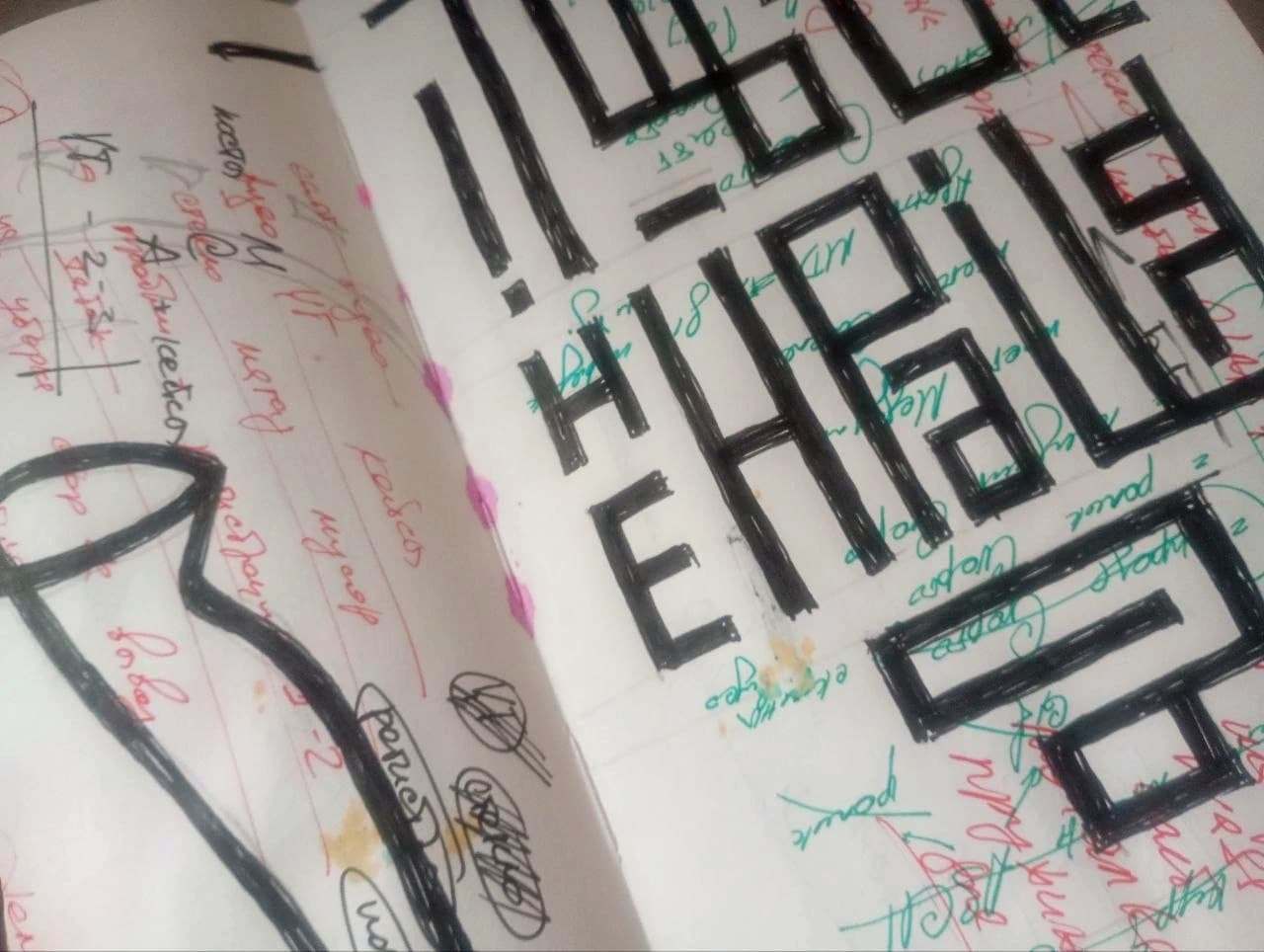
Cover artwork by Anton Biletskyi-Volokh, from an unpublished reusable sketchbook in progress.
A thematic selection of translated notebook fragments.
When you are at peace with yourself, you stop picking on other people. You notice the harmony of the world more than its inconsistencies.
A loss you have not lived through is like an endless minus sign that you add to every event.
Preventing rescuing behaviour means believing that the other person can cope on their own. The less we believe in someone, the harder we rescue them.
Allowing your parents to be unhappy with you is an important part of separating. Other people have a right to whatever feelings they have, and not all their feelings are about you.
The idea that you will be loved whatever you do and however you behave is a dream of an ideal mother.
The stronger the pain someone feels, the less able they are to perceive and read other people’s experiences.
There are no bad relationships in adult life. Every relationship meets some important need.
Inner conflicts reduce our capacity to adapt more than even difficult external circumstances. More precisely, an inner conflict often prevents us from changing the circumstances, leaving them or, if that is impossible, changing our attitude towards them.
Needs lie behind every relationship. Good relationships develop and support us. Haphazard relationships heal us and make it possible to build good ones later.
As much as romantic obsession looks sweet in youth, romantic obsession at a later age points to a youth that has not been lived through.
Pain makes you egocentric. The stronger the pain, the less you notice other people.
The rescuer role is absorbing because the pain of the person you are rescuing does not hurt you yourself.
The mindfulness so loved by pseudo-spiritual teachings is impossible without emotional stability. An unsettled emotional life seriously disrupts a clear view of the world.
Disliking people usually begins with yourself. People who pick on others usually pick on themselves in the same way inside.
When someone cannot live their own life, they often try to drag those close to them into non-existence too.
Scolding other people is a way of praising yourself.
On grievances. Can you resent your parents? Of course you can. But while the resentment remains, you keep living with them even if you are on the other side of the world.
If people treat you badly and you keep staying in those relationships, the person treating you badly first and foremost is you yourself.
Living in things that do not exist, pretending to be someone else, creating imaginary images of yourself is a way of avoiding pain.
The less contact someone has with their own feelings, the more room there is for doubt. What is more, intrusive doubts arise where someone wants to avoid their feelings.