
When I prepared a Ukrainian wine tasting for representatives of Nantes City Hall, I faced an interesting question: how do you introduce unfamiliar grapes and wine regions to people who already have one of the world's richest wine cultures on their doorstep? My answer was simple. Start with what they know.
There is a particular difficulty in explaining Ukrainian wine to a French audience.
The French don't exactly suffer from a shortage of wine.
They have Burgundy, Bordeaux, Champagne, the Rhône Valley, Alsace, the Loire, Provence, Languedoc, and enough appellations to make a perfectly respectable evening disappear into a discussion of limestone.
And here in Nantes, we have Muscadet practically on the doorstep.
So imagine arriving with a bottle made from a grape called Sukholymanskyi.
You explain that it's a Ukrainian variety.
You explain that it comes from the south of the country.
You explain that the wine is fresh, citrusy, and somewhat mineral.
People may be interested.
But the description is still rather abstract.
Now try something different.
"Think about the freshness you appreciate in Muscadet. Not the same grape or the same wine, of course. But start from that feeling."
Suddenly, the unfamiliar bottle has an entry point.
The listener has something to compare it with.
A familiar sensation.
A place.
A style of wine they already understand.
And that was the idea behind a presentation I prepared for a tasting of Ukrainian wines with representatives of Nantes City Hall.
I didn't want to introduce Ukraine through a long list of grape names that most French wine drinkers would never have encountered.
I wanted to give them a mental map.
A map that began in France and ended in Ukraine.
Not because Ukrainian wine needs to be explained as an imitation of French wine.
Quite the opposite.
I wanted the differences to become easier to appreciate.
The Problem with Introducing an Unfamiliar Wine Country
When somebody says Burgundy, an experienced wine drinker immediately has a collection of associations.
Pinot Noir.
Chardonnay.
Limestone.
Acidity.
Terroir.
Small differences between neighbouring vineyards that can inspire discussions of extraordinary length and questionable social necessity.
The same thing happens with other established wine regions.
Mention the Loire and certain styles come to mind.
Mention Roussillon and you expect something different.
Alsace suggests another set of grapes and aromas.
Savoie another climate, another landscape, another approach.
These are generalisations, of course.
Every region contains enormous variation.
But the associations are useful.
They give us a starting point.
Ukraine presents a different challenge.
It has a long history of viticulture, particularly around the Black Sea, where winemaking traditions reach back to the ancient Greek settlements.
It has international grape varieties familiar to almost everyone interested in wine.
But it also has locally important varieties, historical grapes, and crosses developed specifically for the conditions of its vineyards.
Odeskyi Chornyi.
Sukholymanskyi.
Telti-Kuruk.
Citron Magaracha.
These names don't immediately evoke an established taste profile for most Western European wine drinkers.
And simply listing them doesn't solve the problem.
A tasting should not become a vocabulary examination.
Especially when everyone would rather be tasting the wine.
My French Map of Ukrainian Wine
So I approached the subject through comparisons.
I looked at the broad character of Ukrainian wine regions and asked which French regions might provide useful reference points.
These are not strict equivalents.
The climates, soils, grapes, and winemaking traditions are different.
And southern Ukraine in particular contains overlapping geographical identities. Bessarabia, for example, is part of the wider Odesa region, not some entirely separate country of wine.
The comparisons are about giving someone a way into the subject.
Not producing a scientifically exact translation of terroir.
I arrived at four broad associations.
Odesa and the Black Sea: Pays Nantais meets Languedoc
This was the easiest place to begin in Nantes.
The Black Sea introduces maritime influences to parts of southern Ukraine's wine country.
There are coastal vineyards, sunshine, wind, and a wide range of styles.
Some of the fresh white wines can be approached through the idea of Muscadet or the Pays Nantais.
Not because they taste identical.
But because freshness, acidity, and suitability for seafood provide a recognisable connection.
The comparison becomes especially useful when introducing Sukholymanskyi.
Yet the broader Black Sea region also produces concentrated, full-bodied reds.
Here the comparison changes.
Languedoc offers a better reference for certain warm-climate, Mediterranean-style wines.
In other words, the Odesa region cannot be reduced to one French equivalent.
That would be rather like describing the entire Loire Valley through one glass of Muscadet.
Convenient.
But not particularly accurate.
Bessarabia: the Roussillon connection
Bessarabia, particularly the Budjak area in southwestern Ukraine, has a landscape of dry steppe, warm summers, and extensive vineyards.
This made Roussillon an intuitive comparison.
There is sunshine.
Dryness.
A sense of southern intensity.
And the possibility of wines with expressive aromatics and substantial character.
But the grapes introduce their own personalities.
A wine made from Citron Magaracha, for example, offers a very different experience from the reds most people associate with Roussillon.
The regional comparison establishes the climatic mood.
The grape provides the surprise.
Central Ukraine: thinking about Jura and Alsace
This was always a more exploratory analogy.
Central Ukraine is not a direct climatic or geological counterpart to Jura or Alsace.
The connection was more about continental conditions, smaller-scale experimentation, and the idea of discovering distinctive wine styles outside the country's most familiar southern vineyards.
In the French context, Jura is especially useful as a reminder that wine does not have to follow the most commercially familiar stylistic conventions.
Unusual techniques and local choices can be part of a region's identity.
Alsace provides another reference for aromatic whites and wines associated with continental conditions.
These are starting points for curiosity, not claims that Ukrainian central vineyards reproduce either region.
Transcarpathia: Savoie and Alsace
Transcarpathia, or Zakarpattia, lies in western Ukraine, influenced by the Carpathian Mountains.
Its landscape and cooler conditions invite comparisons with Alpine and continental wine regions.
Savoie provides a useful reference for mountain-influenced freshness.
Alsace offers a familiar vocabulary for floral and aromatic white wines.
Again, the analogy has limits.
A Transcarpathian wine is not automatically a Savoyard wine wearing a Ukrainian label.
But for someone unfamiliar with the region, these comparisons help establish why a Ukrainian mountain-influenced white might taste very different from a powerful southern red.
That was the purpose of my map.
To replace one vague picture of Ukrainian wine with several distinguishable possibilities.
| Ukrainian wine region | French tasting reference |
|---|---|
| Odesa / Black Sea | Pays Nantais and Languedoc |
| Bessarabia (within the wider Odesa region) | Roussillon |
| Central Ukraine | Jura and Alsace |
| Transcarpathia | Savoie and Alsace |
Five Wines, Five Different Ways Into Ukraine
For the presentation, I selected five wines that illustrated different parts of the story.
They were not meant to represent every Ukrainian wine style.
That would require a much longer tasting.
And probably a considerably more ambitious lunch.
I chose wines from producers whose wineries I had personally visited.
That mattered to me.
I wasn't simply repeating technical descriptions from the back of a bottle.
I had seen some of the places behind the labels.
The vineyards.
The wineries.
The production facilities.
And the landscapes in which the wines were made.
The selection moved from a fresh white through an aromatic wine and an orange wine, then into a structured red and finally a dry, oxidative-style wine.
It was a way to introduce variety rather than reinforce one stereotype.
1. Sukholymanske Blanc, Kolonist
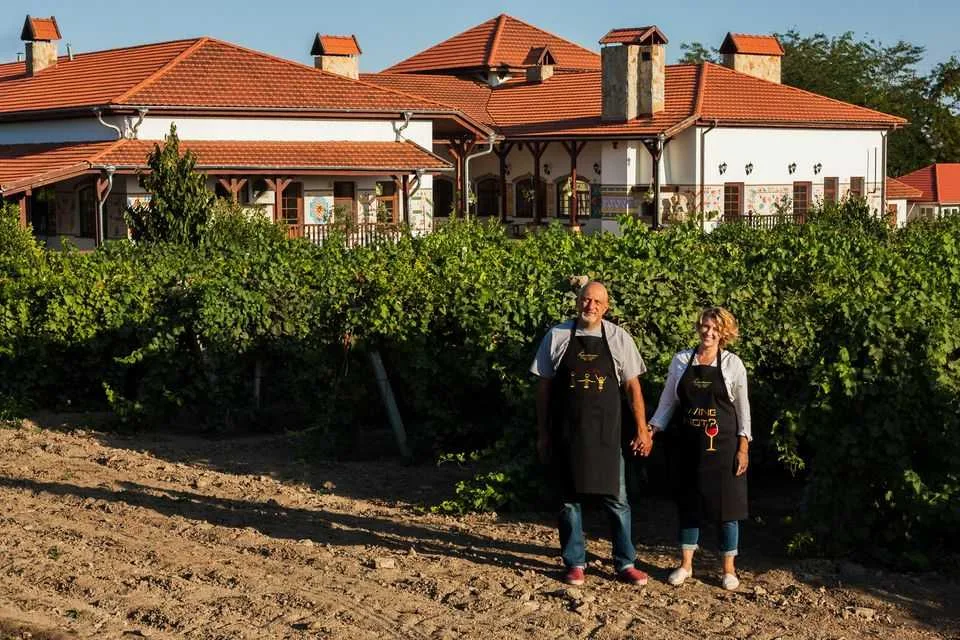
Kolonist winery and vineyard.
The Muscadet conversation starter.
The first wine was Sukholymanske from Kolonist.
Sukholymanskyi White is a Ukrainian grape variety developed at the Tairov Institute through a crossing of Chardonnay and Plavai.
It can produce fresh, aromatic wines with citrus and floral notes.
The example I chose had the kind of profile that makes me immediately think of fish and seafood.
Freshness.
Lemon.
A mineral impression.
A relatively lively character.
This was an excellent introduction for a Nantes audience.
If you already appreciate the refreshing quality of Muscadet alongside oysters or fish, you have a way to approach the wine.
The grape is different.
The region is different.
The aroma profile is different.
But there is a shared culinary idea.
A dry white wine that feels particularly comfortable next to seafood.
Kolonist is a family winery in southern Bessarabia, within the wider Odesa region.
That geographical detail is a useful reminder of why these classifications are approximate.
The winery's location belongs to Bessarabia, while the broad stylistic comparison in my presentation connected the wine with the maritime character of the Odesa region.
Both descriptions can be useful, provided we don't confuse a tasting analogy with an administrative boundary.
For me, Sukholymanskyi is precisely the kind of grape that makes Ukrainian wine interesting.
It's not an obscure name attached to an imitation of something else.
It has its own history and character.
The French reference simply helps someone begin tasting it.
2. Citron Magaracha, Frumushika Nova
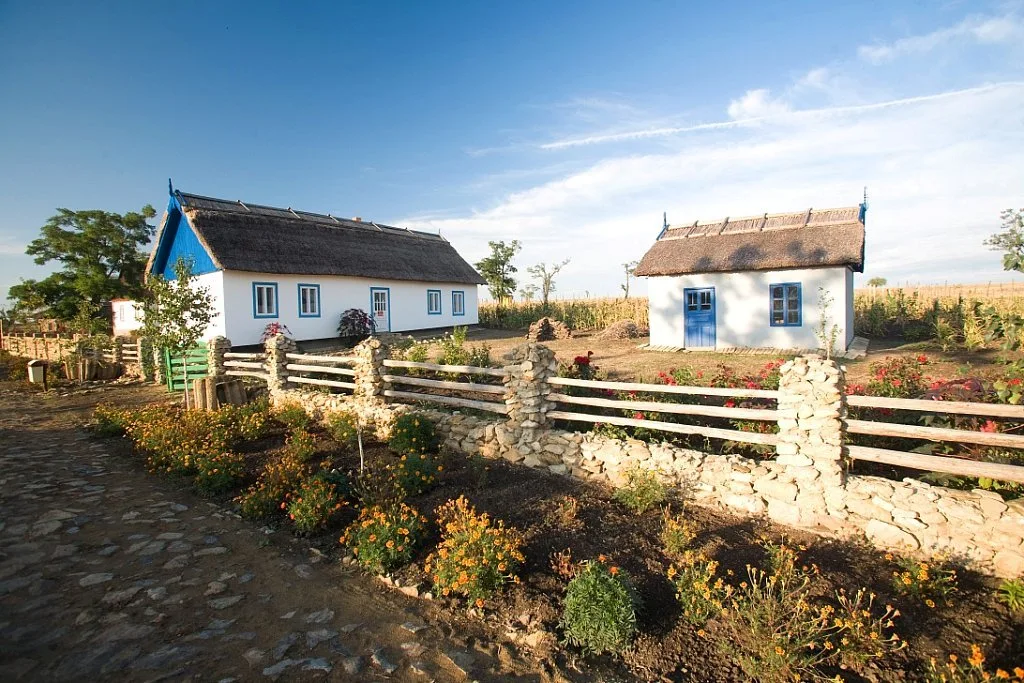
Frumushika Nova, Odesa region.
A different kind of southern white.
The second wine came from Frumushika Nova.
The grape was Citron Magaracha, an aromatic variety developed through the Magarach breeding programme in Crimea.
It has a distinctive character that can suggest citrus, white flowers, herbs, and sometimes a muscat-like aromatic intensity.
This is where I wanted to move the tasting away from the fresh, restrained comparison with Muscadet.
The idea of Bessarabia and Roussillon was useful.
Dry southern landscapes.
More sunshine.
A different relationship between aromatic expression and the environment.
But the wine itself provided something more particular.
Lemon.
Flowers.
Herbal notes.
An expressive aromatic profile that didn't need to be explained through a conventional international variety.
Frumushika Nova also made the presentation more than a list of wine bottles.
The estate is associated with a broader cultural and rural destination.
And the photograph in my original presentation showed the place rather than just the label.
That's always preferable when introducing a wine region.
A name becomes easier to remember when you can imagine the landscape behind it.
3. Telti-Kuruk Orange, Shabo
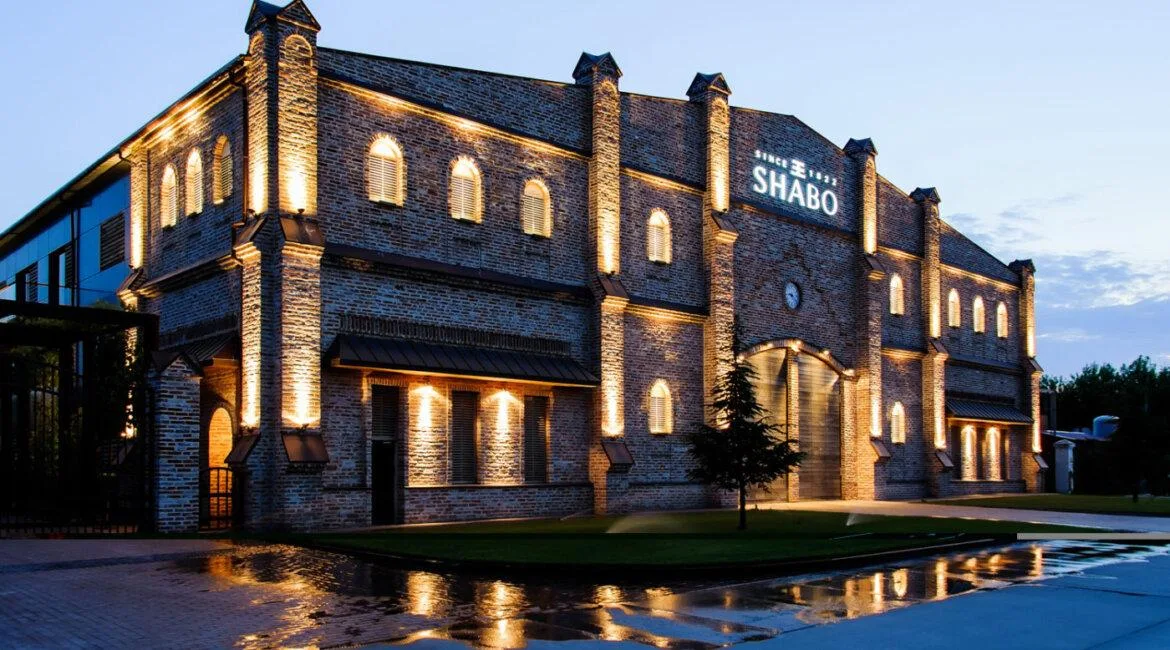
Shabo winery, Odesa region.
When the familiar categories stop helping.
The third wine was perhaps the most useful for challenging expectations.
An orange wine made from Telti-Kuruk by Shabo.
Telti-Kuruk is a historical grape strongly associated with southern Ukraine and the Black Sea area.
The name itself has a long history connected with the region.
And Shabo has worked extensively with the variety.
But the interesting part of this particular wine was the method.
Orange wine is made from white grapes with extended skin contact, allowing the skins to contribute colour, texture, aromas, and tannins.
The Shabo example also involved qvevri, the traditional large clay vessels associated with Georgian winemaking.
The result offered notes that I described in the presentation as dried apricot, tea, and spices.
This is quite a distance from the simple idea of a fresh white wine.
And that was exactly why I wanted it in the selection.
For a French wine enthusiast, the closest conversational reference might be the curiosity and structural complexity associated with some unconventional or skin-contact wines.
A Jura enthusiast, for example, may already be comfortable with the idea that a white wine can possess unusual texture, savoury elements, and a character that doesn't fit the standard fruity-white category.
But the analogy stops there.
Skin-contact orange wine and the oxidative styles associated with parts of Jura are not the same technique.
And qvevri vinification has its own tradition.
This wine did not need a perfect French counterpart.
By this point, the comparison had already done its job.
The audience had a framework.
Now the wine could be allowed to be different.
4. Odeskyi Chornyi Reserve, Leleka
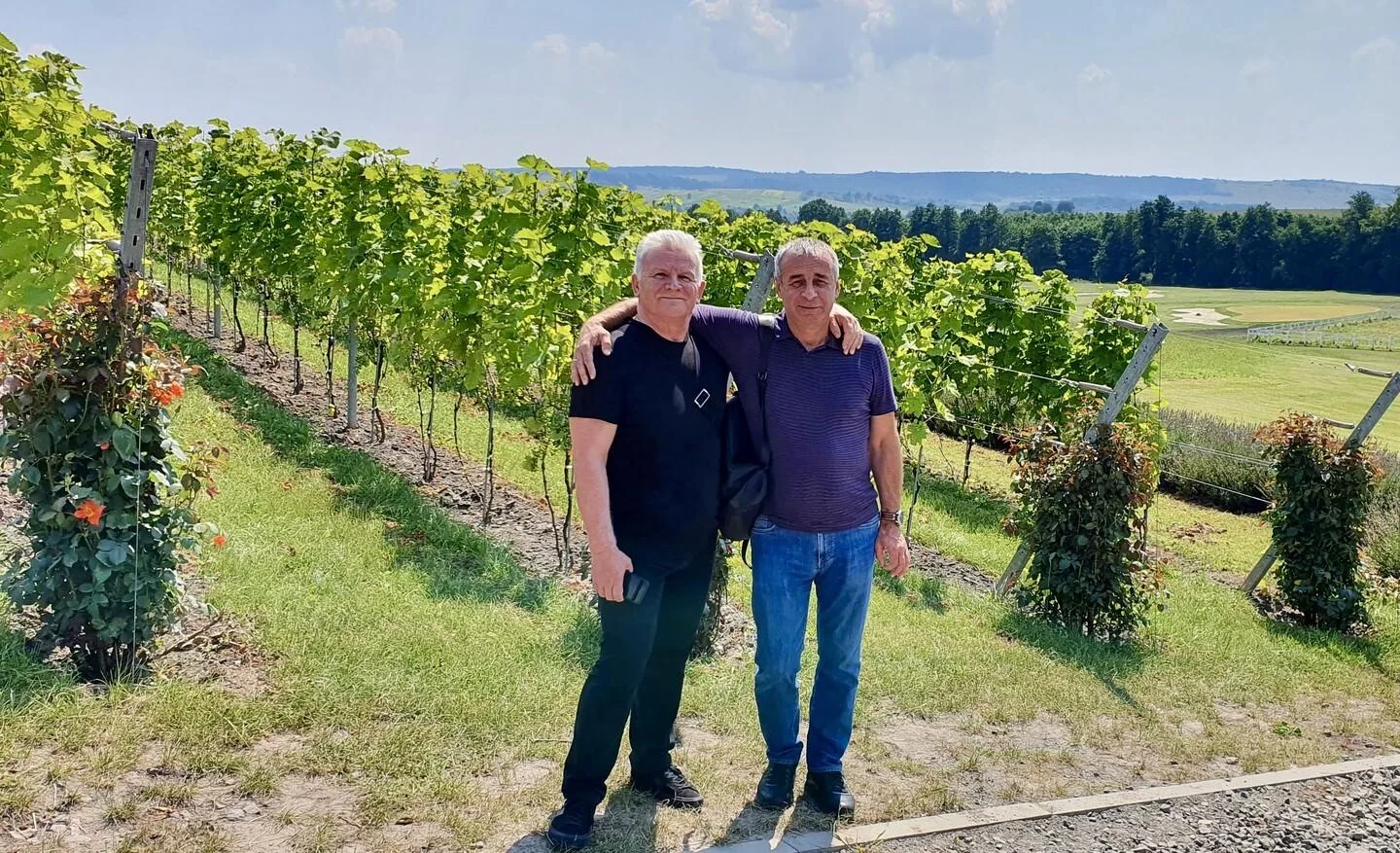
Leleka vineyard, Odesa region.
The Black Sea turns red.
Then came Odeskyi Chornyi.
Also known as Odesa Black or Alibernet, it is a Ukrainian crossing of Cabernet Sauvignon and Alicante Bouschet.
It is known for its extraordinary depth of colour.
But colour is not the only interesting thing about it.
The wine can offer considerable structure, dark-fruit aromas, and pronounced tannins.
For the Leleka Reserve in my presentation, I noted blackcurrant, plum, and oak.
This is where the French reference shifts back toward the south.
Think about the concentration and warmth that might make you comfortable with certain Languedoc reds.
Then discover what the Ukrainian grape does differently.
Odeskyi Chornyi is not simply a Cabernet Sauvignon substitute.
Its Alicante Bouschet parentage contributes to the variety's famously intense pigmentation.
And a well-made example can show much more than dark colour.
This was also the point in the tasting selection where I would start thinking about food with considerably more weight.
Roasted meat.
Game.
Rich stews.
The kinds of dishes where tannin, fruit concentration, and structure become useful rather than overwhelming.
It is a very different expression of Ukrainian wine from the Sukholymanskyi that opened the selection.
Which was precisely the point.
A country that can produce both does not belong in a single stylistic category.
5. Fleur Dry, Vinna Stantsiya
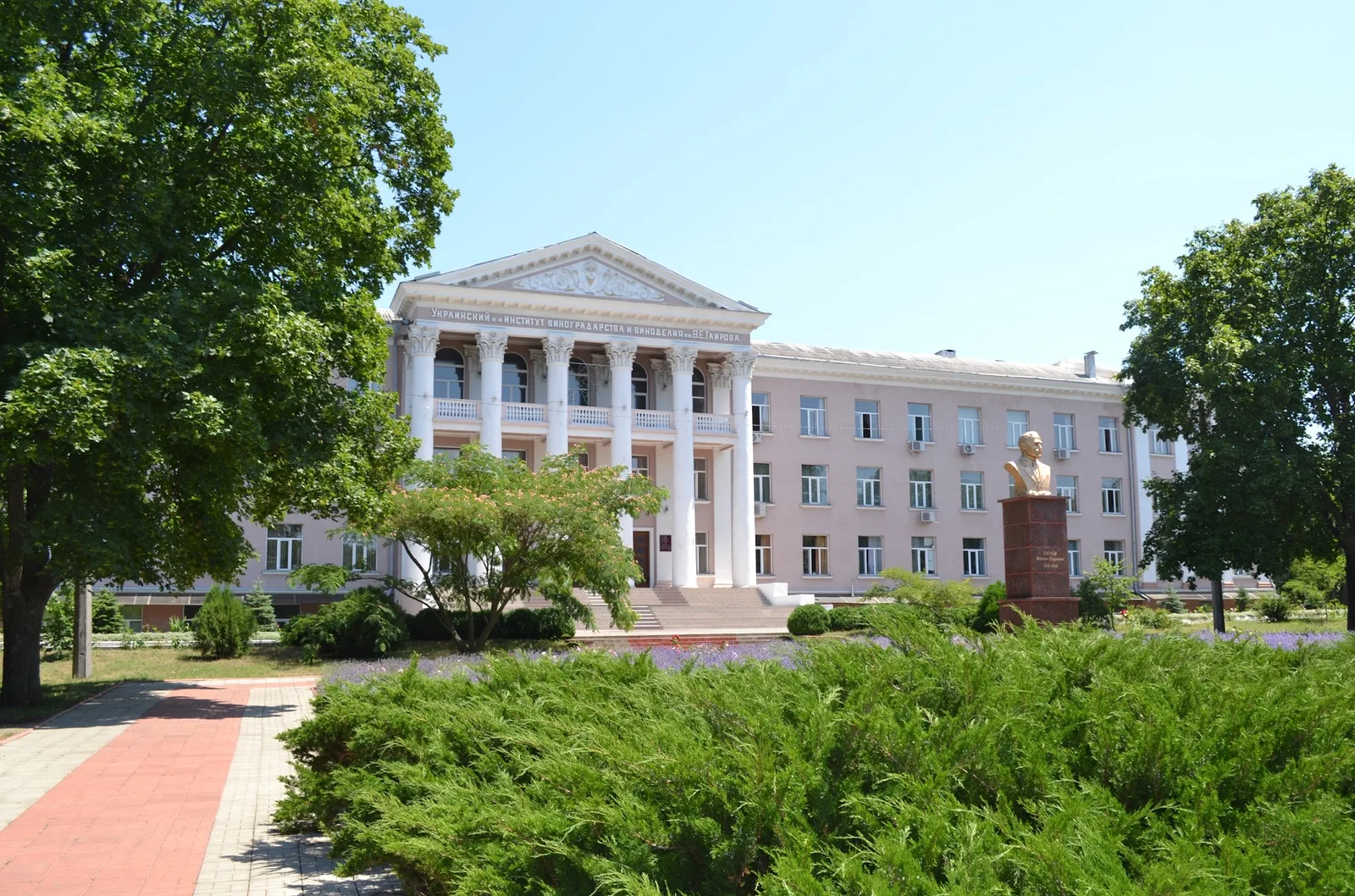
Tairov Institute of Viticulture and Winemaking.
A final detour through the world of oxidative wines.
The last selection was Fleur Dry from Vinna Stantsiya.
This was perhaps the least conventional wine of the group.
The presentation described a dry wine made using a solera-style ageing approach, without the addition of spirit.
Its aromatic profile included nuts, dried hay, and caramel.
For a French audience, I found it useful to introduce the idea through the world of oxidative wines.
Jura provides one possible point of reference.
But another connection comes from Spain.
Dry Sherry.
Of course, a Sherry-style comparison does not mean that this Ukrainian wine is Sherry.
The production methods and legal definitions are different, and the absence of fortification is an important distinction.
But the family resemblance in aromas can be helpful.
Nuts.
Dryness.
Developed, savoury notes.
A style where the appeal is not simply fresh fruit.
Vinna Stantsiya was also associated with the historical winemaking research environment around the Tairov Institute.
I liked ending with that connection.
Ukrainian wine is not only a story about vineyards and traditional varieties.
It is also a story about breeding, research, experimentation, and different approaches to production.
The winery and institute context made a natural final stop.
After five wines, the imaginary map had moved quite a distance.
From Nantes and the Loire to the Black Sea.
From fresh white wines to aromatic varieties.
From skin contact to deeply coloured reds.
And finally to a wine whose character invites comparisons with another, entirely different tradition.
What Comparisons Can Do, and What They Cannot
There is a danger in explaining wine through analogies.
Once you've told someone that a Ukrainian region resembles a French region, they may begin expecting exactly the same thing.
But that isn't what I intended.
The Odesa region is not the Pays Nantais.
Bessarabia is not Roussillon.
Transcarpathia is not Savoie.
And the wines don't need to become more familiar by pretending to belong somewhere else.
The comparisons work at the beginning.
They help establish a direction.
A sensory reference.
A climatic association.
A useful expectation about freshness, body, aroma, or structure.
Then the wine itself needs to take over.
A useful comparison is a bridge.
Not a permanent address.
I think this applies to many unfamiliar food and drink traditions.
When we explain a Georgian cheese, a Ukrainian grape, or an unfamiliar regional dish, comparisons can make the first encounter easier.
But the purpose should be to help the person appreciate the original.
Not to replace it with a familiar equivalent.
Good food deserves better than being introduced as a strange version of something else.
And wine is no exception.
Wine Is Geography You Can Taste
There is another reason I like presenting wine this way.
Geography becomes less abstract when you can taste it.
You can talk about the Black Sea.
Dry steppe landscapes.
Mountains.
Continental climates.
Limestone.
Sunlight.
Wind.
But the descriptions only become truly interesting when they connect to something in the glass.
Freshness.
Acidity.
Ripe fruit.
Floral aromas.
Tannins.
Texture.
A wine tasting is an opportunity to move between the place and the experience.
And when people already know another wine region well, the comparison can help them make that journey more quickly.
That was my idea when preparing the Nantes presentation.
I wanted people to see Ukraine as a country with distinct wine regions and individual producers, not as one vague area on the eastern edge of Europe's wine map.
And I wanted to use something familiar to make the unfamiliar accessible.
It also mattered to me that the producers were not simply names I had found in a catalogue.
These were wineries I had visited.
Places connected to my own experience.
I could associate the bottles with buildings, vineyards, people, and landscapes.
That makes the explanation different.
A technical description tells you what a wine should be like.
A personal encounter gives the description somewhere to live.
A Wine Map That Should Stay Open
Ukraine's wine culture is still much less familiar internationally than the major wine traditions of France, Italy, or Spain.
And the country's winemakers have faced extraordinary challenges as a result of Russia's war.
But Ukrainian wine is not a new invention.
The history is old.
The regional diversity is real.
And the producers continue working with international varieties, locally developed grapes, historical traditions, and modern techniques.
The five wines in my presentation offered only a small introduction.
There are many more producers.
More grape varieties.
More regional distinctions.
And plenty of bottles that would refuse to fit neatly into any of my French comparisons.
Which is exactly how it should be.
I never wanted to create a definitive classification of Ukrainian wine.
I wanted to make people curious enough to try a second glass.
Perhaps a Sukholymanskyi after Muscadet.
A Citron Magaracha after something aromatic from southern France.
An Odeskyi Chornyi alongside a familiar Mediterranean red.
Or a Telti-Kuruk orange wine that makes the comparison altogether less useful.
The best outcome of any introduction to an unfamiliar wine is the moment when the listener no longer needs the analogy.
They have tasted the wine.
They have formed their own impression.
And the unfamiliar name has acquired a flavour of its own.
That's when the explanation has worked.
Because the point was never to convince anyone that Ukrainian wines taste French.
It was to show that Ukrainian wines deserve to be understood on their own terms.
And sometimes the easiest way to begin that conversation is with something as familiar as a glass of Muscadet.