
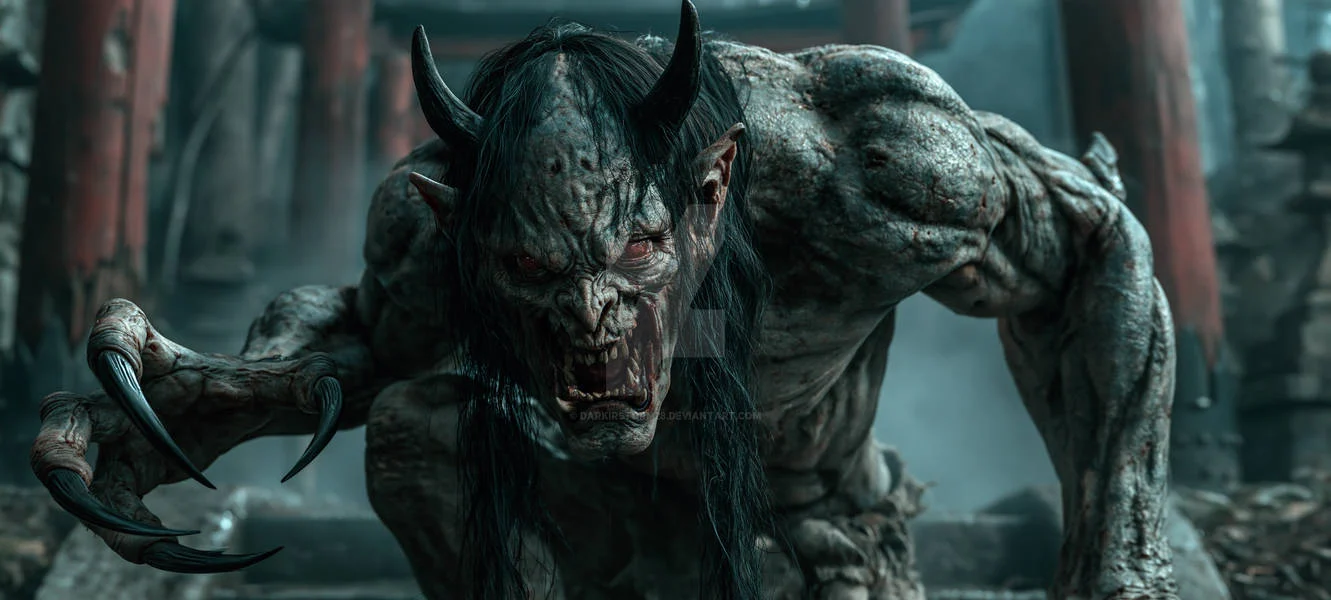
Cover image supplied from the owner-authorized Psychology Notebook reserve.
Kurt Vonnegut, the psychology of meaning, and why knowing a story is invented doesn't always loosen its grip.
There is something rather comforting about believing that everything happens for a reason.
You meet someone unexpectedly.
Clearly, destiny.
You lose a job.
Obviously, the universe has a better plan.
Your relationship collapses.
A necessary lesson.
You miss a train, encounter an old acquaintance, and suddenly discover that the entire afternoon has been organized for your personal development.
The world is an extraordinarily thoughtful place.
At least when we are allowed to write its explanations.
The interesting part is that many of us do not entirely believe these stories.
We know coincidences happen.
We understand that terrible events can occur without providing an important lesson.
We recognize that the universe has probably not arranged its timetable around our romantic lives.
And yet the stories remain attractive.
Sometimes we even announce that they are merely metaphors, useful ways of thinking, little inventions that make difficult experiences easier to bear.
Then, when something important happens, we find ourselves behaving as though they were literally true.
Kurt Vonnegut's Cat's Cradle takes this human tendency to a wonderfully absurd conclusion.
In the novel, a fictional religion called Bokononism openly admits that its teachings are invented.
Its central concept is foma, a term for comforting, supposedly harmless untruths.
The religion does not demand that its followers discover the objective truth about everything.
It offers stories that can make life more bearable.
And the remarkable thing is that they work.
At least for a while.
Which creates a question considerably more interesting than whether human beings sometimes believe false things.
If we know that a story is invented, why can it still organize our lives as though we had no choice but to obey it?
The Religion That Begins by Admitting Everything Is Made Up
Most religions make some kind of claim about reality.
The world has a particular origin.
Human existence has a particular meaning.
Certain practices connect us with truths that cannot be reduced to ordinary appearances.
Bokononism approaches the situation rather differently.
It announces that its teachings are lies.
And then recommends that people live by the useful ones.
This is an almost indecently efficient solution to a long history of philosophical disagreement.
No need to prove everything.
No need to demonstrate that the universe possesses precisely the structure described in the scriptures.
The relevant question is whether the story helps people live.
Does it provide courage?
Kindness?
A sense of belonging?
An explanation that makes suffering more tolerable?
If so, perhaps its factual accuracy is not the only thing worth considering.
Vonnegut establishes this problem immediately.
The narrator, John, who also calls himself Jonah, begins by explaining that he had once intended to write a factual book about what important Americans were doing on the day the atomic bomb was dropped on Hiroshima.
He has since become a Bokononist.
His original project concerns a catastrophic historical event and the attempt to understand it through facts.
His new religious identity concerns a system that openly questions whether factual truth is always what human beings most need.
The contrast is deliberately uncomfortable.
We expect facts to bring understanding.
We expect religion to offer meaning.
But what happens when factual understanding cannot make an event bearable?
And what happens when the meaning that makes it bearable is invented?
Vonnegut does not let us escape into a simple answer.
He makes the invented religion ridiculous, humane, manipulative, occasionally beautiful, and finally rather frightening.
Sometimes all at once.
The Psychological Need for a Story
Human beings are exceptionally good at turning events into narratives.
A disappointment becomes the beginning of a transformation.
A meeting becomes destiny.
A series of difficult experiences becomes evidence of a recurring personal pattern.
An unexpected opportunity becomes confirmation that we are finally moving in the right direction.
We do not merely experience events.
We attempt to understand how they fit together.
Psychological research on meaning-making describes the ways people try to reconcile particular experiences with their broader beliefs, goals, and assumptions about the world.
Crystal Park's influential review distinguishes between global meaning, the more general frameworks through which we understand life, and situational meaning, our interpretations of specific events.
The distinction is useful.
Imagine someone who believes that hard work generally produces fair rewards.
Then they lose their job despite years of excellent performance.
The event conflicts with their broader understanding of how life is supposed to work.
They may begin searching for a new explanation.
Perhaps they were treated unfairly.
Perhaps the industry has changed.
Perhaps the experience reveals that professional achievement cannot provide the security they expected.
Some explanations may help them understand what actually happened.
Others may primarily reduce emotional discomfort.
And sometimes both functions coexist.
A story can be factually incomplete and still help someone reorganize their life.
But not every comforting explanation promotes adaptation.
Research suggests that the quality and consequences of meaning-making matter, not simply the quantity of meaning a person manages to discover.
This distinction is central to Bokononism.
Its stories provide organization and emotional relief.
The question is whether they also help people respond more intelligently to the circumstances in which they live.
Or whether the relief becomes a substitute for responding.
San Lorenzo: A Country That Needs More Than a Good Story
The fictional Caribbean island of San Lorenzo is not a particularly attractive advertisement for human progress.
Its inhabitants live in severe poverty.
Their political institutions are absurd.
The country is ruled by authoritarian figures whose power is supported by theatrical rituals, threats, and elaborate public performances.
The island's history is almost a catalogue of disappointed ambitions.
And then Bokonon and his companion Earl McCabe arrive.
They hope to make things better.
A perfectly reasonable objective.
Unfortunately, they discover that improving the material conditions of the country is considerably more difficult than announcing that they intend to improve them.
The poverty remains.
The misery remains.
The institutions do not become miraculously competent.
So Bokonon proposes another solution.
If he cannot give the people a materially better life, he can provide a more bearable interpretation of the life they already have.
He invents a religion.
Then he and McCabe arrange something even more ingenious.
They turn the religion into a forbidden one.
Bokonon becomes the persecuted holy man.
McCabe becomes the authoritarian ruler who opposes him.
The population now has a drama.
A secret faith.
A heroic rebel.
An oppressive government.
An underground community.
An explanation for suffering.
Life has acquired a plot.
And the plot is considerably more exciting than the original problem of being poor on a badly governed island.
This is one of Vonnegut's cruelest jokes.
The people need food, security, infrastructure, and some prospect of a better future.
They receive a meaningful story about why their suffering belongs to something larger.
The story may genuinely comfort them.
But the material conditions remain.
And suddenly we have to ask a rather unpleasant question.
When does giving somebody meaning become a way of avoiding the responsibility to improve their circumstances?
The Lie That Requires a Real Enemy
The partnership between Bokonon and McCabe is especially revealing because the invented drama gradually escapes its inventors.
At first, the persecution is a performance.
The holy man must be hunted.
The ruler must appear determined to capture him.
The religion becomes more compelling because practicing it involves an apparent act of resistance.
But the performance begins to acquire consequences.
The threats become real.
The authoritarian role becomes increasingly destructive.
People actually suffer and die within an arrangement originally intended to make their lives more bearable.
The story has become an institution.
And the institution now demands behavior that the original storytellers cannot fully control.
This is an important distinction.
A fictional narrative can be harmless when everyone understands its limits.
A theatrical performance can be meaningful without becoming a political obligation.
A shared myth can create belonging without requiring anyone to be persecuted.
But when the fictional structure begins governing real relationships, the situation changes.
The participants may know that the original story was invented.
They may even know who invented it.
That knowledge does not necessarily release them from the roles the story has established.
The ruler must remain the ruler.
The persecuted prophet must remain persecuted.
The followers need the struggle to continue.
If the conflict ends, part of the meaning that organizes their lives disappears.
There is something psychologically recognizable here.
A family can spend decades organized around the conflict between its supposedly responsible member and its supposedly unreliable one.
A couple can maintain a relationship through repeated accusations and reconciliations.
A political or social group can define its identity through opposition to an enemy.
Eventually, the conflict becomes more than a problem.
It becomes the structure through which everybody understands who they are.
Solving the conflict may threaten the identities built around it.
Sometimes the problem has become too useful to be allowed to end.
The People Who Belong to Your Story
Bokononism has a wonderful vocabulary for the apparently mysterious connections between human lives.
One of its central concepts is karass.
A karass is a group of people brought together to participate in some larger purpose, even when its members do not recognize that purpose.
They may belong to different countries.
Professions.
Families.
Social classes.
They may meet through events that seem entirely accidental.
But their lives are connected within a hidden arrangement.
Imagine the comfort of believing this.
You meet someone unexpectedly.
The encounter matters because it belongs to a pattern.
A series of unrelated events brings you to a particular place.
Perhaps you were supposed to arrive there.
A relationship changes the course of your life.
Maybe that person was always part of your karass.
The concept gives coincidence a sense of significance.
It also offers a form of belonging that does not depend on conventional institutions.
You may be lonely.
You may not understand why certain people have entered your life.
You may have no clear picture of what you are supposed to be doing.
But somewhere, invisibly, you belong to a group whose purpose has not yet become clear.
That is an attractive explanation.
And its psychological value does not necessarily depend on whether the cosmic arrangement is real.
A chance encounter can genuinely transform a life.
A friendship can emerge from an absurd coincidence.
Two people can become important to one another without having planned it.
The relationship is real.
The claim that it was cosmically arranged is another matter.
But Bokononism allows the emotional reality of connection to support a much larger story about destiny.
And once that story becomes familiar, ordinary coincidence may stop feeling ordinary.
The Granfalloon: Belonging Without Much of a Reason
Bokononism also contains a particularly useful insult.
The granfalloon.
A granfalloon is a false karass, a group whose members imagine a profound connection on the basis of something that does not necessarily justify it.
Being born in the same place.
Attending the same institution.
Belonging to the same organization.
Sharing some superficial category that becomes the foundation of exaggerated collective significance.
Vonnegut particularly enjoys mocking the assumption that people from Indiana possess some mysterious bond simply because they are all Hoosiers.
The category is real.
The supposedly profound connection is questionable.
This distinction has an obvious psychological relevance.
Social identity can create genuine belonging.
Groups can provide support, cooperation, friendship, and opportunities for collective action.
There is nothing inherently false about identifying with a profession, a hometown, a university, or a community.
But membership can acquire an importance that exceeds the actual relationships involved.
We begin assuming that people who share a label must share something essential.
They are our kind of people.
They understand us.
They are more trustworthy.
They belong to the correct side.
And suddenly an administrative, cultural, or historical category becomes a source of almost sacred identity.
Vonnegut's granfalloon exposes the ease with which we transform arbitrary boundaries into emotional necessities.
Yet there is another irony.
The karass is itself an invented religious concept.
Bokononism distinguishes between supposedly genuine cosmic connections and false collective identities, despite having openly declared that its own teachings are fabricated.
The religion has created a way of identifying false belonging from within a system that admits its own unreliability.
This is a magnificent psychological maneuver.
We know our stories are invented.
But some of our inventions are apparently more genuine than others.
And naturally, the story that explains our particular relationships tends to look especially convincing.
The Invented Connection Can Still Be Real
There is a complication here that prevents us from simply laughing at the believers.
Suppose two strangers become friends because they believe they share a meaningful destiny.
The destiny may be imaginary.
But the friendship need not be.
They help one another.
Share experiences.
Provide comfort.
Develop a history.
The belief has produced real consequences.
And those consequences may be valuable.
The same thing can happen with rituals.
A group gathers around a shared narrative.
The narrative provides opportunities for care and cooperation.
The participants feel less isolated.
Their relationships develop.
The original explanation may be fictional, but the emotional and social experiences created through it are not.
Bokononism dramatizes this through boko-maru, a ritual involving contact between the soles of two people's feet.
As a religious doctrine, the ritual belongs to an obviously invented system.
As an interpersonal encounter, however, it creates a moment of bodily contact, attention, and shared participation.
One need not accept the theological explanation to recognize that rituals can affect how people experience one another.
This is why calling a belief false does not automatically establish that everything associated with it is worthless.
A story may be inaccurate about the universe while producing genuine affection between people.
A family tradition may rest on an invented origin while remaining emotionally important to the people who practice it.
A fictional character may never have existed and still profoundly influence someone's understanding of courage or responsibility.
The psychological effects of a story are not erased by recognizing its fictional status.
But neither does its usefulness prove its truth.
The two questions must remain separate.
And perhaps the most important issue is whether the people using the story are still capable of separating them.
The Cat's Cradle Has No Cat
The title of the novel provides its own little philosophical demonstration.
As a child, Newt Hoenikker remembers his father, Felix, attempting to amuse him with a cat's cradle.
A structure made from a loop of string.
The fingers create a pattern.
The pattern has a name.
And the name encourages us to imagine something that is not actually present.
There is no cat.
There is no cradle.
Only string.
The human mind provides the rest.
The image is particularly disturbing because Felix Hoenikker is one of the scientists involved in developing the atomic bomb.
He is brilliant at manipulating the physical world.
Much less impressive at understanding people.
The man whose scientific work has helped change human history is attempting a small gesture of connection with his child.
But the encounter does not produce the warmth he might have intended.
Newt is left with an image of an elaborate pattern whose name promises things that are not there.
It is tempting to treat the cat's cradle as a simple metaphor for religion.
Human beings arrange a pattern.
Give it a name.
And imagine meaning where there is only string.
But the novel makes the problem more complicated.
Scientific knowledge also involves constructing models.
Institutions arrange people into categories.
Families develop narratives about their histories.
Individuals create explanations for their lives.
These systems are not all equivalent.
A scientifically supported account can be tested against evidence in ways that a fictional religious story cannot.
But all require human interpretation.
The danger is not simply that we make patterns.
Pattern recognition is fundamental to understanding the world.
The danger begins when we mistake a pattern we have constructed for a guarantee about what reality must contain.
And perhaps when we become more loyal to the pattern than to the people holding the string.
Ice-Nine: The Truth That Doesn't Care About Meaning
Then Vonnegut introduces a rather different kind of invention.
Ice-nine.
A fictional form of ice capable of causing ordinary liquid water to freeze at temperatures where it would normally remain liquid.
Felix Hoenikker develops it as a scientific possibility.
After his death, his children possess fragments of the substance.
They use it in ways shaped by their own desires and ambitions.
And eventually, through a disastrous chain of events, ice-nine transforms the world.
Water freezes.
The ecological consequences become catastrophic.
The human stories organized around the substance suddenly seem rather insignificant.
This is where the novel's contrast between scientific knowledge and comforting fiction becomes especially sharp.
Bokononism provides explanations that help people endure misery.
Ice-nine provides a physical mechanism that does not care whether anyone finds the consequences meaningful.
The water does not respond to prayers.
The scientific process does not become less dangerous because its inventors have interesting personal histories.
Reality continues operating according to its physical conditions.
And the catastrophe is not impressed by the explanations people have constructed around their lives.
It would be too simple, however, to conclude that Vonnegut presents scientific truth as evil and religious fiction as good.
Science is not merely a collection of dangerous facts.
Scientific knowledge can help prevent suffering, understand disease, and improve material conditions.
The problem with ice-nine concerns the ethical separation between technical possibility and human responsibility.
Felix can investigate what a substance does without appearing particularly interested in what might happen if people use it.
Others can recognize its extraordinary power while treating it as a means of satisfying personal or political desires.
The catastrophe emerges from knowledge used without adequate responsibility.
Meanwhile, the invented religion cannot protect people from the consequences.
The distinction is devastating.
A comforting story cannot negotiate with the physical world.
And accurate knowledge does not automatically tell us what we ought to do with it.
Both truth and meaning require an ethical question.
What are we doing to other people?
Is a Harmless Lie Still Harmless When It Stops Us Acting?
We now arrive at the difficult word in Bokononism.
Harmless.
An untruth may comfort someone.
But how do we determine whether it is harmless?
Imagine telling a frightened child that everything will be all right.
Perhaps the reassurance is reasonable.
Perhaps it helps the child tolerate uncertainty without becoming overwhelmed.
But suppose there is a real danger that adults could reduce through practical action.
If reassurance becomes a substitute for action, the situation changes.
Or consider a person facing serious financial difficulties.
They tell themselves that everything happens for a reason and a better opportunity will arrive when the time is right.
The story may reduce despair.
It may also help them remain hopeful enough to search for work, ask for support, or make a difficult decision.
But it could equally become an excuse for avoiding the actual problem.
The same explanation can support action or replace it.
Its consequences depend on the context and the way it is used.
This is why the idea of a universally harmless falsehood is so difficult to defend.
Harmless to whom?
For how long?
Under what circumstances?
What does the story allow someone to do?
And what does it prevent them from recognizing?
On San Lorenzo, Bokononism makes deprivation easier to endure.
But the political arrangement built around it also helps preserve the conditions of deprivation.
The religion offers consolation while the island remains desperately poor.
At some point, the question becomes unavoidable.
Would it be better to provide a more comforting explanation?
Or to provide food, medicine, security, and functioning institutions?
The answer need not be that stories are worthless.
People need emotional support as well as material resources.
But the story cannot become an ethical substitute for the resources.
An invented meaning is not harmless merely because it makes suffering easier to tolerate.
Sometimes making suffering tolerable is precisely what allows an intolerable situation to continue.
The Zen Question: Can You Use a Story Without Living Inside It?
This is where our comparative reading through Zen Buddhism becomes interesting.
There is a tempting similarity between Bokononism and Buddhist reflections on the constructed character of our concepts and identities.
Human beings create explanations.
Attach themselves to descriptions.
Organize experience through categories that can become more rigid than the changing realities they describe.
Buddhist philosophy, including Zen, questions the tendency to cling to fixed views and to treat conceptual distinctions as though they completely capture reality.
But this does not mean Buddhism recommends believing whatever makes us feel better.
That would be a serious misunderstanding.
Buddhist ethics places substantial importance on truthful speech, compassion, and reducing suffering through appropriate action.
Its philosophical traditions are also concerned with understanding reality more clearly, not simply replacing difficult facts with comforting fictions.
Some Buddhist discussions of skillful means explore how teachings can be adapted to the needs and capacities of particular people.
But this is not a blanket endorsement of manipulation or deliberate deception.
The comparison is therefore most useful as a question about our relationship to stories.
We all use conceptual frameworks.
We describe ourselves through identities.
Understand relationships through narratives.
And rely on explanations that help us function.
There is no practical way to abandon all conceptual thinking.
The question is whether we can use an explanation without becoming completely attached to its authority.
Can I find comfort in a story while recognizing where it stops being reliable?
Can I treat a narrative as meaningful without insisting that it describes a hidden cosmic necessity?
Can I accept that an encounter changed my life without assuming that the universe arranged the encounter specifically for me?
And, perhaps most importantly, can I abandon a useful story when it begins making me less attentive to reality or less responsible toward other people?
This is a more demanding form of nonattachment than simply announcing that all stories are fictional.
It requires noticing how the story affects what we do.
Knowing a Story Is Invented Does Not Mean You Are Free of It
Here is the psychological problem I find most interesting.
People can know perfectly well that a belief is not literally true and still experience it as emotionally binding.
Consider an old family role.
You were always the responsible child.
The one who solved problems.
The one who kept everybody calm.
As an adult, you may understand that this role was partly created by your family's circumstances.
You know you were not born with a cosmic obligation to manage everyone else's emotions.
You can explain exactly how the pattern developed.
Yet when somebody needs help, you still feel guilty for refusing.
The story remains powerful.
Or consider someone who has always believed that success will finally make them worthy of love.
They understand intellectually that achievement does not determine human worth.
They have read the psychology.
Recognized the pattern.
Perhaps even written an excellent essay about it.
Then another opportunity for recognition appears.
And suddenly their entire emotional equilibrium depends on obtaining it.
The old story has returned.
Not because the person has forgotten what they know.
But because knowledge and habitual emotional organization are not the same process.
A belief can remain influential through repetition, emotion, social reinforcement, and the behavior it organizes.
We do not necessarily have to believe a story completely for it to keep shaping our choices.
Sometimes we merely have to behave as though it is true.
And after enough repetition, the behavior becomes familiar.
The story feels less like an explanation.
More like the natural structure of life.
Bokononism exposes this phenomenon with delightful clarity.
Its followers can acknowledge that the religious account is invented.
And still live through its categories.
Its rituals.
Its understanding of connection.
Its explanations of destiny.
Knowing the story is fictional does not automatically interrupt its psychological function.
The question is whether the person can ever step outside it when reality requires something different.
The Last Story at the End of the World
The novel's apocalyptic ending gives this problem a far darker form.
When ice-nine brings catastrophe, Bokononism confronts a reality that cannot be made manageable through another clever invention.
The consequences are not merely philosophical.
The survivors face devastating physical conditions.
The religion continues to shape how people interpret the disaster and respond to it.
For some, the possibility of a future collapses alongside the physical world.
And Bokononism, which was supposed to provide harmless consolation, becomes entangled with the characters' final decisions.
The book does not allow us to dismiss these decisions as a simple demonstration that religion is dangerous.
Nor does it offer a comfortable proof that invented belief provides sufficient protection from despair.
Instead, it reveals the limits of consolation when the conditions for continued life have been destroyed.
The religion can describe the catastrophe.
It can incorporate it into a story.
It can offer a posture toward the inevitable.
But it cannot reverse what ice-nine has done.
And the narrator eventually encounters Bokonon himself, who is considering how to conclude his sacred writings.
The final proposed gesture is defiant, bitter, absurd, and directed toward the incomprehensibility of human existence.
The prophet who built a religion from comforting inventions no longer appears to possess a comforting conclusion.
There is something very Vonnegut about this.
The man who understood how badly people needed stories discovers that no story can ultimately make the world safe from human stupidity.
But he keeps trying to produce one last sentence.
Even at the end of the world, the human impulse to make a story continues.
The Fiction That Doesn't Pretend to Save Us
Perhaps this is why Cat's Cradle is more complicated than either a defense or a denunciation of religion.
Vonnegut himself is writing fiction.
The story is invented.
Bokonon is invented.
San Lorenzo is invented.
Ice-nine is invented.
The characters' destinies are arranged by a novelist.
And yet the novel asks serious questions about science, politics, responsibility, and suffering.
Its fictional status does not make those questions meaningless.
On the contrary, the invention allows Vonnegut to bring contradictions into view that ordinary explanation might struggle to expose.
A religious story can create genuine belonging.
A political performance can become real oppression.
A scientific discovery can become catastrophic when ethical responsibility is absent.
A supposedly meaningless pattern can organize an entire life.
And a humorous novel can make us think about the destruction of humanity without pretending to provide a final explanation.
This is the crucial difference between fiction as a form of inquiry and fiction as an unquestionable authority.
A novel can invite us to imagine.
Reflect.
Compare.
Disagree.
Change our understanding.
It does not have to claim that its invented world literally exists.
Nor does it have to demand obedience to the conclusions it suggests.
Bokononism is more dangerous when its stories become obligations that govern actual lives.
Vonnegut's novel remains valuable partly because it refuses to make its own explanations entirely comfortable.
It does not ask us to become Bokononists.
It asks us to notice why Bokononism is attractive.
And what might happen if we allow that attraction to settle every difficult question.
The Difference Between Meaning and Certainty
There is an assumption that often makes psychological life unnecessarily difficult.
If something matters, it must belong to a larger plan.
If a relationship is important, perhaps it was destined.
If an experience changed us, perhaps it happened for a reason.
If our lives have meaning, perhaps that meaning must be guaranteed by something beyond us.
But perhaps meaning does not always require certainty about its ultimate origin.
A friendship can matter even if the meeting was accidental.
A relationship can be precious without having been cosmically arranged.
An act of kindness can be meaningful without participating in a hidden universal plan.
A person can create something valuable without knowing whether it fulfills some larger purpose.
There is a difference between the claim that an experience matters to us and the claim that the universe designed it to matter.
The first can be genuine.
The second requires evidence that may not be available.
And perhaps we do not always need the second in order to live fully through the first.
This is where a Zen-inspired perspective may offer a different relationship to meaning.
Not the rejection of every narrative.
Not the elimination of imagination.
But a willingness to let experience remain valuable without insisting on a final explanation.
We can participate in life without knowing its complete design.
Care about people without being certain that they belong to our cosmic group.
Act responsibly without believing the world has guaranteed a particular outcome.
And tolerate the absence of ultimate certainty without immediately filling it with a story that must never be questioned.
That may sound less reassuring than Bokononism.
But it also offers greater freedom.
The story can be useful.
It does not have to become our master.
Can You Put Down the String?
The title image returns.
A loop of string.
An arrangement of fingers.
A recognizable shape.
A name.
A cat's cradle.
There is no actual cat.
No actual cradle.
But the pattern exists.
The game exists.
And the interaction between the people holding the string can matter.
Perhaps this is the central distinction Vonnegut makes possible.
We do not have to choose between treating every invented pattern as sacred and declaring every invented pattern worthless.
Human beings create stories because stories help us organize experience.
They can provide continuity.
Community.
Imagination.
Hope.
A language for things that are otherwise difficult to express.
Some stories help us act more generously.
Some help us endure irreversible losses.
Some make an uncertain future feel less frightening.
And some help us avoid the realities we most need to confront.
The difference cannot be established solely by asking whether the story is literally true.
Nor solely by asking whether it makes us feel better.
We also need to ask what it does to our capacity to recognize reality, make choices, and respond to other people.
Does the story help us live?
Or has living become an obligation to preserve the story?
Can we revise it?
Can we acknowledge what it cannot explain?
Can we tolerate the possibility that the meaningful connection we experienced was not arranged by destiny?
Can we recognize that our comforting narrative has begun protecting a destructive situation?
And if the world presents evidence that our explanation is inadequate, are we still willing to look?
The uncomfortable truth about Bokononism is that admitting a story is invented does not guarantee freedom from it.
Sometimes the admission becomes part of the story's charm.
We are sophisticated people.
We know this is a fiction.
We are not naive.
And yet we continue arranging our lives around its promises.
Perhaps the more useful question is not whether we believe our stories.
It is whether we can live differently when they stop helping us.
A cat's cradle can be beautiful.
It can bring two people together.
It can give a child a moment of fascination.
It can even become the image through which a novelist asks what human beings are doing with the stories they create.
But it remains a pattern held between fingers.
And there may come a moment when the most important thing is not to defend the pattern.
It is to recognize that we can loosen our hands.
A story does not have to be true in every respect to be meaningful.
But if we cannot put it down when reality demands something else, we have stopped using the story. The story is using us.
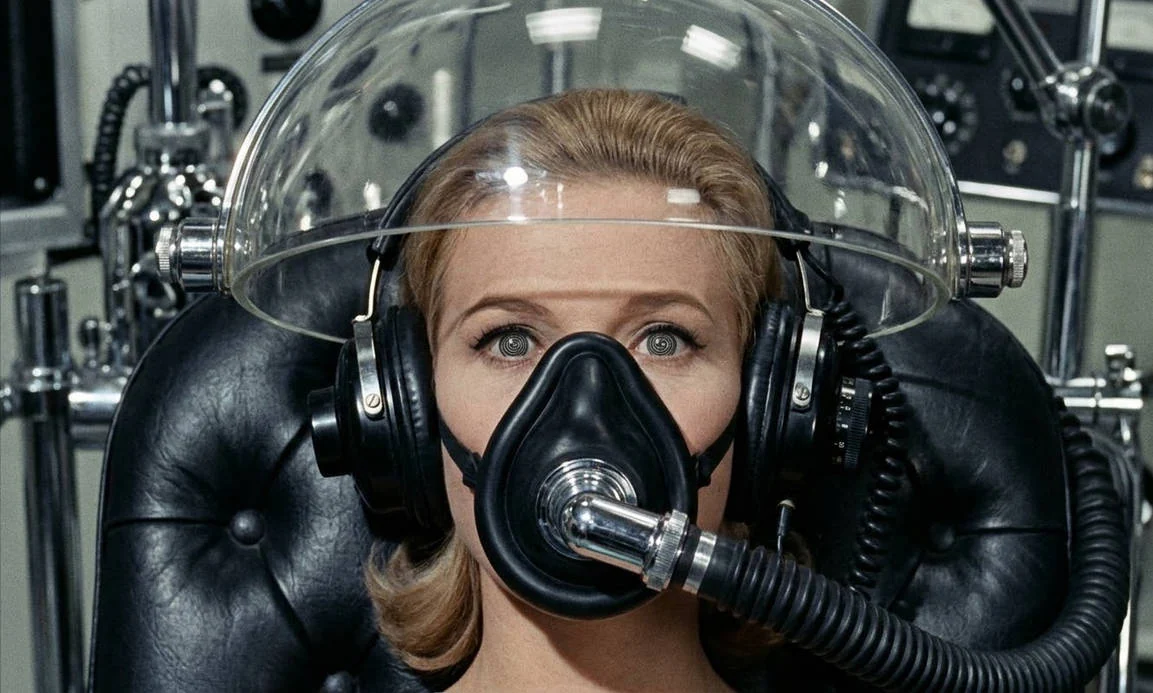
Illustration supplied from the owner-authorized Psychology Notebook reserve.