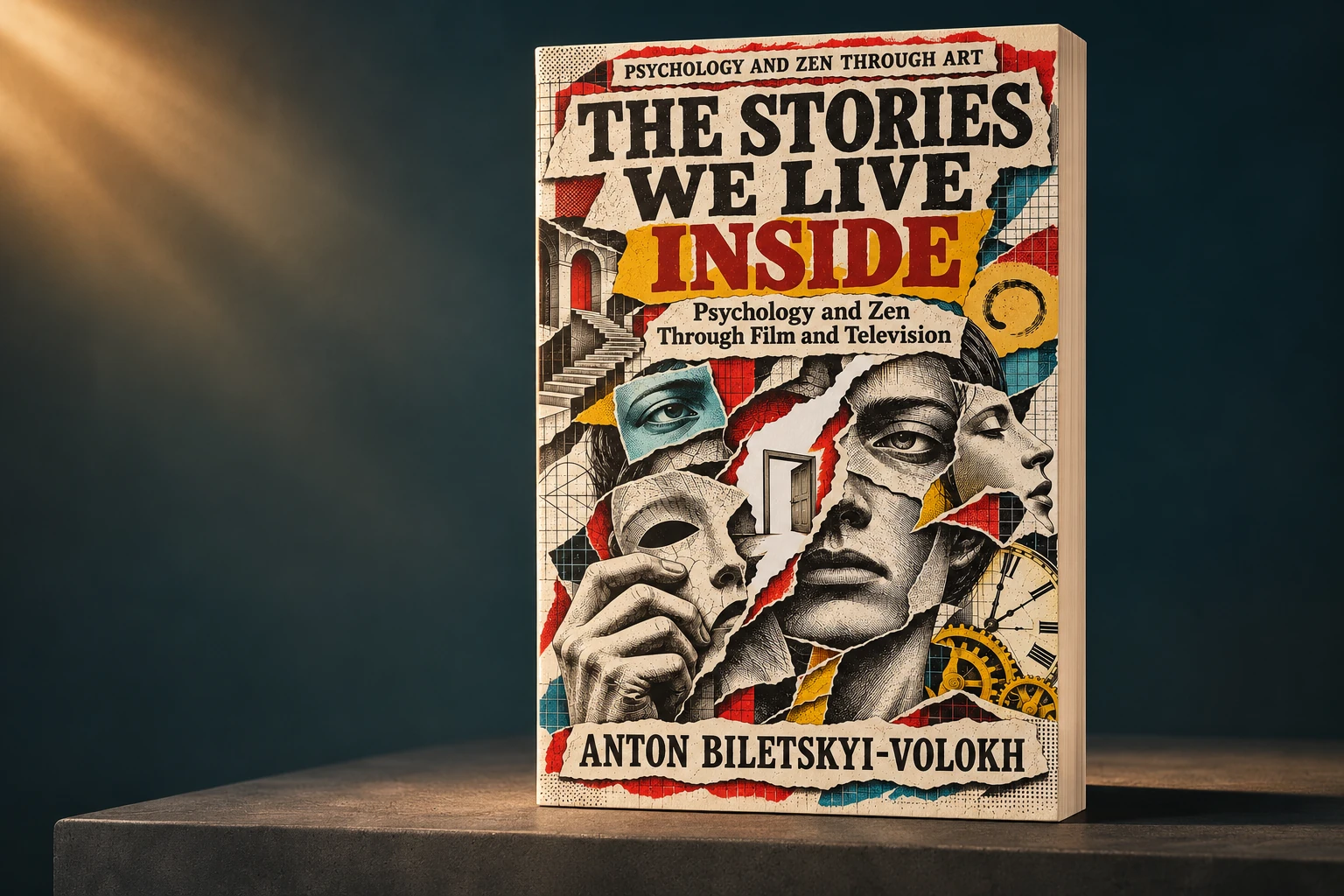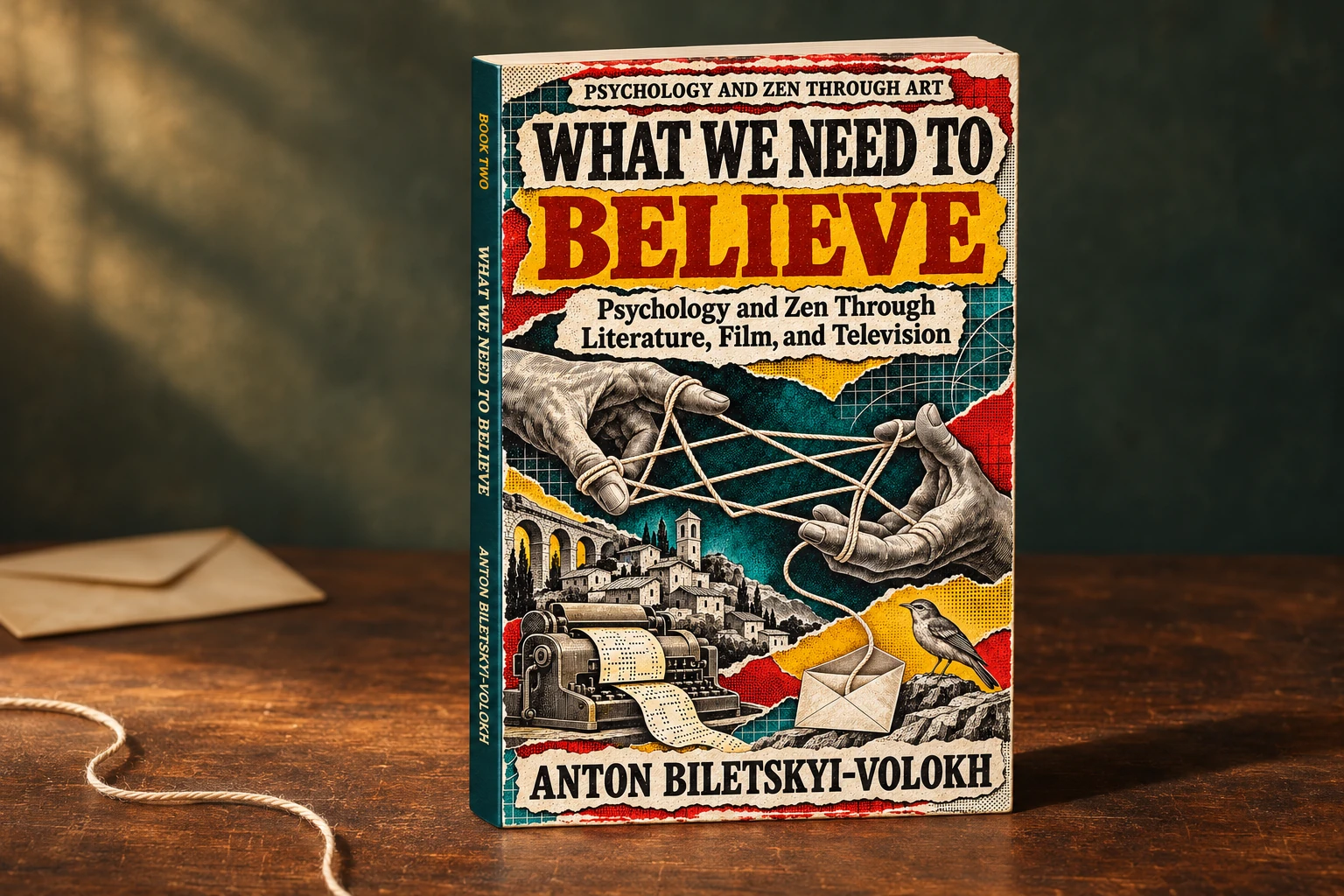
Psychology and Zen Through Art
A five-volume series of illustrated essays on psychology and Zen through literature, film, and television, exploring identity, belief, attention, care, and change.
About this series
Psychology and Zen Through Art is a five-volume series of illustrated essays by Anton Biletskyi-Volokh on literature, film, and television. A gesture, a line of dialogue, or a change in what the camera shows can reveal a character’s predicament before anyone in the story can name it. The essays start with details like these and follow them into questions about how we live.
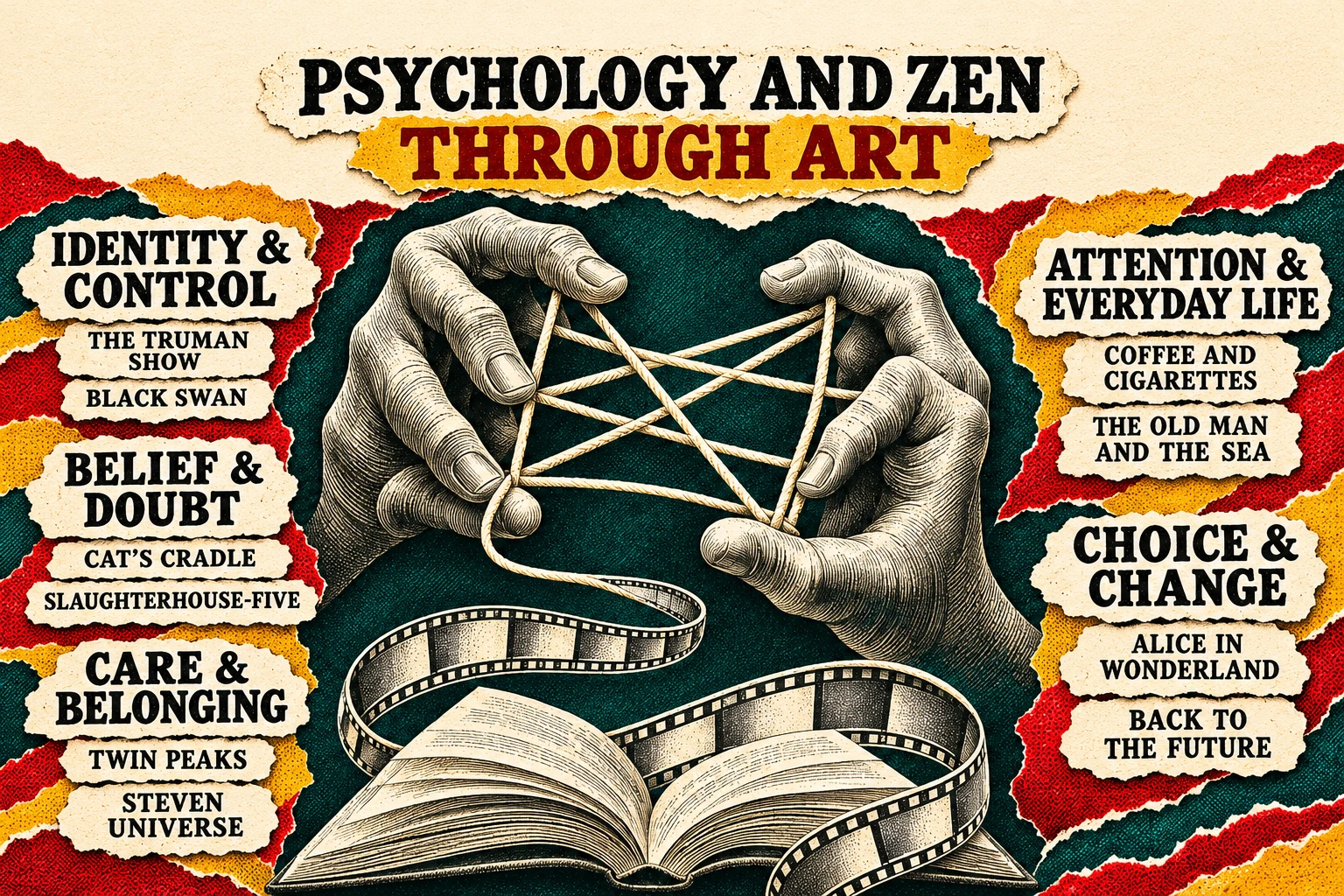
The series begins with identity and control. In The Truman Show, a whole town helps keep one man inside a life arranged for him. In Black Swan, the demand for perfection reaches into the dancer’s sense of who she is. The question of what keeps a person in a role leads to belief and doubt. From the invented religion of Cat’s Cradle to the consolation Billy Pilgrim finds in Slaughterhouse-Five, the essays ask what a belief makes bearable and what it costs to revise it.
Attention and everyday life bring the scale down to a table in Coffee and Cigarettes or a river in Hemingway’s “Big Two-Hearted River.” The way a film holds on a conversation or a writer describes a small task can change what we notice. That kind of attention also matters in the essays on care and belonging. Twin Peaks and Steven Universe open questions about wanting to save somebody, taking responsibility for them, and recognizing where their choices begin.
The final theme is choice and change. In Alice in Wonderland, a changing body unsettles a familiar sense of self. The Midnight Library gives regret the shape of lives that might have been. Adventure Time follows characters who must live with the people they used to be. Across these works, change often begins with a decision small enough to miss.
Psychology helps explain how habits, relationships, and social pressures sustain a way of seeing. Zen brings attention to what is happening while we are occupied with our explanations. Reading the two perspectives alongside scenes, images, and passages keeps the questions grounded in the works themselves. Each volume stands on its own, so readers can begin with the subject or work that draws them in.
Books, resources and companion systems.