About this book
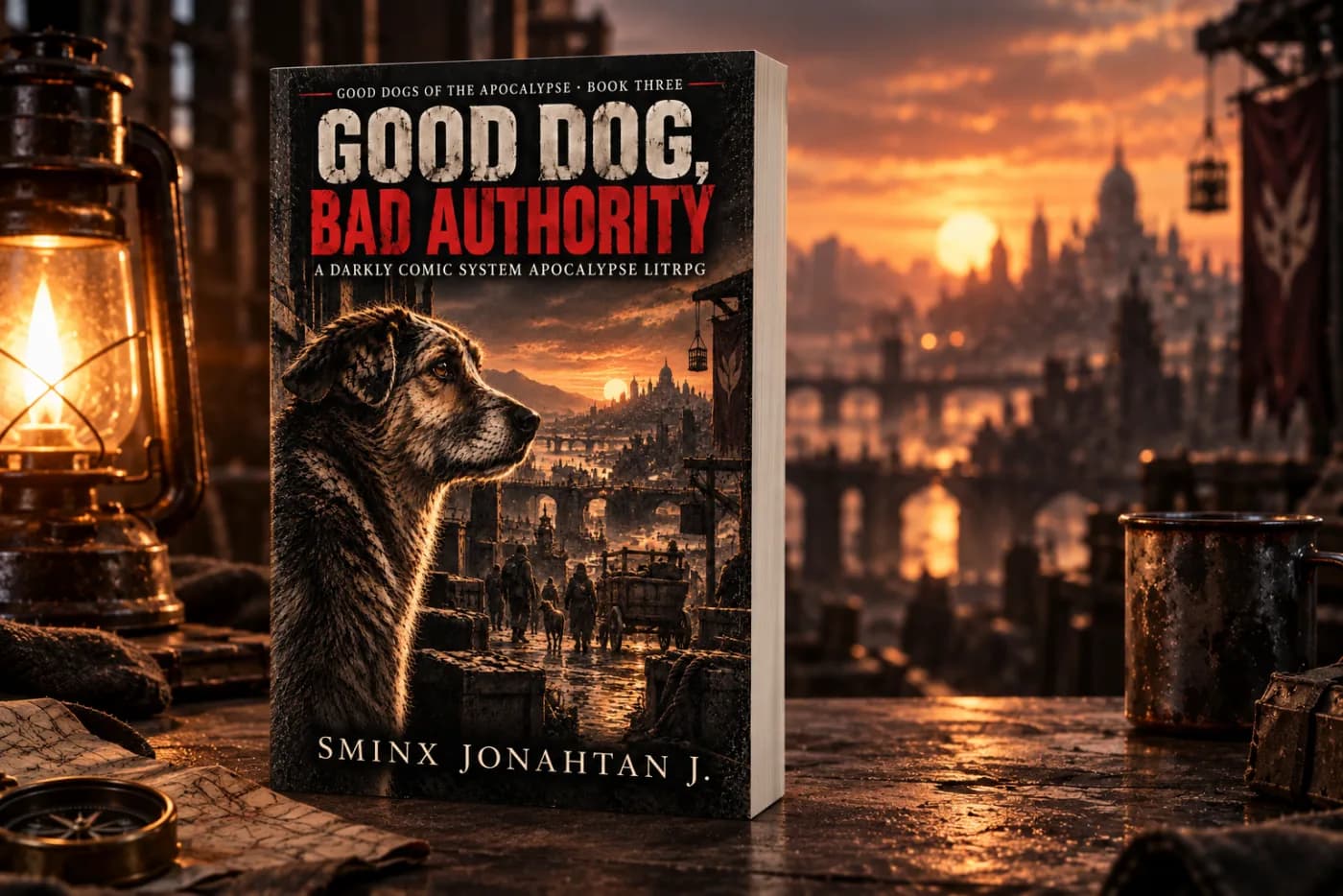
Good Dog, Bad Authority: Who Gets to Decide What Counts?
A delivery reaches the Hearth with a piece missing—and a carrier who can’t prove exactly where it went. Mriya remembers the accident. She also knows that remembering is not the same as seeing every part of what happened.
Good Dog, Bad Authority is Book Three in Good Dogs of the Apocalypse, a darkly comic System Apocalypse LitRPG series about dogs, humans, survival, and the choices that hold a community together. This time, the pressure does not arrive as a monster to defeat. It arrives as a request to witness, confirm, and settle disputes—and as the growing expectation that Mriya will be there whenever someone needs an answer.
A small delivery dispute with district-wide consequences
At first, the work seems practical. Carriers and receivers need help making handovers clear. A torn mark, a damaged load, or a message carried along the wrong route can cost someone time, goods, and trust. Mriya and her neighbors begin helping people compare what they saw and what they can actually confirm.
But a useful practice can become an unwanted office. When more people start depending on the Hearth’s witness, every request risks turning Mriya into the single point through which the district must pass. Saying yes to everyone would make her valuable—and make the others more dependent on her.
The book follows this pressure through ordinary work: waiting beside a cart, checking a repair, carrying a message, and deciding which requests can wait. The stakes are personal because the people involved have their own needs, limits, and alternatives. A disagreement does not make someone an enemy, and a careful answer cannot restore a lost morning.
A post-apocalyptic LitRPG about limits and trust
The System is part of Mriya’s world, but Good Dog, Bad Authority keeps its focus on choices people and dogs make together. How much should one neighbor promise? When does helping become an obligation? Can a community share useful information without claiming authority over every route and trade?
Mriya’s own body sets limits too. Her hip, her time, and her capacity to make another trip matter. When she helps someone, the effort has a real cost—but it cannot force the other person to trust her or agree with her.
That grounded approach gives the novel its distinctive dark humor. The grand question of authority may have to wait while someone’s cart wheel catches, a bowl needs moving, or a dog points out that the basket is facing the wrong way.
Continue the Good Dogs of the Apocalypse series
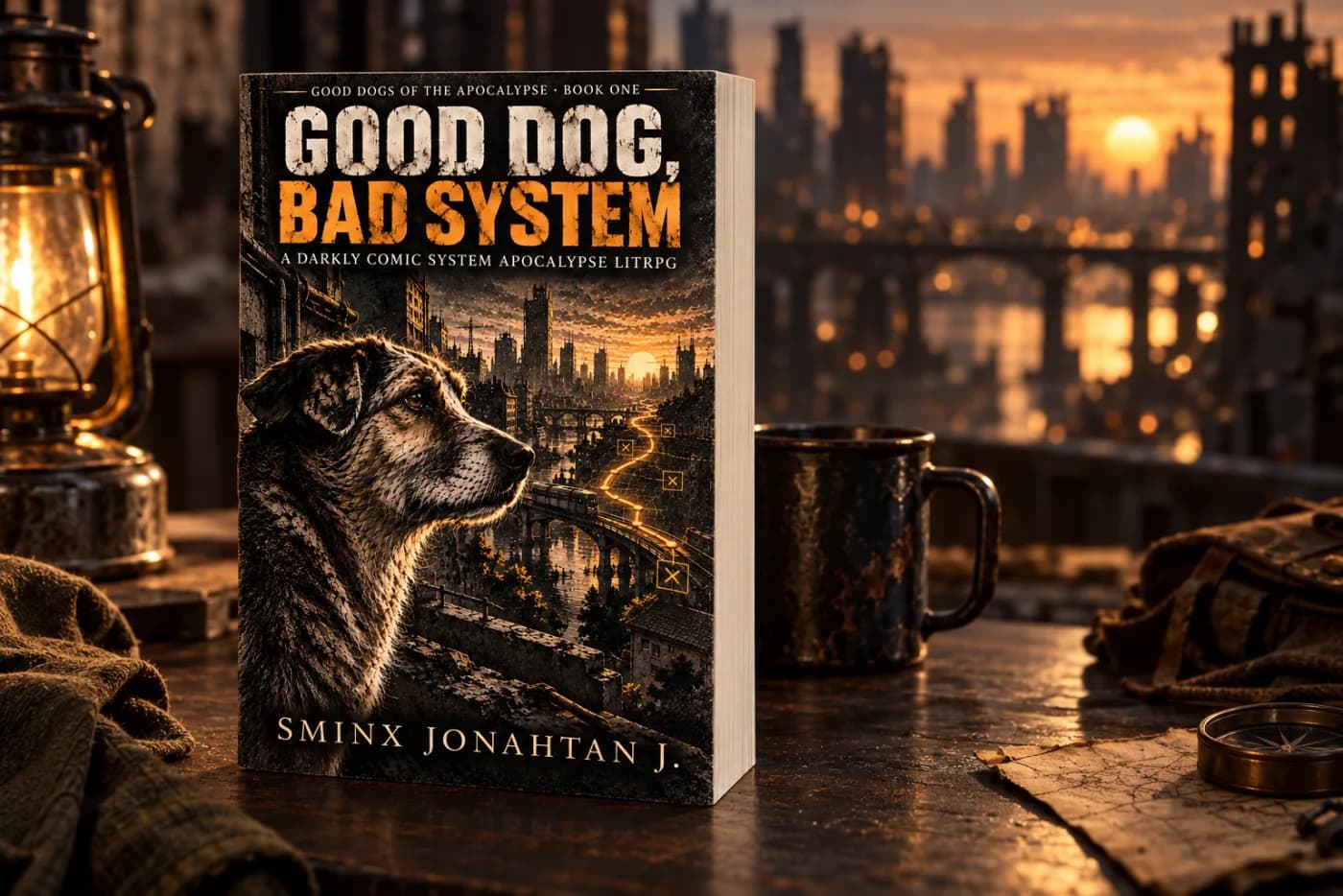
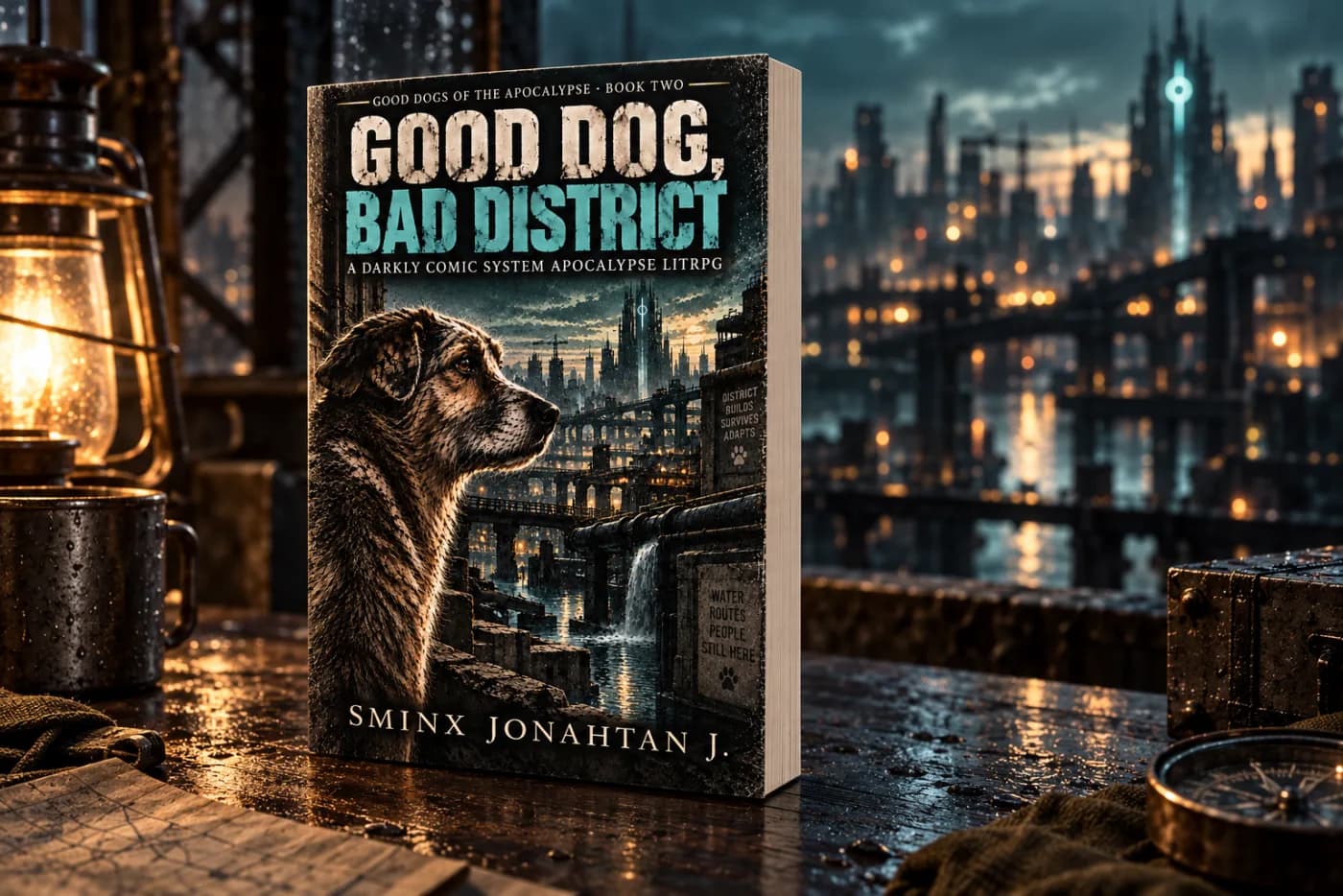
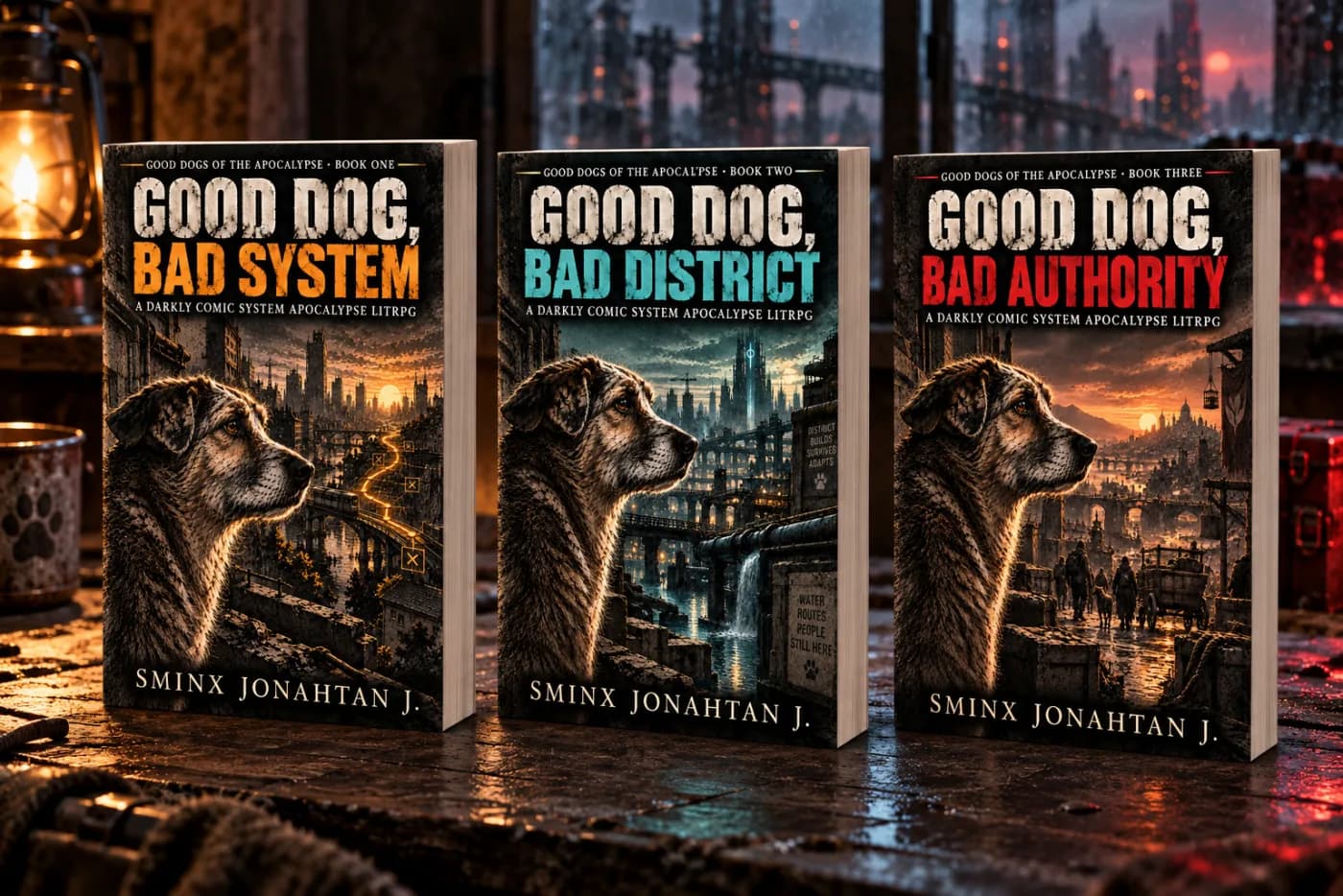
Readers returning from Good Dog, Bad System and Good Dog, Bad District will find Mriya’s community facing a new kind of test: not whether one leader can take charge, but whether people can share responsibility without making one person indispensable.
With a dog-centered viewpoint, practical survival stakes, found-family warmth, and a thoughtful take on power, Good Dog, Bad Authority offers a distinctive entry in post-apocalyptic fantasy and LitRPG. It asks what a community can build when help remains voluntary—and when no one is entitled to turn another’s effort into a permanent promise.
Same shelf, nearby systems.