
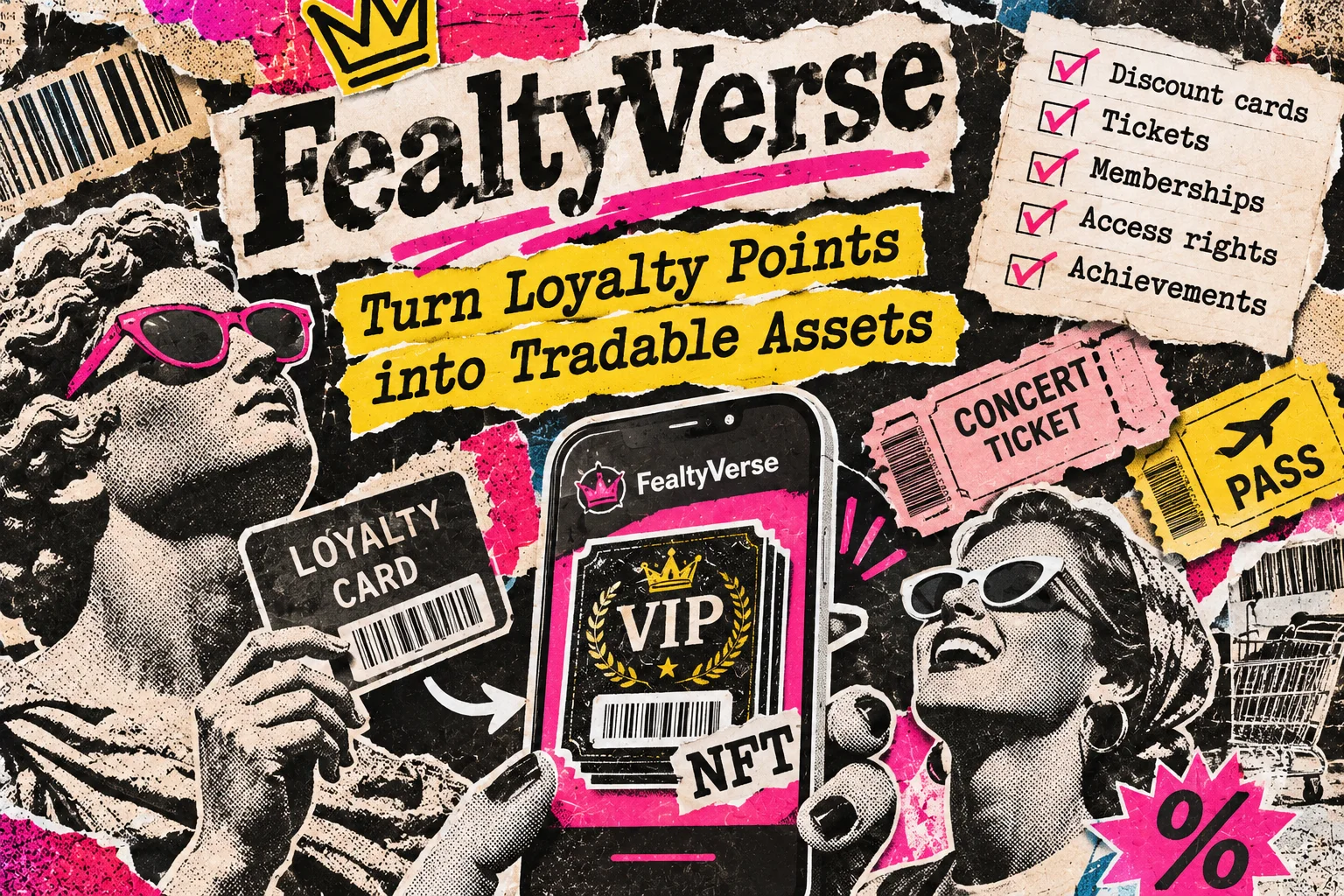
An unlaunched Web3 product concept exploring a surprisingly practical question: what if the discounts, memberships, tickets, and privileges we accumulate could be stored, exchanged, sold, or transferred instead of remaining trapped inside individual brands' loyalty systems?
Project: FealtyVerse, originally explored as Privileges NFT Field: Web3, Loyalty Technology, Digital Marketplaces My role: Co-founder, Concept Creator and CMO Work: Product Concept, Business Model, Marketplace Strategy, Tokenization Architecture, Go-to-Market Planning Status: Early MVP and initial activity described in project materials. Full commercial platform not launched.
You Have a Discount. Someone Else Needs It.
Imagine you've just finished renovating your apartment.
For months, you've been buying building materials, furniture, lighting, and everything else that a supposedly simple renovation eventually requires.
You've spent a small fortune.
But there is one consolation.
Your purchases have finally earned you the highest loyalty status at a large home-improvement retailer.
You now qualify for an excellent discount.
Wonderful.
Except the renovation is finished.
You don't need another bathroom.
You've bought enough furniture.
And you're not planning to renovate anything else for the next ten years.
Your reward has arrived at precisely the moment when you no longer have much use for it.
Meanwhile, someone across town has just bought an apartment.
They are about to spend thousands on the same products.
And they would find your discount extraordinarily useful.
But the loyalty programme doesn't allow you to sell it.
Or transfer it.
Or rent it.
Or perhaps even share it with a family member.
The economic value exists.
The person who owns the privilege doesn't need it.
Someone else does.
And the system connecting them doesn't exist.
That was one of the ideas behind FealtyVerse.
What if privileges could become transferable digital assets rather than remaining isolated benefits inside individual loyalty programmes?
This was a more interesting question to me than simply turning another collection of digital images into NFTs.
The goal was to explore whether blockchain technology could give existing consumer privileges a second life.
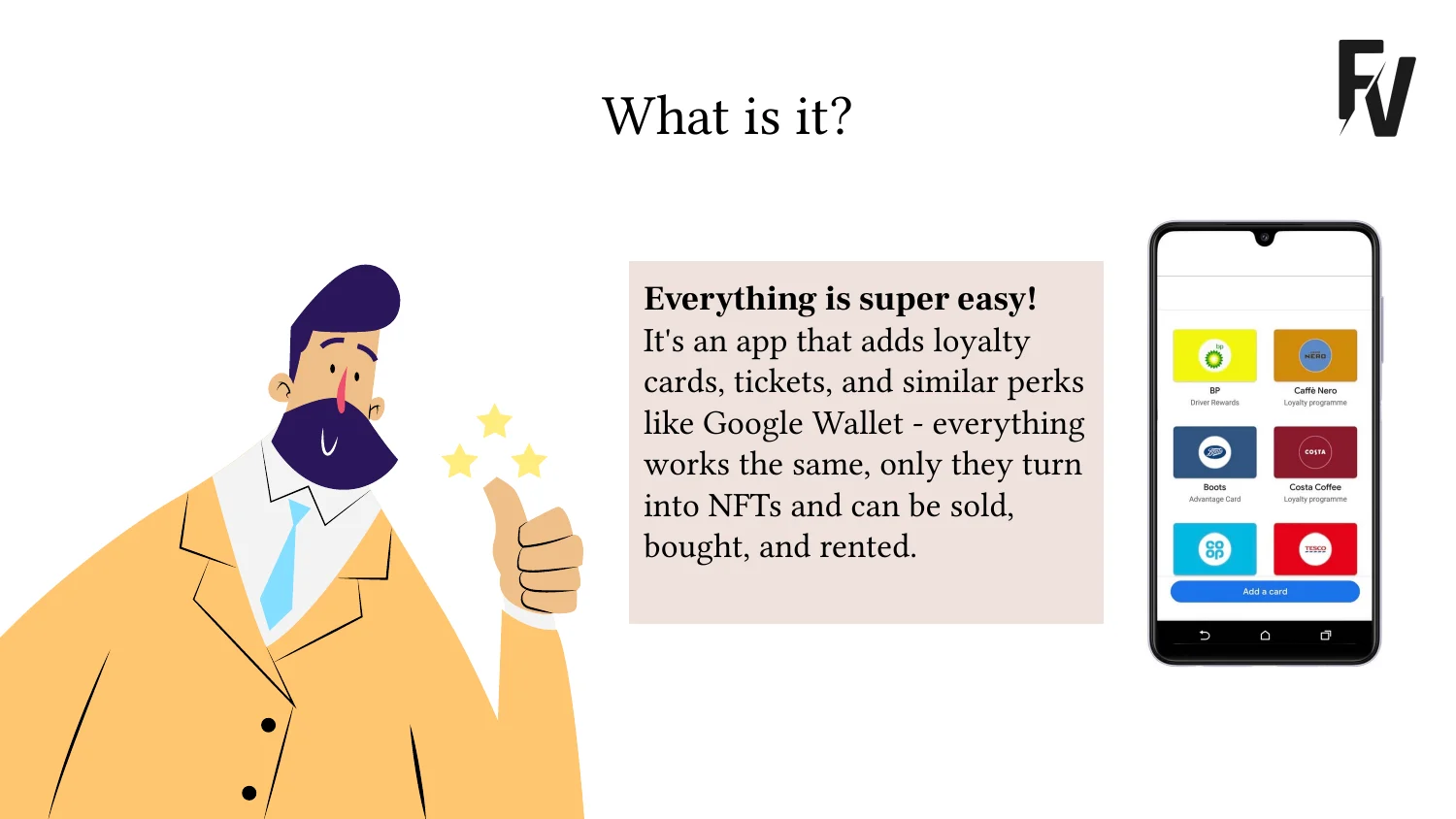
Original presentation, slide 2: early wallet concept. Transfers depend on the issuer’s rules.
The Things We Own but Cannot Really Use
Loyalty programmes are everywhere.
Discount cards.
Bonus points.
Gift cards.
Memberships.
VIP access.
Event tickets.
Special offers.
Achievements.
Digital passes.
Each programme creates its own rules, identity system, and account structure.
The customer collects benefits across dozens of separate environments.
And those benefits usually remain locked inside the system that issued them.
Some can be shared.
Others are personal.
Some expire.
Others require additional spending before they become useful.
And many are difficult to evaluate economically because no legitimate secondary market exists.
The customer sees a discount.
The brand sees a retention mechanism.
But the privilege itself may represent something more interesting.
A conditional right.
The right to receive a particular price.
The right to enter an event.
The right to access a service.
The right to claim a reward.
And, in some cases, the right to transfer that benefit to another person.
The problem is that not all these rights are transferable.
Some are explicitly tied to the original customer.
Some exist only within a company's database.
Others depend on conditions that cannot simply be represented by a token.
That distinction eventually becomes the central technical and commercial challenge.
But the starting observation was useful.
Consumer loyalty programmes create value.
And some of that value remains unused because the original systems were never designed to make it portable.
The First Concept: Privileges NFT
The project began with a straightforward product idea.
Imagine an application that feels as simple as a digital wallet.
You add loyalty cards, tickets, memberships, and similar items.
The interface looks familiar.
There are cards.
Balances.
Codes.
Privileges.
But the underlying system adds another dimension.
Where appropriate, the privilege can be represented by an NFT and offered to other users.
It might be sold.
Transferred.
Exchanged.
Or made available for a defined period, if the underlying right permits it.
That was the original Privileges NFT proposition.
Not NFTs as collectibles for their own sake.
NFTs as representations of something useful outside the blockchain.
The idea developed into FealtyVerse.
The name changed, but the central question remained.
Could the fragmented world of consumer privileges become a connected marketplace?
And could the resulting transactions provide useful information to consumers and participating brands?
The project explored three main types of interaction.
Proof of an entitlement or achievement.
Transfer of an existing privilege.
And collective use of benefits, where the issuer's rules permitted it.
Each presented a different business opportunity.
And each introduced its own complications.
Three proposed use cases
Proof — An issuer could recognise a digital record of a membership, entitlement or achievement. The record itself does not create a legal right.
Purchase and sale — A holder might transfer or sell a privilege when the issuer permits that transfer and its conditions can be verified.
Sharing — A benefit could be made available to another person only within the rules set by the issuer.
The Discount Card That Finds a New Owner
The home-renovation example was one of our clearest use cases.
One customer has accumulated a valuable discount.
Another customer has an immediate need for it.
If the retailer permits transfers, a digital marketplace could connect them.
The first customer receives compensation for a benefit they no longer need.
The second obtains access to a better price.
And the retailer may gain a new customer or additional spending.
Everyone potentially benefits.
But there is one condition that cannot be skipped.
The retailer must recognise the transfer.
An NFT can prove control over a token.
It cannot, by itself, force a company to honour a discount issued under different contractual terms.
This is the fundamental difference between representing a privilege and actually transferring it.
The transfer of a blockchain token is a technical operation.
The transfer of a commercial entitlement is a question of rules, authorisation, and enforceability.
FealtyVerse's longer-term architecture anticipated official integrations with brands precisely because that difference matters.
Without such integrations, users could collect and exchange digital representations, but the redemption of those representations would remain subject to the original issuer's rules.
A token doesn't magically rewrite a loyalty contract.
Even if the token looks considerably more impressive than the original plastic card.
The More Provocative Idea: Shared Loyalty
Another proposed mechanism involved collective accumulation of loyalty benefits.
Suppose a retailer offers a one-percent discount to new customers.
After a sufficiently large amount of spending, the discount increases.
Eventually, a customer reaches a premium tier.
For an individual, that threshold might be difficult to achieve.
But what if a group of customers could legitimately combine their purchases?
The original presentation used an illustrative example involving a $100,000 spending threshold and one thousand customers contributing $100 each.
A shared account could theoretically reach a higher loyalty level much faster than any individual participant.
Then participants might receive access to the associated benefits.
This was an intriguing network-effect hypothesis.
Instead of waiting for individual spending to generate privileges, users could organise collectively.
But it was also one of the most challenging ideas in the model.
Many loyalty programmes explicitly prohibit account sharing or the pooling of purchases outside approved structures.
A group cannot simply manufacture a valid commercial entitlement by distributing NFTs representing one person's membership.
A real implementation would need a participating brand to authorise the arrangement, define the eligibility rules, and specify how discounts would be redeemed.
It would also need fraud controls, clear economics, and a method for preventing the same benefit from being claimed more often than permitted.
The idea was useful as a way to explore collective loyalty economics.
It was not proof that existing retailer programmes could be pooled without permission.
That distinction would have been crucial to converting the concept into a sustainable product.
Not Every NFT Needs to Be a Picture
One of the ideas I still find interesting was our approach to achievements.
Digital platforms regularly reward users with badges.
You complete a challenge.
You receive an achievement.
The application shows a colourful icon.
Congratulations.
You have acquired another small image demonstrating that you interacted with the application exactly as its designers intended.
For a while, this can be entertaining.
Then the excitement fades.
I remember looking at the achievements I'd accumulated in Monobank.
There were dozens.
They were visually appealing.
But most didn't do anything beyond confirming that I'd earned them.
That prompted another question.
What if an achievement carried a real privilege?
Complete a challenge and receive a discount.
Participate in a programme and unlock access to an event.
Combine certain achievements to obtain a useful service.
Receive a benefit that has some practical value beyond its decorative appearance.
FealtyVerse proposed connecting achievements with entitlements.
The NFT could become a record of the achievement and, where appropriate, carry a benefit recognised by the issuer.
This would give brands another way to design loyalty programmes.
Instead of distributing badges as isolated engagement mechanics, they could connect achievements to useful rewards.
Not every achievement should be transferable.
Some represent personal accomplishments or identity-related qualifications.
But the reward attached to an achievement could sometimes be transferable even when the achievement itself remained personal.
That distinction would create additional design possibilities.
The important idea was that gamification should lead somewhere.
A badge is an indication that something happened.
A privilege can change what the user is able to do next.
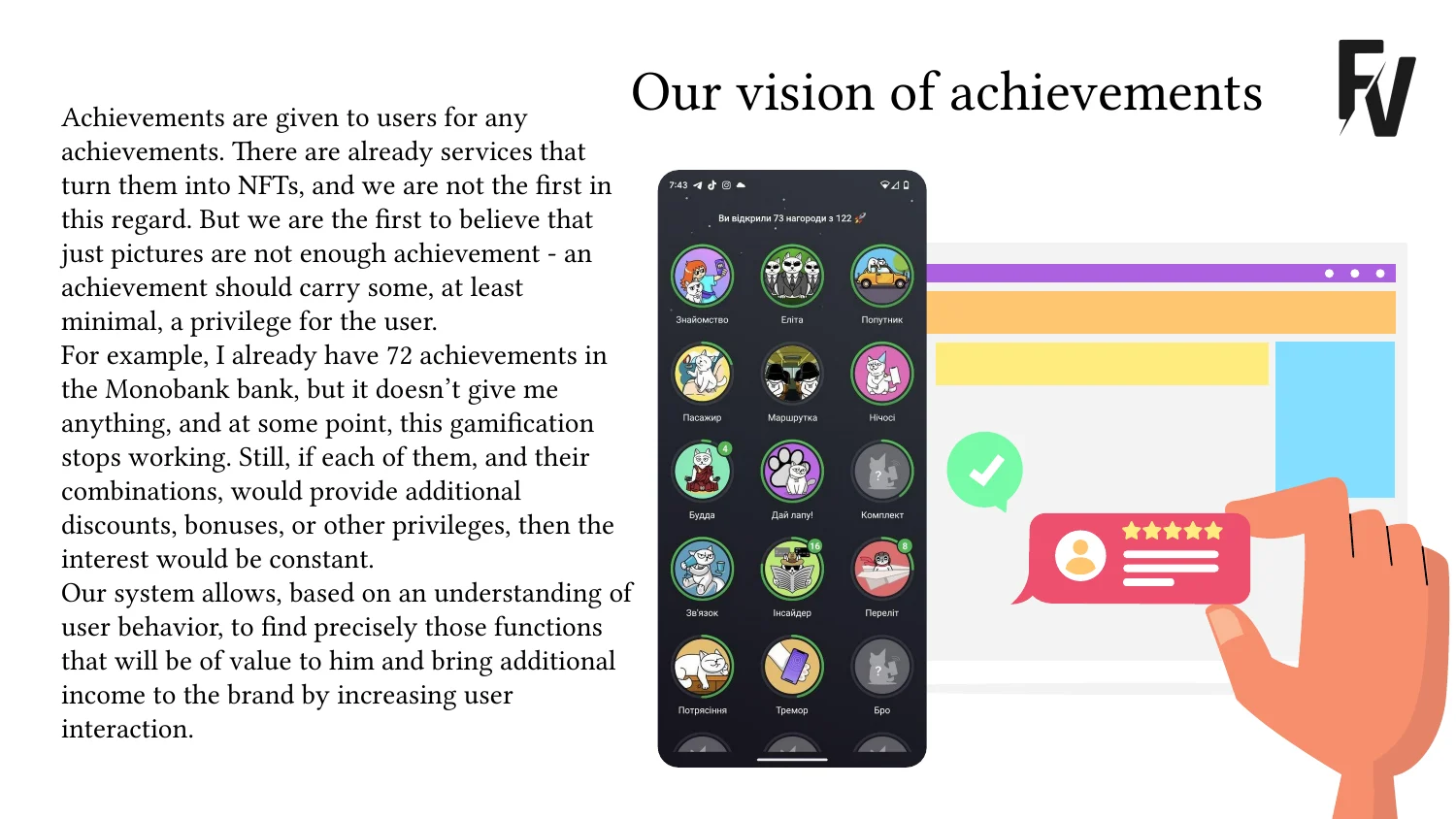
Original presentation, slide 9: proposed achievement-based privileges; badges and brands are illustrative.
A Marketplace for More Than Discounts
The proposed system covered a broad range of privilege types.
Discount and bonus cards were the most obvious.
Gift cards and tickets were another category.
Memberships and access rights introduced more complex rules.
Passes could represent eligibility to enter a physical or digital space.
Achievements could be connected to specific rewards.
And users or businesses could create their own privileges.
That last possibility opened the concept beyond existing loyalty programmes.
Imagine organising a small private concert.
You create a limited number of digital entry passes.
People can purchase or receive them.
The passes can be checked at the entrance.
Or perhaps you run a small shop and want to distribute special discounts to a group of customers.
A creator might offer access to a private event.
A community might issue limited membership benefits.
The original proposal even joked about creating the right to pet someone's cat.
Which is not necessarily an attractive financial asset.
But it illustrates the point.
The platform wasn't intended to support only large brands.
It also proposed a tool for creating and distributing new privileges.
The business opportunity came from making these objects easier to issue, discover, transfer, and verify.
At least where their terms allowed it.
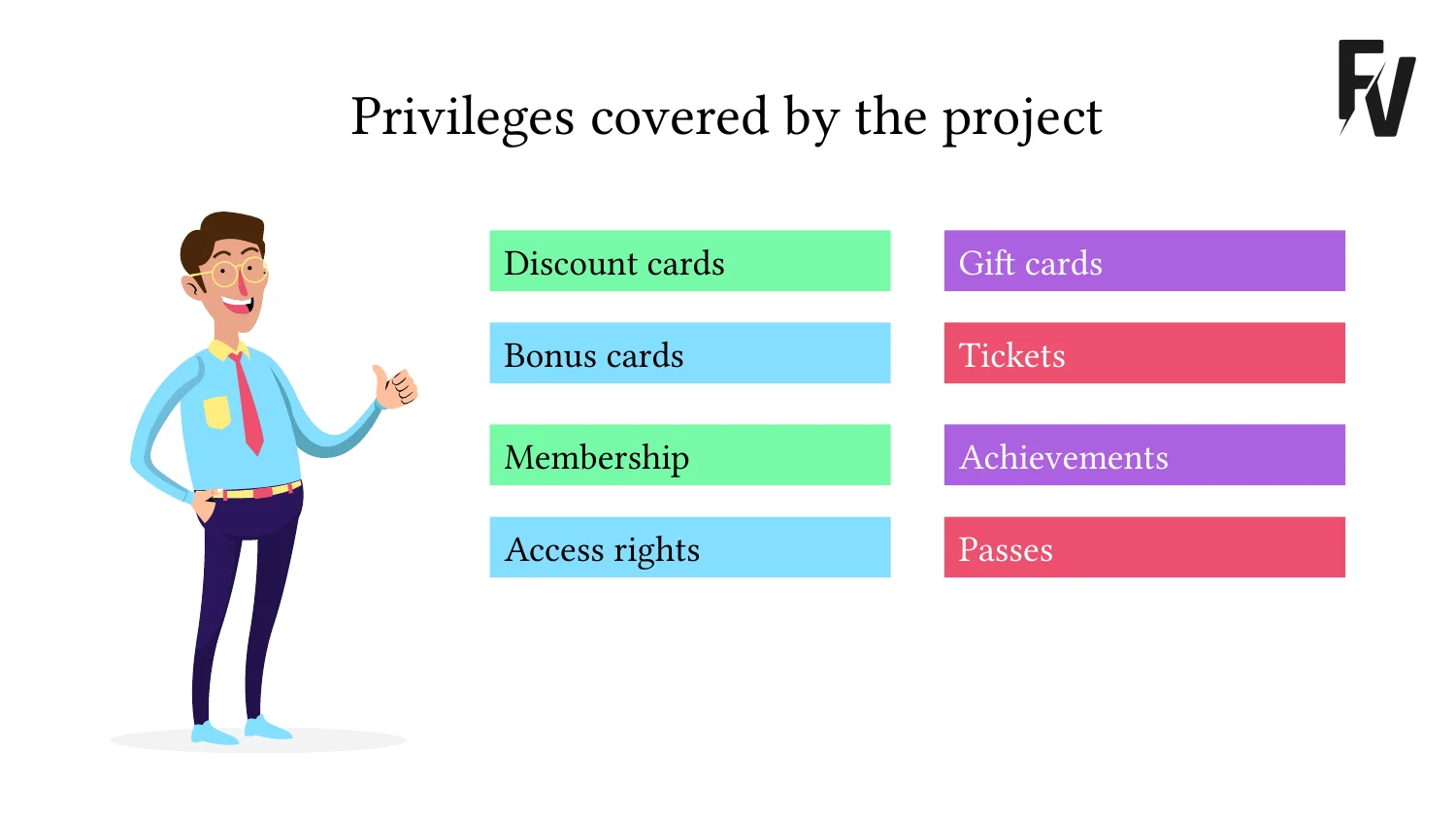
Original presentation, slide 4: proposed privilege types.
What Does an NFT Actually Need to Know?
The presentation went beyond a general idea of putting loyalty cards on a blockchain.
It defined a basic structure for privilege-related data.
An object would need to identify the type of benefit.
Discount.
Bonus.
Ticket.
Membership.
Access right.
It would also need information about the issuer, the location, any applicable time restrictions, and the code or identifier used for redemption.
Other attributes would describe the token's uniqueness or edition and whether the privilege was officially connected to the issuing brand.
This last distinction was especially important.
A user-created representation of an existing card is not equivalent to an issuer-authorised digital entitlement.
The two need to be visibly distinguishable.
The design also implied additional requirements that would have needed further technical development.
How is the underlying privilege verified?
Can it be revoked?
Does it expire?
Can it be transferred multiple times?
Can it be redeemed only once?
What happens if a ticket is refunded?
How does a merchant verify that the token holder is entitled to use it?
These are not simply blockchain questions.
They are questions about the relationship between an on-chain object and an off-chain service.
The smart contract can manage certain ownership and transfer rules.
But a retailer, event organiser, or membership provider still needs a system capable of honouring the associated entitlement.
That is where the interesting product architecture begins.
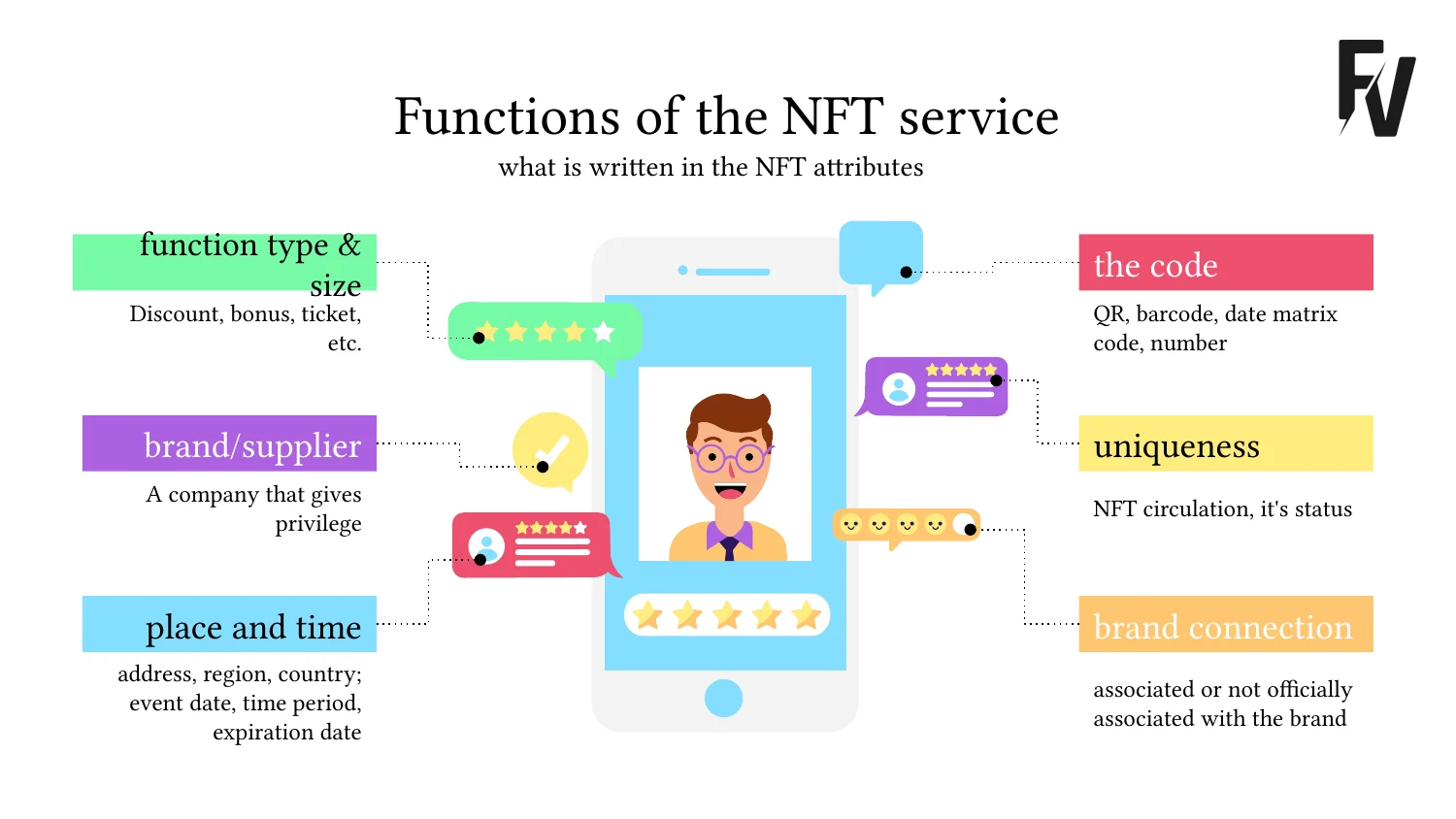
Original presentation, slide 5: proposed data model, including issuer, conditions and redemption details.
Start With Users, Bring Brands Later
The original business strategy proposed a staged development model.
The first phase was P2P.
Users would be able to collect, represent, and exchange privileges without requiring a complete system of brand integrations from the beginning.
The next phase involved accumulating a dataset of user behaviour and marketplace activity.
Once the platform had developed a meaningful user base, the plan was to introduce official connections with brands.
The longer-term vision included a combination of consumer activity, P2P exchange, and B2B services.
This was a deliberate attempt to solve a familiar marketplace problem.
How do you attract brands before you have users?
And how do you attract users before you have valuable brand partnerships?
The proposed answer was to begin on the consumer side.
Develop utility.
Create activity.
Learn what people were trying to exchange.
Then use that evidence to approach brands.
There was commercial logic to this.
But there was also a difficult dependency.
If the initial consumer use cases relied on rights that brands had not authorised for transfer, the platform could accumulate demand without being able to fulfil it reliably.
This created tension between the staged go-to-market plan and the technical requirements of the product.
A contemporary version would probably need to begin with clearly transferable entitlements, user-created privileges, or a small group of cooperating issuers.
The ambition to grow through P2P activity was interesting.
But the rights themselves had to remain real.
That would have been the most important validation problem.
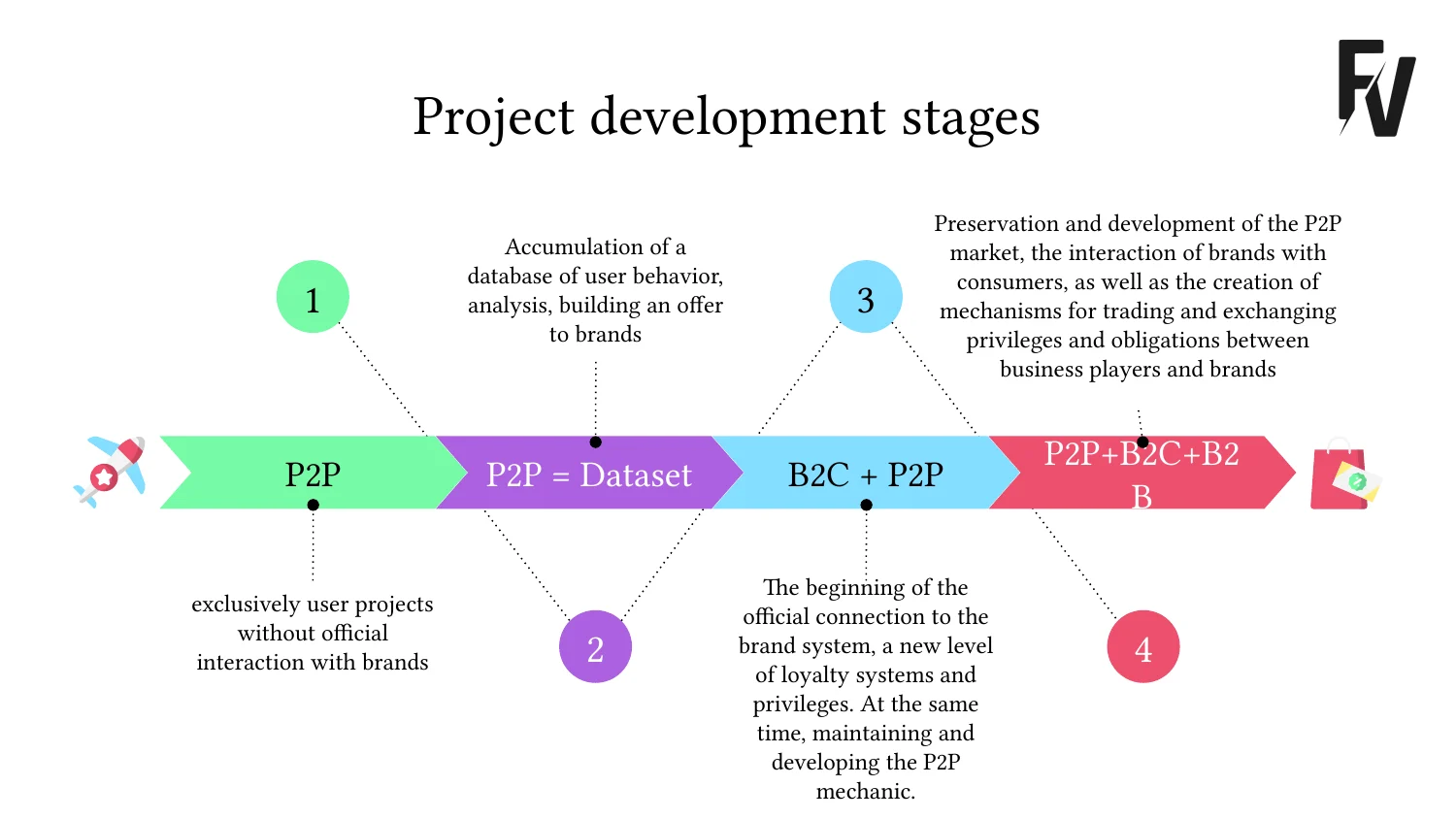
Original presentation, slide 7: historical four-phase plan, not a record of completed rollout.
The Brand Side: From Loyalty Programmes to Market Intelligence
The eventual B2B product was more ambitious than a token-issuing tool.
It included a brand dashboard, analytics, a privilege-creation wizard, and a proposed AI-driven system for configuring privilege economics.
The idea was to give brands greater visibility into how their benefits circulated.
Traditional loyalty programmes often record issuance and redemption inside one company's systems.
But some customer-to-customer transfers happen informally or outside the issuer's direct view.
A supported digital transfer system could make authorised movements more transparent.
Brands could understand which privileges were being used.
Which were being transferred.
What users considered valuable.
And how different kinds of entitlements affected customer engagement.
That information could help brands improve programme design.
It might also reveal whether consumers valued certain privileges more highly than the issuer expected.
This was the second side of the FealtyVerse proposition.
For consumers, privileges could become more flexible.
For brands, the system could provide a new way to design, distribute, and analyse those privileges.
The longer-term commercial hypothesis was that marketplace activity and issuer integrations would reinforce one another.
More relevant privileges could attract more users.
More activity could make the platform more useful to brands.
And greater participation from brands could increase the quality of the marketplace.
It was a reasonable platform hypothesis.
But network effects are not created merely by drawing arrows between user growth and brand adoption.
They have to be demonstrated through real participation.
The marketplace would need enough desirable, usable privileges to justify returning.
And brands would need evidence that participating produced commercial value.
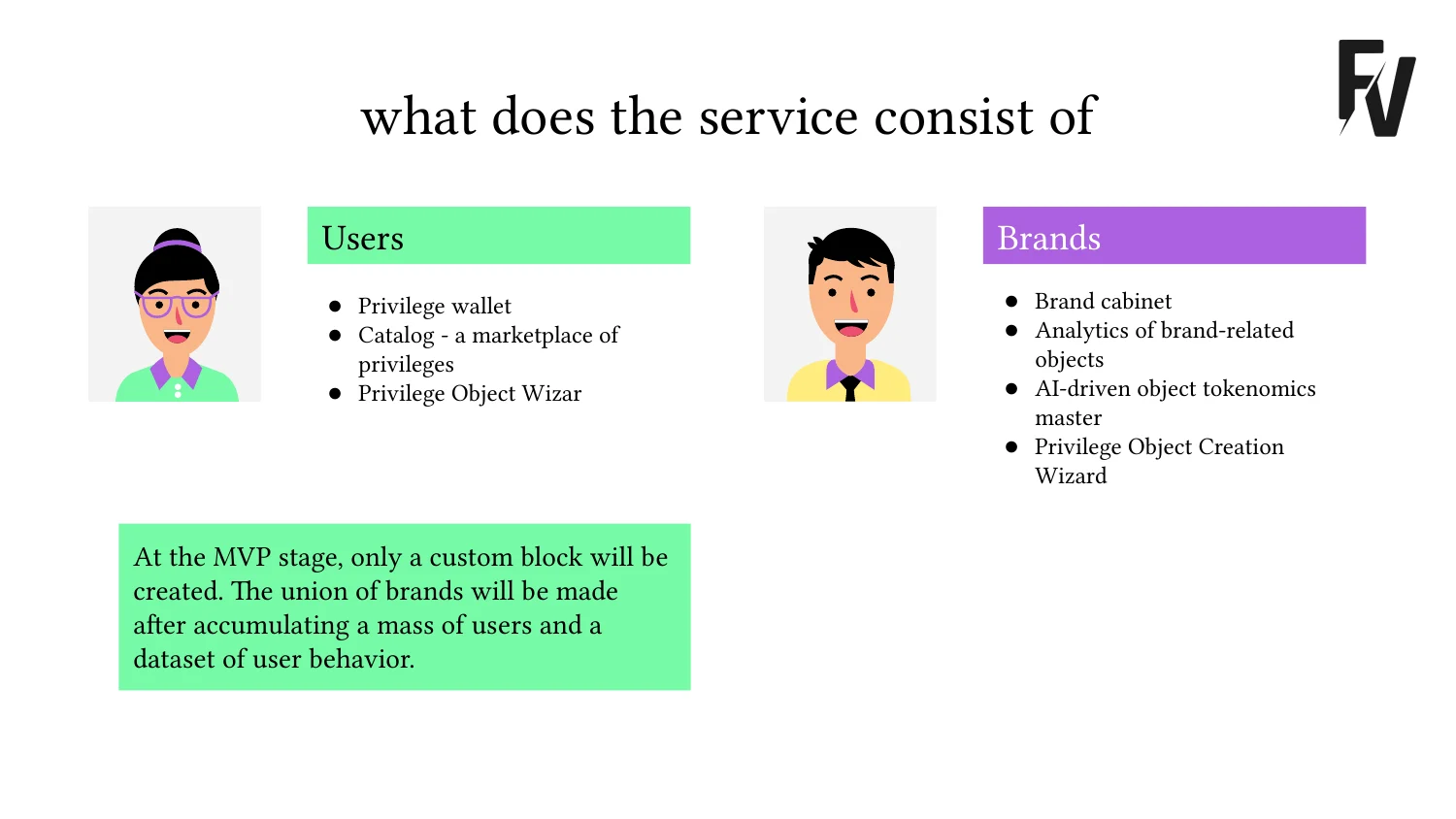
Original presentation, slide 10: proposed user and brand sides. Brand tools were not established as implemented.
The Business Model
FealtyVerse explored several potential revenue streams.
Transaction fees on marketplace activity were the most direct.
Premium subscriptions could provide additional features.
The presentation proposed a subscription price of $9 per month, with benefits such as automated discovery of relevant offers and priority access to selected opportunities.
For brands, the longer-term business included analytics and tools for managing privilege programmes.
These were proposed revenue mechanisms, not established income streams.
And each depended on the same underlying requirement.
The privileges had to possess genuine utility.
Without useful entitlements, transaction volume would be limited.
Without transactions, analytics would have little value.
Without brand participation, some of the most interesting commercial features would remain difficult to implement.
This is why the economic architecture and the technical architecture could not be developed independently.
A platform for trading privileges cannot rely on the mere existence of tokens as proof of demand.
The value has to originate in the underlying benefit.
The blockchain can help organise representation and transfers.
It cannot create a useful discount out of nothing.
How Far the Project Got
The project materials contain several stages of development.
The earliest presentation used the name Privileges NFT and focused on the underlying wallet and marketplace concept.
The later materials developed the FealtyVerse identity and expanded the business proposition.
They included product architecture, user scenarios, privilege attributes, a phased go-to-market model, proposed brand-facing tools, and monetisation.
The later presentation also contained a section describing what already existed.
It referred to an MVP and landing page, a Telegram support group, initial privilege cards, and early users and transactions.
It also included screenshots associated with the project's website and an example NFT card.
Those details matter.
The work did not remain exclusively at the level of an idea written in a pitch deck.
The documents indicate an initial attempt to put some of the concept into practice.
But the available materials do not establish the complete technical functionality of that MVP.
They do not provide independently verifiable transaction records, usage analytics, revenue reports, retention figures, or evidence of a fully operational marketplace with authorised brand integrations.
The screenshots and presentation claims are evidence of the project's reported early stage, not proof that the full commercial system operated successfully.
The broader platform was never completed or launched at the intended scale.
That is the status I would assign to FealtyVerse.
An advanced product and business concept with documented early MVP activity.
Not a completed Web3 marketplace.
And not a commercially validated platform.
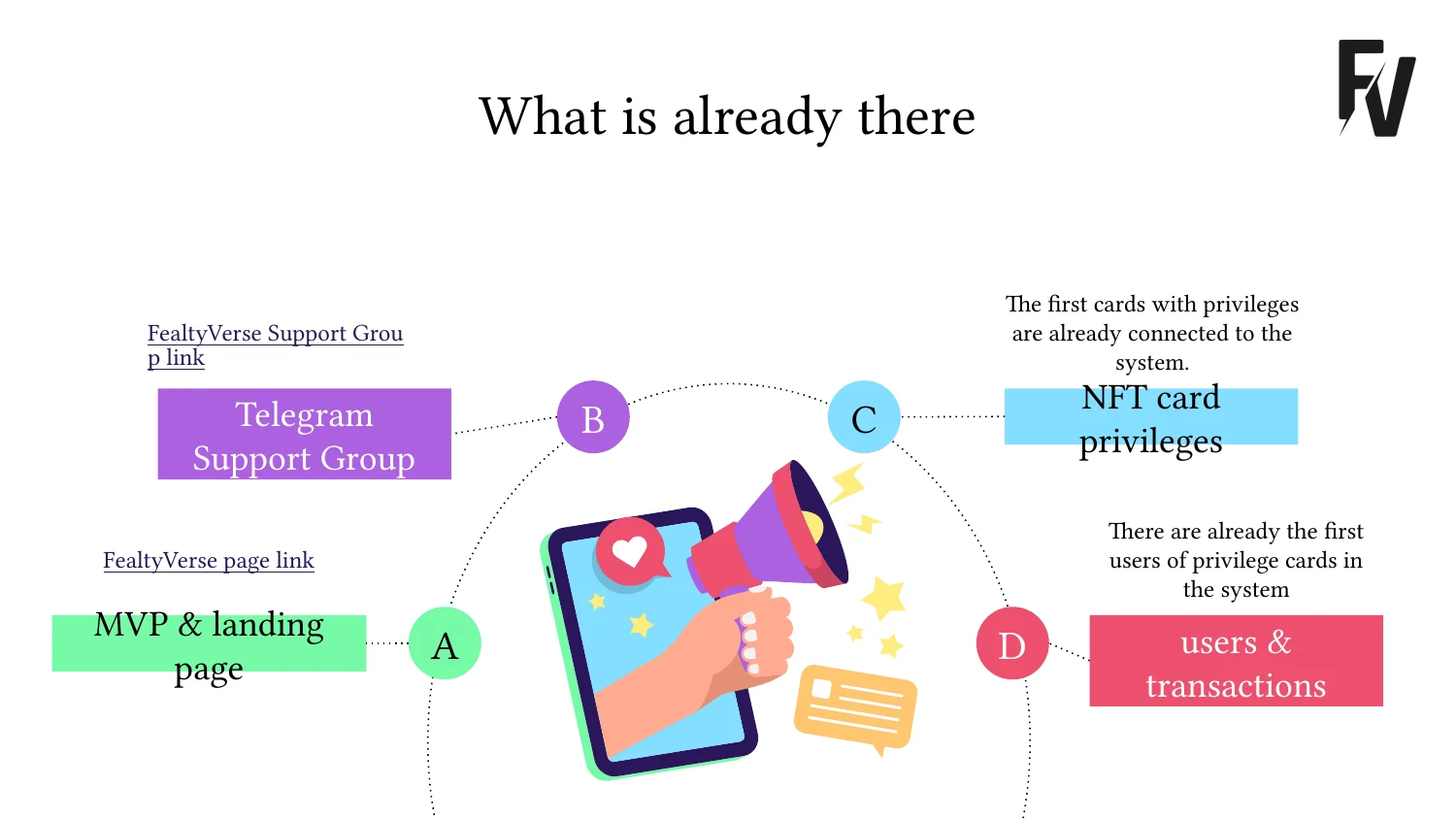
Original presentation, slide 13: early project claims about an MVP and activity; metrics and commercial operation were not independently verified.
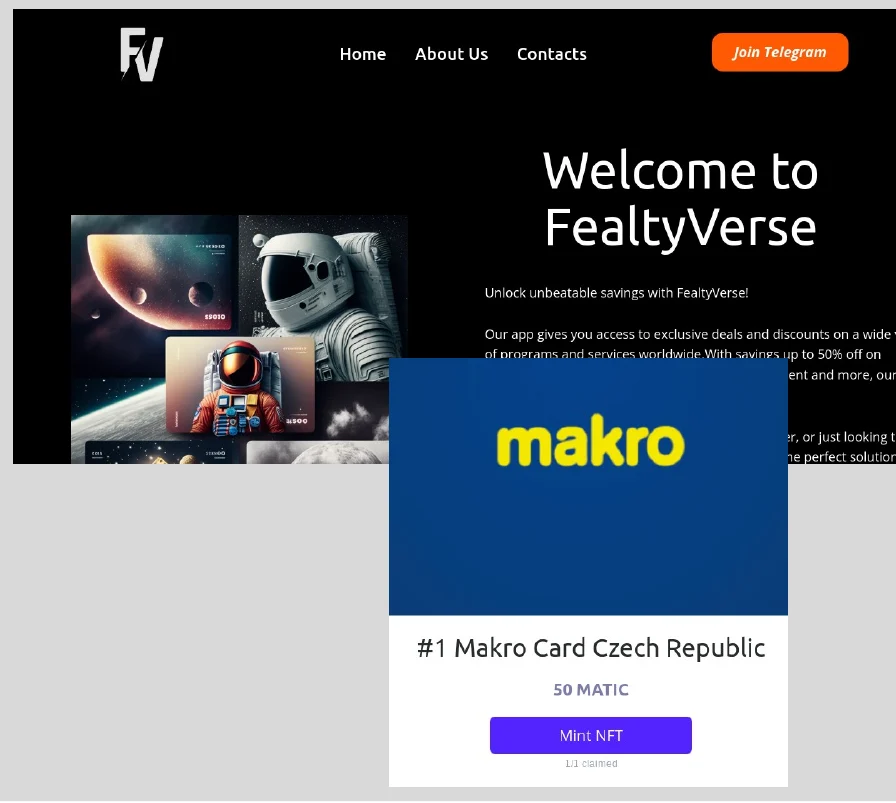
Original presentation, slide 14: historical landing and example card. This does not establish a Makro partnership or acceptance of the card.
What I Would Change Today
Looking back, I think the strongest idea was not NFT technology itself.
It was the identification of a market where value can exist without being easily transferable.
That question remains interesting.
But I would simplify the implementation considerably.
The first version would need a narrow set of privileges that could legally and technically be transferred.
Perhaps digital event passes issued by participating organisers.
Or limited discounts from merchants that explicitly allow secondary transfers.
Or community-created access rights where the issuer controls the terms.
These are easier starting points than attempting to convert arbitrary third-party loyalty cards into independently tradable assets.
I would also separate the user experience from the blockchain terminology.
Most consumers do not want to think about NFTs.
They want a ticket that works.
A discount they can redeem.
A membership they can manage.
And a safe way to transfer something they no longer need.
If blockchain infrastructure helps with those tasks, it can operate underneath.
But the existence of a token should not be the product's primary selling point.
The product should be the useful right.
Not the technology representing it.
I would also change the approach to trust.
Every privilege would need a clear issuer.
A clear validity period.
A defined transfer policy.
And a reliable redemption process.
Users would need to know whether the issuer officially recognises it.
The system would have to prevent double redemption, fraudulent listings, and sales of expired or revoked entitlements.
And any data collected about user behaviour would need explicit privacy controls.
The original concept contained the beginnings of this distinction through the idea of brand affiliation.
A production version would need to make it fundamental to the entire architecture.
Finally, I would reduce the scope of the marketplace.
A platform supporting tickets, discounts, memberships, gift cards, bonuses, achievements, and arbitrary user-generated rights sounds versatile.
But each category has different rules.
A concert ticket is not the same thing as a loyalty status.
A gift card is not the same thing as access to a private club.
And an achievement proving that someone completed a personal challenge may not be transferable at all.
The product would need to understand those differences rather than forcing everything into one generic token type.
A smaller, reliable marketplace could establish trust.
Then the range of supported privileges could expand.
The goal would be to validate one useful market before attempting to reorganise the entire world of consumer loyalty.
The Interesting Part Was Never the NFT
FealtyVerse belonged to a period when NFTs were being proposed as solutions to an enormous variety of problems.
Some ideas were genuinely interesting.
Others began with the decision to use an NFT and only afterward searched for something to tokenise.
I think FealtyVerse was more interesting when viewed from the opposite direction.
Start with the economic problem.
A person has a benefit they cannot use.
Another person values it.
The issuer may have reasons to allow a transfer.
Could a digital marketplace organise that exchange?
If the answer is yes, an NFT might be one possible technical representation.
If the answer is no, putting the benefit on a blockchain does not solve the problem.
That distinction is the part of the project I still find worth revisiting.
We were exploring how existing customer privileges might become more useful, measurable, and flexible.
How brands could design benefits that travel beyond one account.
How achievements could lead to practical rewards rather than decorative badges.
And how a marketplace could emerge around the value of access, discounts, and entitlements.
The project did not reach full implementation.
The available evidence does not establish that the proposed commercial model worked at scale.
But the research and product architecture addressed a real question.
What does it mean to own a digital privilege if you cannot transfer it, exchange it, or use it outside the system that issued it?
The answer isn't always that every privilege should become tradable.
Some rights are personal.
Some shouldn't be transferred.
And some are valuable precisely because they are restricted.
But where transfer makes sense, it can create new possibilities for both the holder and the issuer.
That was the underlying idea behind FealtyVerse.
Not a marketplace for pictures.
A marketplace for things that actually do something.
And while the project itself remained unfinished, the distinction between possessing a token and possessing a usable right remains one of the most important lessons from the work.