
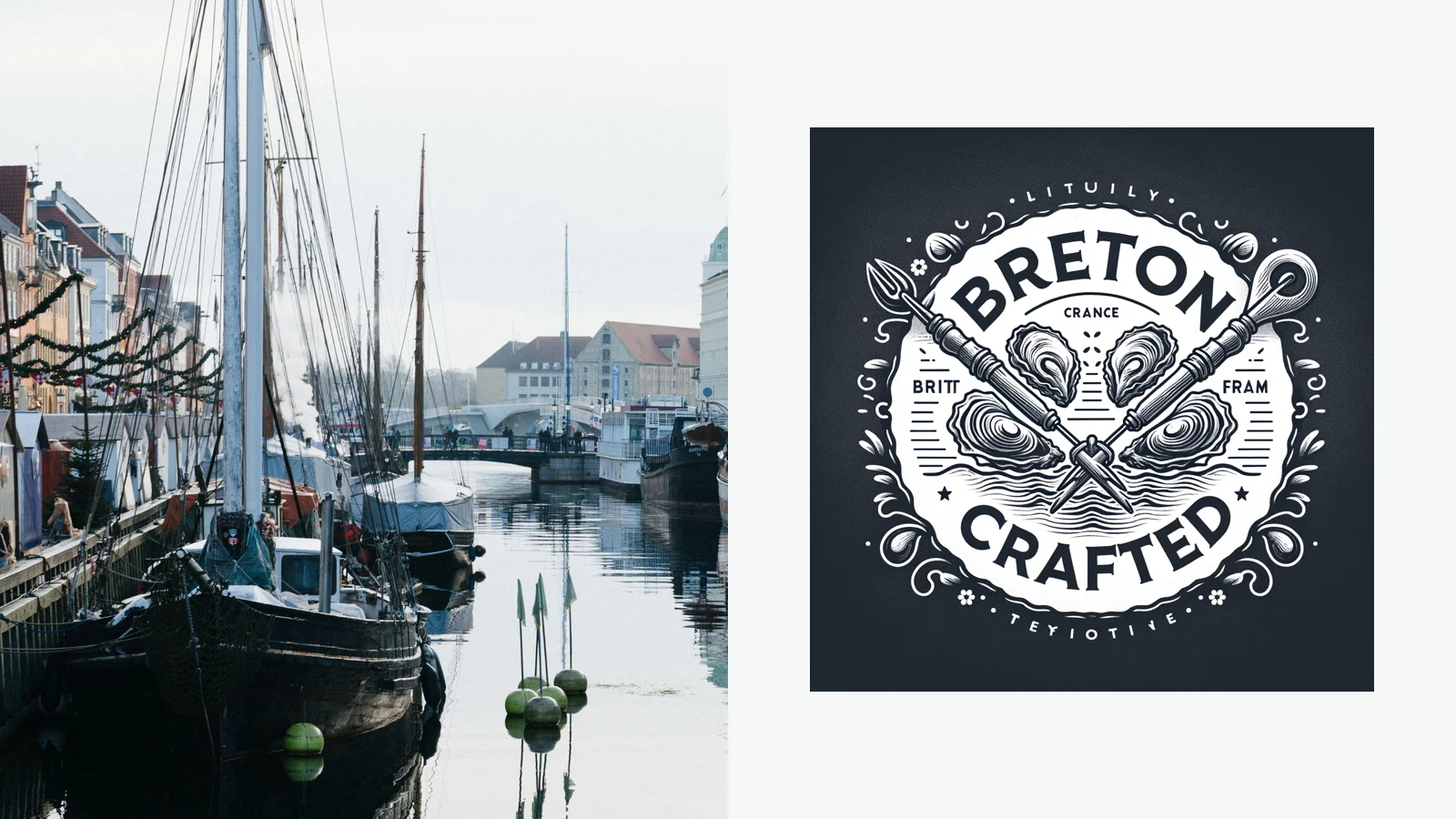
An unrealized food-business concept inspired by visits to French oyster farms. The idea was to explore whether commercially overlooked but food-safe seafood could become the foundation of artisanal oyster sauce, fish sauce, and fermented condiments. I developed the concept into a presentation, then decided not to pursue the business. Perhaps someone else will find the idea useful.
Project: Breton Crafted / Breton Essence Field: Food Innovation, Circular Economy, Artisan Food Production Work: Product Concept, Brand Direction, Market Hypothesis, Distribution and Partnership Strategy Status: Exploratory concept and presentation only. No production or commercial launch.
It Started with an Oyster Farm
Living in France has given me plenty of opportunities to visit oyster farms.
And I rather enjoy them.
There's something fascinating about a business that combines agriculture, the sea, local traditions, unpredictable natural conditions, and a product that people frequently consume with almost nothing added to it.
An oyster.
Perhaps a little lemon.
A glass of white wine.
Done.
The simplicity is part of the attraction.
But whenever I visit a producer, I tend to become interested in something beyond the product being sold.
I start wondering about the production process.
What happens to the things that don't get sold?
What happens to products that don't meet commercial size or appearance standards?
Where do the leftovers go?
And could some of those materials have a second, useful life?
At one point, this led me to a question.
Why not make oyster sauce from suitable oysters that won't be sold in their original form?
Oyster sauce is a familiar ingredient in Asian cooking.
It's rich, savoury, full of umami, and useful in everything from stir-fries to marinades.
Meanwhile, France has an established oyster industry, strong regional food identities, and an enormous amount of culinary expertise.
The combination seemed interesting.
And once I started thinking about oysters, the idea expanded.
What about fish sauce?
What about fermented seafood condiments?
What about combining French Atlantic ingredients with techniques and flavour profiles more commonly associated with Asian cuisines?
I could already imagine an entire little product line.
Which, as anyone who has ever had a business idea while enjoying good food will understand, is a dangerous moment.
A casual question can become a surprisingly elaborate project before you've even finished your glass of wine.
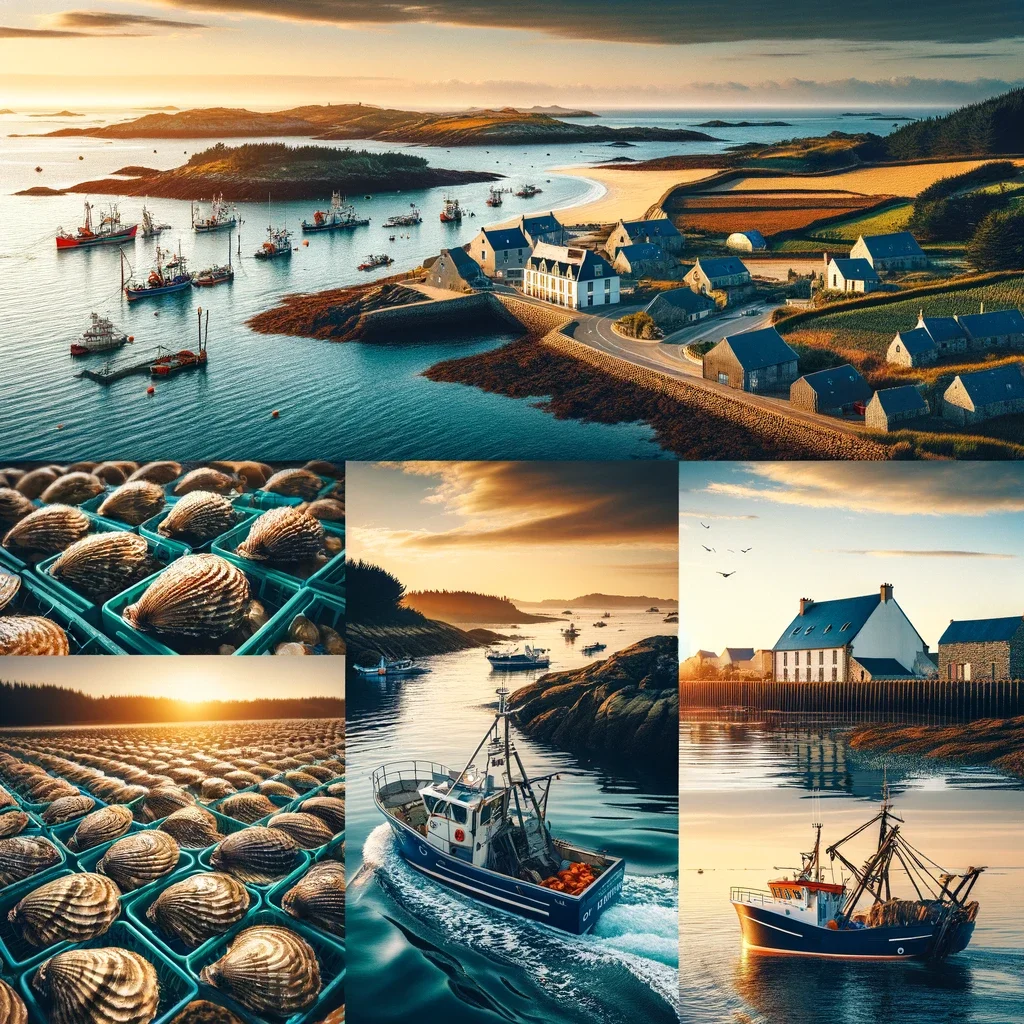
Coastal image from the 2024 concept presentation; no specific farm or supplier is identified.
First, an Important Distinction About Waste
My original thought involved oysters that producers might discard.
But the word discarded covers several very different situations.
An oyster might be perfectly safe to eat but unsuitable for a particular commercial category because of its size, shape, or appearance.
A batch might contain food-grade surplus that the producer has no convenient market for.
Those are potential ingredients for further processing, provided the producer can demonstrate that they meet all applicable food-safety requirements.
An oyster that has died, deteriorated, become contaminated, or is otherwise unfit for human consumption is something entirely different.
It is not an ingredient waiting to become sustainable.
It is unsafe food.
And turning it into sauce does not automatically make it safe.
This distinction is fundamental.
The opportunity I wanted to explore was valorisation of safe, commercially underused seafood, not the recycling of spoiled shellfish into something people would eat.
French shellfish production is subject to strict controls governing harvesting areas, microbiological quality, traceability, and handling.
The European food-safety framework also requires that food unfit for human consumption must not be placed on the market.
For a real producer, this would be the first technical question.
Which materials are available?
Why were they excluded from the original sales channel?
Are they suitable for human consumption?
Can they be processed safely and economically?
And is the volume sufficiently consistent to support a product?
Only after answering those questions would it make sense to begin developing recipes.
That may sound less exciting than starting with a bottle design.
But it is the difference between a food-business opportunity and an attractive presentation.
Three Products from One Idea
The concept eventually became a proposed line of three products.
Oyster sauce.
Fish sauce.
And oyster-based kimchi.
They would not use identical manufacturing methods.
But they shared a commercial direction.
Take locally sourced seafood ingredients, develop distinctive condiments, and connect regional French production with broader culinary influences.
1. Breton Oyster Sauce
This was the original idea.
A savoury sauce using suitable oysters or oyster-derived ingredients from the local production chain.
The goal wasn't necessarily to reproduce a familiar Asian supermarket sauce exactly.
It was to create a recognisable product with a regional identity.
French Atlantic oysters have their own culinary associations.
There might be an opportunity to carry some of that identity into a condiment intended for cooking rather than raw consumption.
The possible applications were obvious.
Vegetable dishes.
Stir-fries.
Meat marinades.
Noodles.
Rice.
Sauces.
Restaurant kitchens.
The interesting commercial question was whether a French oyster sauce could offer something distinctive enough to justify its place beside established imported products.
Local sourcing alone would not be enough.
It would need to taste good.
It would need a consistent flavour profile.
It would need an acceptable shelf life.
And it would need a production cost compatible with what customers were willing to pay.
But as an initial product hypothesis, I liked it.
2. Atlantic Fish Sauce
The second idea grew naturally from the first.
France has substantial fishing and seafood-processing activities.
And fish sauce is one of the great examples of how a relatively simple ingredient can be transformed into something extraordinarily complex.
Traditional fish sauces use controlled maturation or fermentation involving fish and salt.
Time and biological processes produce the distinctive savoury character.
I wondered whether selected, safe fish-processing materials from the Atlantic seafood industry could become the basis of a regional version.
Not every fish species would be equally suitable.
Not every by-product could be used.
And a food processor would need carefully controlled sourcing, handling, fermentation, and testing.
Fish sauce also introduces particular food-safety concerns, including histamine formation in certain species.
But the underlying culinary proposition was interesting.
An artisanal French fish sauce.
Perhaps with a flavour profile influenced by local species and production techniques.
Something that chefs could use as a seasoning rather than simply as an imitation of an imported product.
I could imagine it fitting particularly well into contemporary French kitchens that already borrow techniques and ingredients from different culinary traditions.
Again, it was a hypothesis.
I hadn't developed and validated a formulation.
But it seemed worth exploring.
3. Oyster Kimchi
The third concept was more playful.
Kimchi with oysters.
Korean culinary traditions already include preparations involving oysters and other seafood, so the idea was not to claim an entirely new invention.
The opportunity would be in developing a regional interpretation using suitable French ingredients.
It could become a distinctive fermented vegetable product with a seafood component.
A condiment.
A side dish.
Perhaps something for restaurants interested in fermented flavours and contemporary cuisine.
But this was also potentially the most complicated product from a safety and shelf-life perspective.
Fresh seafood and fermentation require particular care.
A commercial recipe would need proper validation, including microbiological controls, storage conditions, and a defensible shelf-life determination.
It was certainly not a matter of adding a few oysters to a jar of cabbage and seeing what happened in the kitchen.
The presentation was about a potential product category.
The actual formulation and safety process remained to be developed.
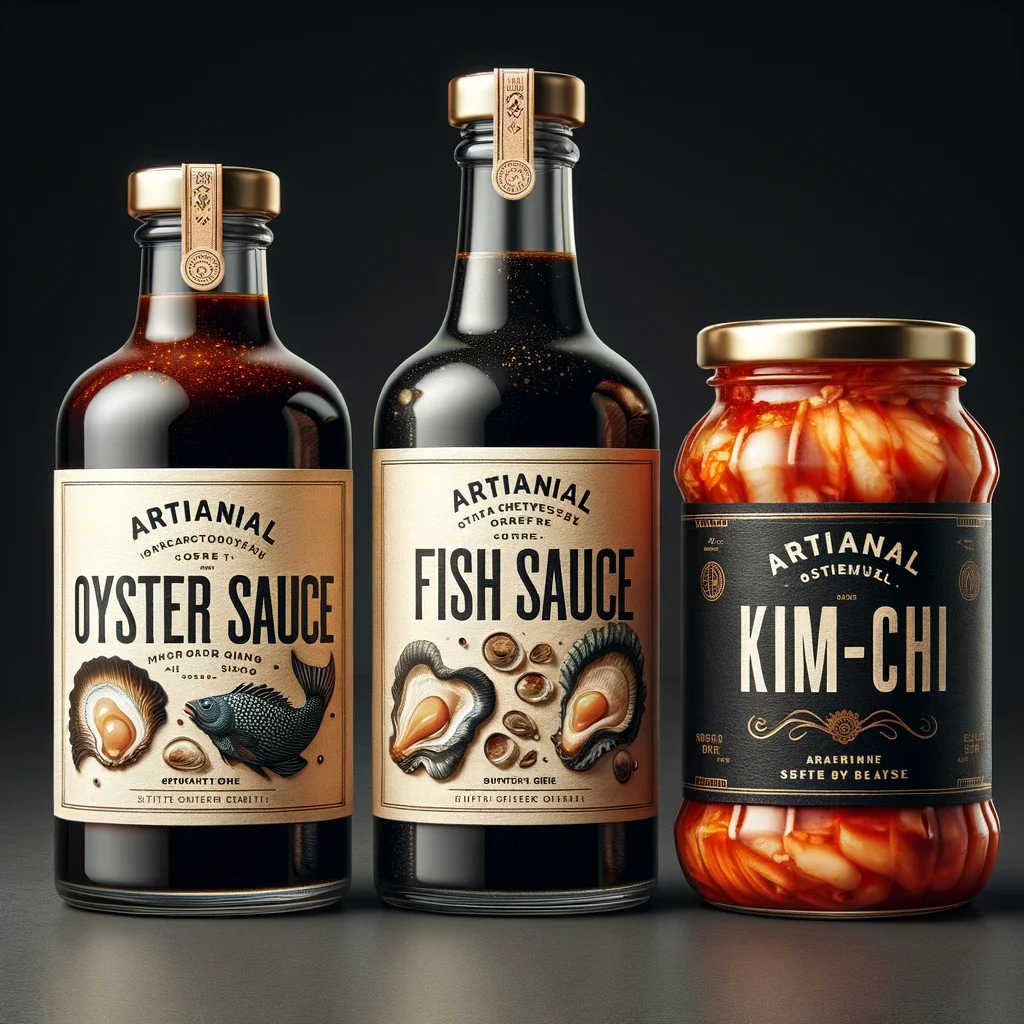
Concept product artwork from slide 4; the products were not manufactured.
Brittany as a Culinary Identity
I gave the presentation two closely related names.
Breton Essence appeared in the opening material.
Breton Crafted became the main product-brand concept.
The geographical idea was Brittany.
This was not because the region had no existing tradition of transforming seafood.
Quite the opposite.
Brittany already has a strong identity built around the sea.
Fishing.
Oyster farming.
Seafood.
Small producers.
Regional foods.
And a culinary culture that many French consumers recognise immediately.
I wondered whether this identity could support a new range of condiments.
Products that were recognisably connected to the Atlantic coast, but not limited to familiar traditional preparations.
The ambition was to combine two ideas that can sometimes appear contradictory.
Regional authenticity.
And international culinary inspiration.
I don't see a contradiction.
French chefs have been borrowing techniques, adapting ingredients, and developing new products for centuries.
The interesting thing is not whether a sauce belongs to one supposedly pure tradition.
It's whether the combination produces something distinctive and genuinely good.
A Breton oyster sauce wouldn't become French simply because the label contained a picture of the coast.
Its regional identity would need to come from the ingredients, the producer, the production process, and the actual flavour.
That would have been part of the product-development work.
The presentation established the direction.
It didn't prove the identity through a finished product.
The Wine Barrel Idea
One detail in the concept still appeals to me.
I included the possibility of using local wine barrels in the production or ageing of selected sauces.
France has an enormous amount of accumulated knowledge about fermentation, maturation, wood, and flavour development.
And I wondered whether some of that expertise could be transferred to savoury condiments.
For example, a carefully developed fish sauce might acquire an interesting character through contact with suitable wood under controlled conditions.
Or an oyster-based condiment might be designed around a specific flavour profile associated with regional craftsmanship.
This was one of the more speculative parts of the proposal.
A wine barrel is not automatically a suitable vessel for seafood fermentation.
Its previous use, cleaning, materials, microbial condition, and compatibility with the process would all need evaluation.
The flavour contribution would also need testing.
But the idea was interesting as a possible signature of the brand.
Not just making an Asian-inspired sauce in France.
Trying to create a genuinely local interpretation using available production knowledge.
Whether it would work is something that could only be answered through trials.
Which, in this particular story, never happened.
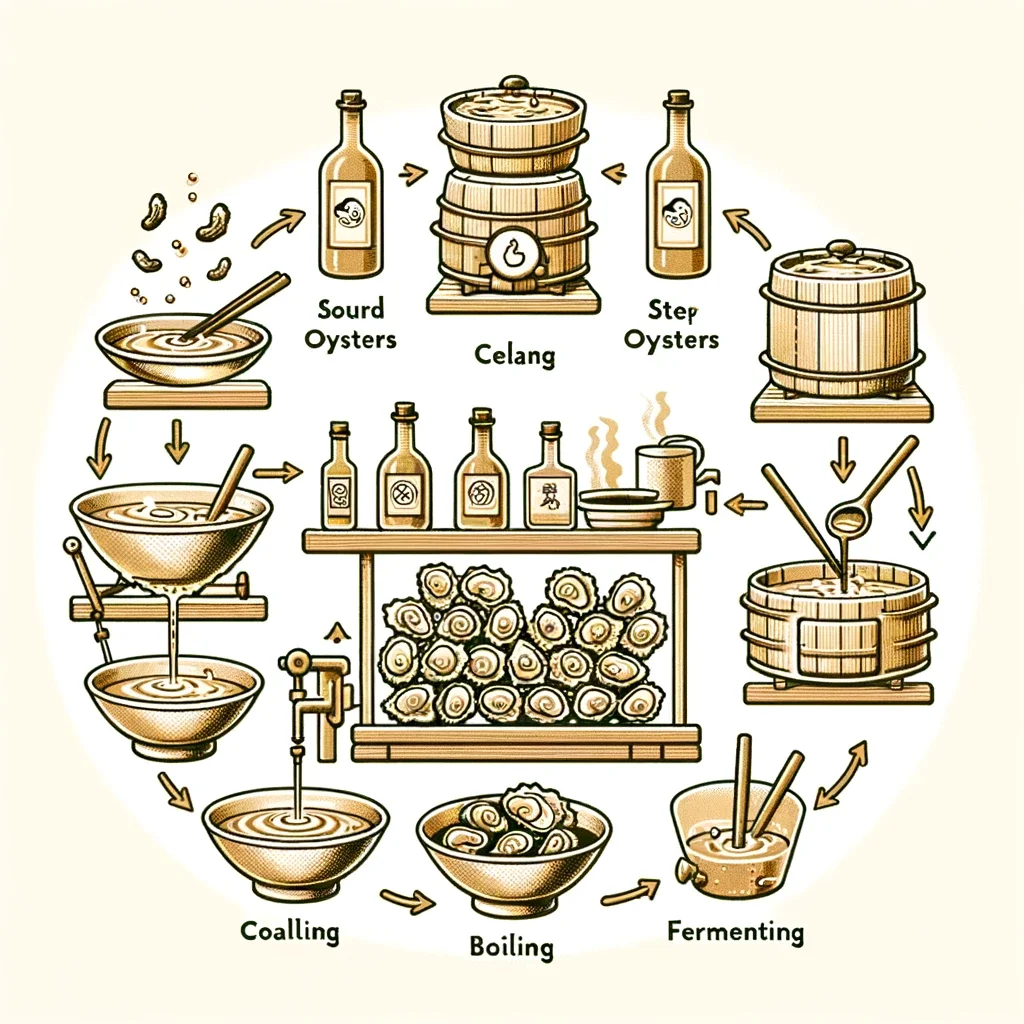
Concept artwork from slide 7; not a tested process, recipe or food-safety procedure.
The Missing Link Wasn't the Recipe
Once I had the product direction, I began thinking about the business.
The obvious potential partners were oyster farms and seafood producers.
They would understand their raw materials.
They would know which products or processing streams might be suitable.
They would know the practical constraints of harvesting, storage, and logistics.
A food technologist or experienced processing partner would be needed to develop safe, consistent formulations.
And the commercial side would involve several possible markets.
Restaurants were an attractive starting point.
Particularly restaurants already using oyster sauce, fish sauce, or fermented condiments.
Specialist food shops were another possibility.
Direct-to-consumer sales could support a small artisanal brand.
And regional gastronomy shops might provide an additional route if the products developed a sufficiently distinctive identity.
The presentation described the opportunity through these possible channels.
But none had been commercially validated.
I hadn't established a reliable supply chain.
I hadn't negotiated with producers.
I hadn't developed tested recipes.
And I hadn't demonstrated that restaurants would purchase the products at prices supporting viable production.
These were the next steps.
Not completed milestones.
That's an important distinction because a presentation can make a business look much more developed than it really is.
Especially when the slides already contain attractive product images and a confident description of future partnerships.
A product mockup is not a product.
A proposed supplier relationship is not a supply contract.
And a good market story is not evidence of demand.
Still, the structure gave the idea a shape.
It showed which elements would need to come together before the concept could become real.
Concept illustration from slide 8; no supplier relationship or sourcing arrangement is claimed.
From a Thought to a Pitch Deck
I eventually put the concept into a fifteen-slide presentation.
It covered the brand.
The three proposed product categories.
The general market opportunity.
Sourcing and sustainability.
Possible fermentation techniques.
Partnerships with producers.
Distribution channels.
And the rationale for developing a regional artisanal seafood-condiment brand.
The tone was deliberately commercial.
It was designed as an introductory proposal, not a technical feasibility report.
The idea was to have something I could send to oyster farms and potential partners.
A way to begin the conversation.
Not a request for someone to finance a fully developed factory.
Simply a proposition.
Here is a potential use for suitable materials from your industry.
Here are the products that might be developed.
Here are the possible customers.
Could this be interesting enough to investigate together?
I prepared the presentation.
Then I stopped.
Why I Didn't Pursue It
The reason was fairly ordinary.
I began thinking about what it would take to turn the idea into an actual business.
Contacting producers.
Finding someone willing to participate in trials.
Developing formulations.
Testing food safety.
Understanding manufacturing costs.
Designing packaging.
Finding distribution partners.
Negotiating commercial agreements.
Possibly organising investment.
And then doing the much less glamorous work of building a food-production and distribution business.
That is a substantial commitment.
And I couldn't see a sufficiently clear way for me personally to capture enough value from the process to justify the time.
I could send the presentation to producers.
Perhaps someone would find it interesting.
Perhaps it would lead to a conversation.
Perhaps it would eventually become a real project.
But there was also a perfectly plausible outcome in which I spent considerable time helping other people explore a business opportunity without a meaningful commercial return for myself.
And I had other things to do.
So I didn't proceed.
I didn't approach the oyster farms with the deck.
I didn't begin product trials.
I didn't establish the proposed partnerships.
The project remained a presentation.
There is no dramatic explanation.
No failed funding round.
No manufacturing disaster.
No spectacular disagreement with investors.
I simply decided that the possible reward did not justify the amount of work I would personally have to undertake.
Which is a rather important part of entrepreneurship.
Having an idea and deciding to build a business around it are two different decisions.
And sometimes the second answer is no.
What Would Need to Be Proven?
If someone wanted to revisit the idea, I think the first step should be much narrower than the original presentation.
Not three products.
Not a national brand.
Not a complete distribution network.
Start with one producer and one ingredient.
Find out whether there is a reliable stream of food-safe oysters that cannot be sold efficiently through the producer's existing channels.
Understand why those oysters are underused.
Measure the quantity.
Determine the cost of collection and handling.
Then investigate whether a licensed food-processing partner can produce a safe and appealing condiment from them.
Only then would I start examining the commercial economics.
How much edible material is recovered?
What is the cost per kilogram?
How much processing is required?
What shelf life is achievable?
What happens to the waste remaining after production?
How much energy and packaging does the process require?
And will chefs or consumers pay enough for the finished sauce to make the operation worthwhile?
The sustainability claim would need similar discipline.
Turning a by-product into food sounds environmentally attractive.
But the actual benefit depends on what would otherwise have happened to the material, how much additional processing is required, and whether the new product replaces a more resource-intensive alternative.
Upcycled is not a substitute for measuring environmental impact.
It is the beginning of a question.
And for fish sauce, I would add another requirement: a validated process addressing the food-safety risks associated with seafood maturation and fermentation.
The technology would need to be developed by people with the relevant expertise.
Not improvised from a presentation.
A Brand Without a Product Can Still Contain a Useful Question
Looking back at the slides, I can see how quickly the idea expanded.
There was a brand.
A product range.
A sustainability story.
Potential distribution.
Possible partnerships.
And an entire commercial narrative built around French coastal craftsmanship.
In some ways, the presentation moved faster than the underlying evidence.
That's quite normal in early-stage concept development.
Visualising a business can help identify the components it would require.
But the visualisation should never be mistaken for proof that those components are available.
For me, the useful part of Breton Crafted was not the mockup of a bottle.
It was the original observation about potentially underused resources.
France has sophisticated seafood industries.
There are established traditions for making fermented and savoury condiments.
There are restaurants and consumers interested in distinctive ingredients.
Could those elements be connected in a commercially useful way?
Maybe.
The project didn't get far enough to answer that.
But I still think the question is worth asking.
An Idea Someone Else Can Use
I don't have any particular ambition to restart Breton Crafted.
At least not as my own food business.
I have enough projects.
And the amount of work involved in building even a small artisanal food operation should not be underestimated.
But I don't see much value in letting the concept remain permanently buried in an old PowerPoint file.
Perhaps an oyster farmer will read this.
Perhaps a chef.
A seafood processor.
A food technologist.
Or someone already developing local fermented products.
Perhaps they will recognise a practical opportunity that I never investigated.
Or discover that the idea has already been tested and there is a very good reason it isn't being done in quite this way.
That would also be interesting.
An unrealised idea doesn't have to be a secret.
And publishing it doesn't require pretending that it was more than it was.
Breton Crafted was a concept I developed after visiting oyster farms in France.
I imagined an artisanal product line built around suitable local seafood materials, Asian-inspired condiments, and French coastal identity.
I prepared a presentation.
Considered approaching producers.
Then decided not to invest the time in pursuing it.
No products were manufactured.
No partnerships were signed.
And no commercial result was achieved.
But the original question remains.
If a safe, edible ingredient is being overlooked by its existing market, could it become the foundation of a completely different product?
Sometimes the answer is yes.
Sometimes the economics or food-safety requirements make the idea impractical.
And sometimes you don't know until someone takes the trouble to investigate.
In this case, I didn't.
But maybe someone else will.
And if a bottle of genuinely good Breton oyster sauce eventually appears on a shop shelf, I'll be quite happy to buy one.
Especially if it turns out to be excellent with noodles.
Coastal image from slide 15 of the original presentation.