
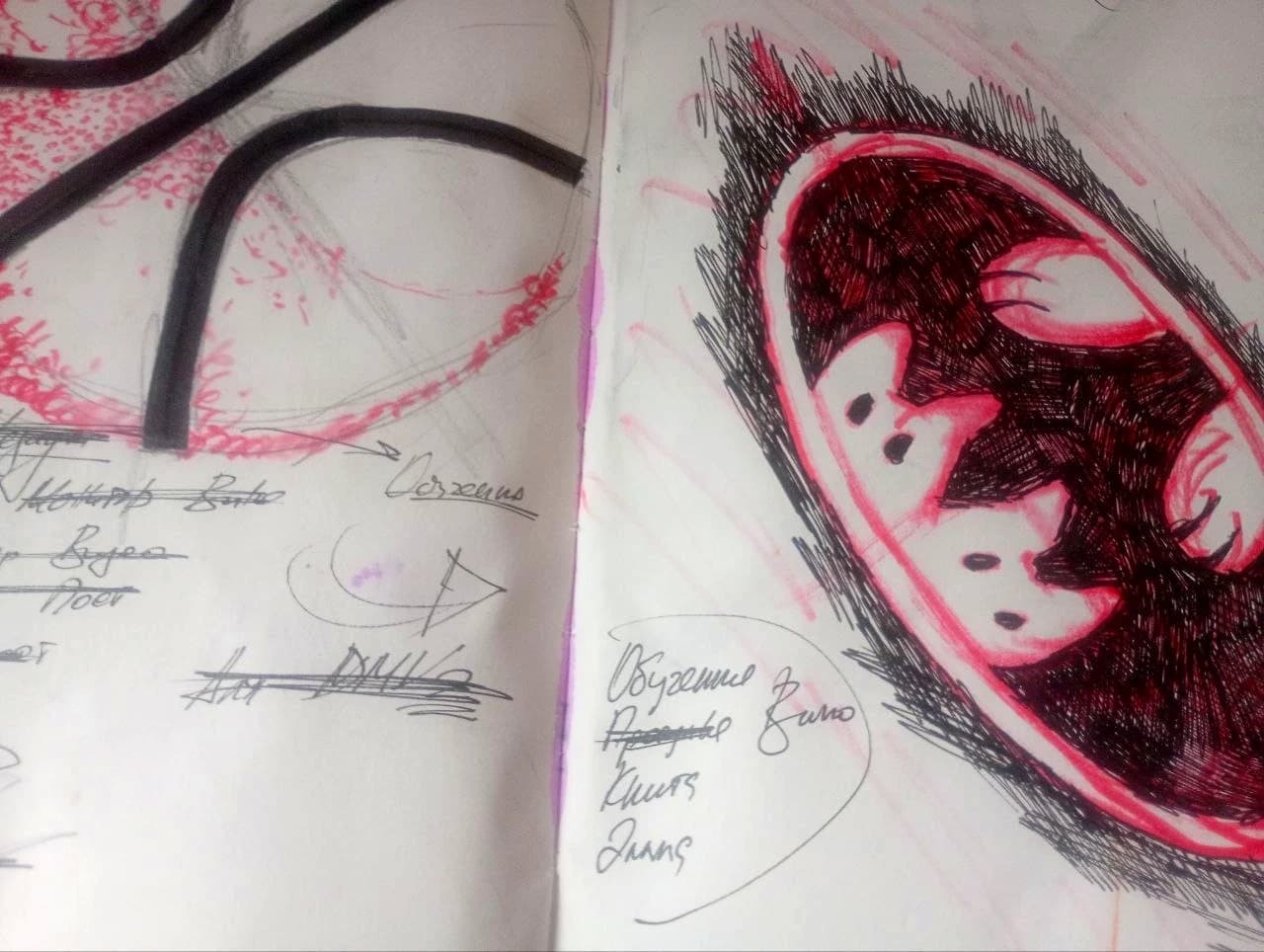
Cover artwork by Anton Biletskyi-Volokh, from an unpublished reusable sketchbook in progress.
A thematic selection of translated notebook fragments.
Immersing yourself in blame is a useful indulgence for doing nothing.
Impaired autonomy is linked to an unstable inner sense of self. To feel yourself, you always need a response from outside.
The fantasy of a partner who takes responsibility for both of you and decides everything is a kind of fear of freedom: a wish to surrender agency in exchange for safety.
Autonomy and isolation are very different things. In autonomy, being alone and being together both feel good. In isolation, togetherness feels dangerous and solitude feels bleak.
Seeing other people as inanimate objects you can manipulate without engaging with their agency is a defensive reaction. A living being has a will of its own and can be unpredictable.
Powerlessness is not failure or defeat. It means recognising the limits of your abilities and letting go of the idea that you are all-powerful. If a stone is too heavy to lift, no amount of straining, anger or sudden heaving will make it any lighter.
Accepting the objective limits of your abilities often gives you more freedom in the long run than constantly fighting those limits and trying to exceed your capabilities at any cost, come what may.
Difficulty adapting socially and a lack of independence as a way of taking revenge on your parents.
Fuck-ups are a way of expressing aggression when direct aggression and refusal are forbidden.
Rescuing someone who has not asked to be rescued does harm and shows that you do not believe in them.
Being permanently short of resources and a poor little thing is a particular way of saying 'no' to those close to you when your personal boundaries are weak.
Being an adult does not mean being boring and lifeless, as some people frighten themselves into thinking. An adult is autonomous and able to manage and cope with life.
While you remain the injured party, you do not have to change or decide anything. After all, what is there to decide or change in such a cruel world?
There is a lot of talk about dysfunctional families, but let me point out that a family where everything is too functional is about object relations rather than relationships between subjects.
Before rushing to rescue others, make sure you do not need rescuing yourself and are not playing the rescuer instead of asking for help.
Feeling inferior gives you an excuse not to take risks or engage with the world.
Since I am not much good, I will not even start.
Until you see your life as the result of your decisions, rather than attributing events to somebody else's will, it remains a rough draft written by other hands.
An author's position requires accepting your own responsibility.
Agency means taking an author's position towards your own life. It requires accepting responsibility for your choices and exercising your will, but opens up the possibility of creating a life that fits who you are.
The child's position is the voice of needs: give me, pick me up, put me down, food, poo, sometimes all at once.
The adult's position is the voice of agency. Not 'What do I want?' but 'Who am I?'
If guilt can be compensated for, it is responsibility. If it cannot be compensated for because time has passed or for other objective reasons, exhausting guilt is a combination of self-directed aggression, masturbatory activity and a sense of being all-powerful.