
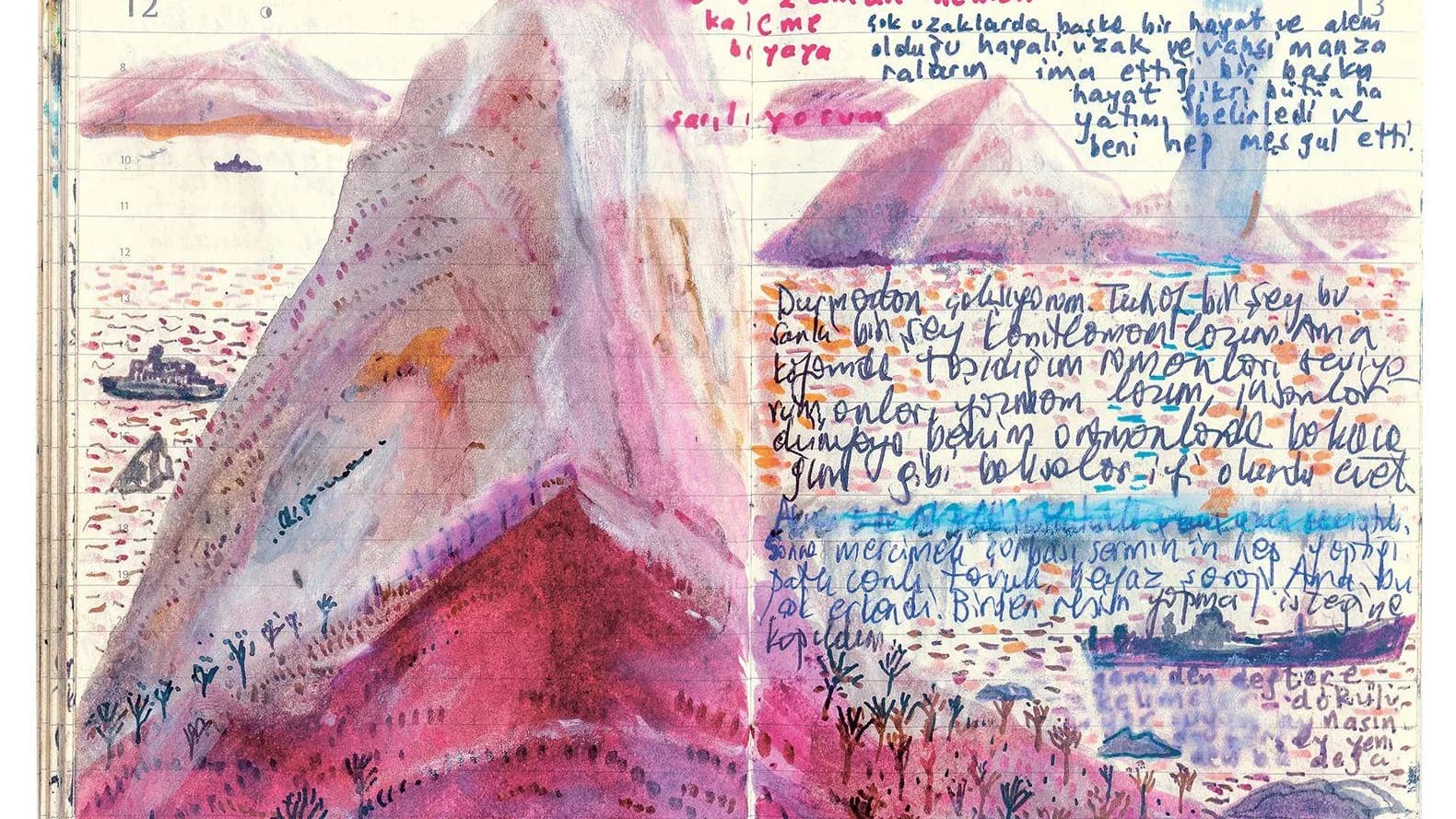
Cover artwork by Anton Biletskyi-Volokh, from an unpublished reusable sketchbook in progress. Other work from my sketchbook practice.
A thematic selection of translated notebook fragments.
Life has no rough draft. The idea that something will happen — a relationship, money, successful success — and then you'll really start living is self-deception. You're already living, and this life is definitely the only one.
A crisis is a golden opportunity to reassess your values and throw out everything you don't need.
The best way to leave: legs.
‘What should I orient myself in?’
‘Time, space and your own identity.’
Staying little, refusing to grow psychologically, is like trying to cheat time. While I'm little, I'm cheating death.
But in cheating death, I'm refusing life.
Sometimes, while bargaining with death and endlessly running through its possible scenarios, you can get so lost in fantasy that you don't live even while you're alive.
Refusing life out of fear of death.
In the physical world, everything begun will come to an end.
So moving from thinking and planning to action is a small step towards death.
But refusing to begin what you've planned out of fear of death deprives you of life.
You can't overcome every hang-up at once, but you can learn to ask yourself from time to time: ‘What am I trying to sort out right now? What am I getting worked up about?’
Once that question becomes a habit, the hang-ups become easier to notice, and over time their influence on your life can weaken.
Coercive motivation works for a while. Then sabotage kicks in.
Good news for anyone who finds life rather sour: it isn't exactly forever.
Good news for anyone who doesn't: life is astonishing, and the fact that it isn't forever gives everything a particular value.
The idea that drama and suffering make life unique is very harmful. Agency makes life unique, not all that flailing about.
Strangely enough, an absorbing, free and individual life often takes less effort than a hard, dreary, dragging one that conforms to some norm.
We don't know whether there's life after death. But there is life before death, and you can live it by making your own choices rather than serving the old decisions of people who have long since become shadows.
A purely utilitarian attitude makes life much poorer.
Getting out of a familiar script of suffering confronts you with a question: what am I going to fill my life with if not this?
If you dislike someone who has little to do with you, if they infuriate you, you judge them, discuss them, get all worked up and so on, then most likely you don't like your own life very much. Instead of admitting it, you get worked up.
Sometimes fear of death makes people give up on having an interesting life. I'll live a mediocre one, and then I won't mind dying so much.
Self-destruction is interesting as an artistic plot, but monotonous as a life script. Literature and cinema simply cut out all the repetition.
Bargaining with the past over how it could have been different is an extremely bad deal.
Psychology Notebook is a translated personal archive of observations, study and lecture notes, paraphrases, quotations and remembered ideas. A fragment's presence here does not establish exclusive authorship or scientific consensus. These are notebook fragments, not clinical guidance.