
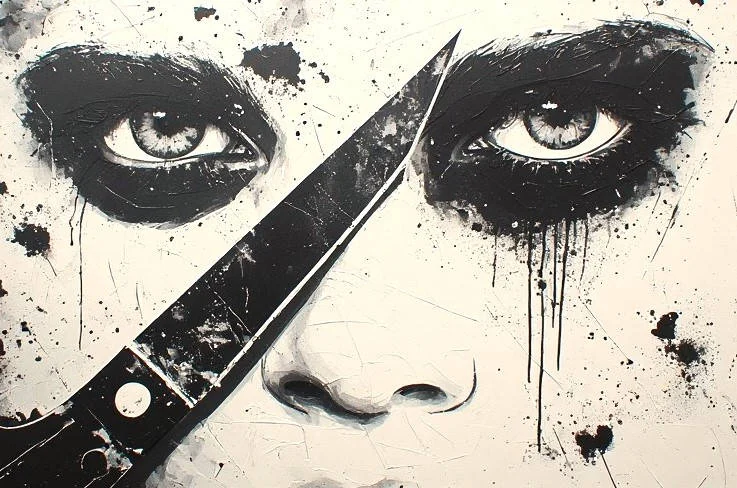
Cover image supplied from the owner-authorized Psychology Notebook reserve.
Emma Stone's Cruella, the psychology of revenge, and the difference between becoming yourself and becoming your enemy's worst nightmare.
Contains spoilers for Cruella (2021).
There is a rather expensive way of proving that you no longer care what powerful people think about you.
Become spectacularly successful.
Dress better than they do.
Steal their audience.
Destroy their reputation.
Make sure every newspaper mentions your name.
And spend the entire process carefully monitoring whether they have noticed.
Congratulations.
You are now completely independent.
Apart from the small detail that your entire existence has become a response to someone you supposedly no longer care about.
Craig Gillespie's Cruella, starring Emma Stone, offers one of the most stylish versions of this psychological contradiction.
Estella is talented, ambitious, difficult, inventive, and frequently underestimated.
She wants to become a fashion designer.
But the world she enters is controlled by the Baroness, an established creative authority who has made a career out of humiliating people and treating their talent as her property.
Estella initially seeks recognition.
Then discovers the Baroness's connection to the death of the woman who raised her.
And the desire to become a great designer gradually merges with a much more urgent project.
Revenge.
She creates Cruella.
A spectacular new identity.
Fearless.
Provocative.
Impossible to ignore.
Everything Estella was apparently not allowed to be.
The transformation is exhilarating.
But it raises a question the film's extraordinary costumes sometimes make easy to overlook.
If my new identity exists to defeat someone who once made me feel small, how much of that identity still belongs to them?
Perhaps the Baroness no longer gets to tell Estella what to wear.
But she may still be deciding why Estella gets dressed.
The Girl Who Was Always Too Much
Estella is introduced as a child who does not fit comfortably into the expectations surrounding her.
She is inventive.
Restless.
Combative.
Unusually willing to challenge authority.
Her distinctive black-and-white hair makes her visually impossible to overlook, even before she develops the theatrical identity for which she will become famous.
Her mother, Catherine, tries to guide her.
To help her navigate social expectations.
To prevent her from making every conflict worse.
There is an interesting tension here.
Children need boundaries.
Learning to cooperate with others is not necessarily a form of oppression.
But a child whose temperament repeatedly clashes with an environment can begin receiving a particular message.
There is something wrong with how you naturally respond to the world.
You are too loud.
Too difficult.
Too ambitious.
Too emotional.
Too much.
Estella learns that certain parts of herself create trouble.
And she learns to manage them.
The film introduces Cruella as a name associated with the more unruly side of her personality.
But it would be too simple to conclude that Estella is a false identity and Cruella is the authentic self hidden underneath.
Both identities develop in response to relationships and circumstances.
Estella's restraint is not necessarily fake.
Her affection for Catherine is real.
Her concern for her friends is real.
Her creative ambitions exist long before she begins planning revenge.
And her capacity to become cruel does not automatically establish that cruelty represents her deepest nature.
The problem is not discovering which of two personalities is the true one.
It is understanding how a person might become trapped between the expectation to remain acceptable and the desire never to be made small again.
A Childhood With a Terrible Explanation
Estella's childhood is marked by the death of Catherine.
At a lavish gathering, Catherine falls from a cliff after being attacked by the Baroness's Dalmatians.
As a child, Estella believes her own disobedience helped cause the catastrophe.
She carries guilt alongside grief.
This is important because the explanation a person gives to a painful event can become part of their identity.
Something terrible happened.
Why?
What did I do?
What should I have done differently?
If I had behaved better, perhaps the outcome would have changed.
Such questions can become especially powerful when a child encounters circumstances they cannot fully understand or control.
Children may interpret events in self-blaming ways, particularly when they lack information about what actually happened.
But the film's construction is not a clinical case study.
It uses childhood guilt as part of a fictional origin story.
Later, Estella discovers that the Baroness was responsible for Catherine's death.
The revelation changes the moral structure of the past.
The guilty child becomes the daughter of a murdered caregiver.
Someone else is responsible.
The correction matters.
Estella has been living with an explanation that assigned her a burden she did not deserve.
But the new knowledge introduces another danger.
Instead of reorganizing her identity around guilt, she begins reorganizing it around revenge.
The question changes.
It is no longer simply:
How could I have prevented this?
It becomes:
How can I make the person responsible suffer?
That change may bring relief from self-blame.
It may also create a new center around which the rest of her life begins to revolve.
When Recognition Feels Like Oxygen
Before the revenge plot fully develops, Estella wants something very ordinary.
She wants her talent to be recognized.
She works at Liberty, the London department store.
Her abilities are wasted on tasks that offer little opportunity for creativity.
She has ideas.
She notices what others overlook.
She wants to design rather than merely comply.
Then she transforms a window display.
It is disruptive.
Unauthorized.
And, apparently, impressive enough to attract the attention of the Baroness.
Suddenly, the person who was supposed to follow instructions is noticed for her originality.
This is an important moment because Estella's creative identity exists before Cruella's war with the fashion establishment.
She genuinely loves designing.
Her imagination does not begin as revenge.
She wants to make things.
To transform materials.
To create something visually extraordinary.
That desire is independent of the Baroness.
But professional recognition introduces a complication.
Estella's talent becomes visible through the approval of someone who possesses enormous social and economic power.
The Baroness can open doors.
Offer employment.
Provide access to the industry.
Declare a design valuable.
Or dismiss it.
And because Estella has spent much of her life feeling unrecognized, that approval carries unusual emotional weight.
It is not simply professional feedback.
It begins to look like confirmation that she finally deserves a place in the world.
Which makes the Baroness a particularly dangerous person from whom to seek validation.
The Baroness Is an Excellent Judge of Talent and a Terrible Human Being
The Baroness is not incompetent.
That matters.
A much simpler film would give Estella a foolish antagonist whose authority exists only because everyone around her is inexplicably gullible.
But the Baroness possesses genuine experience, taste, and professional influence.
She can recognize quality.
She understands the fashion world.
And she knows how to dominate it.
She also treats other people as disposable.
Her employees exist to support her brilliance.
Their mistakes invite humiliation.
Their achievements can be absorbed into her reputation.
She is a mentor who seems to regard the possibility of a genuinely independent successor as an administrative error.
Estella initially admires her.
Then begins recognizing how much that admiration costs.
The Baroness does not merely expect excellent work.
She demands a relationship in which excellence ultimately confirms her superiority.
This creates a recognizable problem of power.
A person who controls access to opportunities can make their approval feel indispensable.
An employee may begin measuring personal worth through the superior's reactions.
A compliment produces relief.
Criticism produces shame.
Recognition becomes something to pursue.
And the person gradually stops asking whether the work itself remains meaningful.
The more the relationship becomes organized around approval, the more the authority figure acquires control over the person's emotional life.
Estella eventually recognizes the exploitation.
She stops trying to become the Baroness's favorite subordinate.
But then she adopts a new objective.
Become the person the Baroness cannot ignore.
The emotional direction reverses.
The dependence may not have disappeared.
The Difference Between Approval and Revenge
There are two apparently opposite ways to organize a life around another person's judgment.
The first is submission.
I want you to approve of me.
I want you to recognize my abilities.
I want to become someone you consider worthy.
The second is defiance.
I want you to regret underestimating me.
I want you to recognize that I am superior.
I want to become someone whose success humiliates you.
These motives feel dramatically different.
The first may be accompanied by anxiety, politeness, and self-restraint.
The second may produce energy, courage, and spectacular self-expression.
But structurally, they can share something important.
The other person's evaluation remains central.
My worth is still being established through your response.
I have changed what I want you to say.
I have not necessarily changed why your opinion matters so much.
This is where psychological research on contingencies of self-worth becomes useful.
People differ in the domains on which they stake their sense of personal worth.
Appearance.
Competition.
Approval.
Achievement.
Moral virtue.
Relationships.
When self-worth depends heavily on success in a particular domain, that domain can become both a powerful source of motivation and a source of vulnerability.
Estella's creative achievements are real.
But Cruella's increasingly public campaign makes recognition, competition, and the humiliation of a rival central to her sense of triumph.
The psychological danger is not ambition itself.
It is the possibility that the person's value becomes conditional on winning.
And winning requires somebody to lose.
Preferably somebody who can see the result.
The Dress Is Beautiful. The Audience Is the Problem.
Cruella's performances are extraordinary.
She arrives at a Baroness event concealed beneath a white cloak.
Then the cloak burns away, revealing a dramatic red dress.
She appears in increasingly outrageous designs.
Occupies spaces associated with the Baroness's authority.
Interrupts the carefully managed exclusivity of high fashion.
And eventually transforms discarded garments into a spectacular outfit that emerges from a garbage truck.
The symbolism is not particularly subtle.
Fortunately, subtlety is not why anyone attends a Cruella fashion show.
The costumes are provocations.
They turn clothing into a public argument.
Look at me.
Look at what I can create.
Look at what you failed to recognize.
Look at what your authority cannot contain.
And the clothes themselves are impressive enough to justify the attention.
The visual language is not merely a disguise for psychological distress.
Cruella possesses genuine creative power.
Her designs rework the conventions of the fashion world around her.
They transform materials and expectations.
They make rebellion visible.
But there is an important distinction between artistic expression and artistic retaliation.
One begins with something the artist wants to create.
The other begins with the effect the artist wants to produce in an adversary.
The two can coexist.
And in Cruella's case, they do.
Her work is inventive.
It is also carefully directed toward one particular spectator.
The Baroness.
The woman whose authority Cruella claims to reject remains the person whose reaction gives each public performance its most immediate emotional significance.
The costumes may have escaped the Baroness's aesthetic rules.
But the fashion shows remain organized around her attention.
Cruella has invented a new visual language, yet much of what she says with it is still addressed to the person who once humiliated her.
Revenge Is an Excellent Creative Brief
There is something intoxicating about having an enemy.
An enemy simplifies motivation.
You know what you want.
You know what success looks like.
You know what must be defeated.
Decisions become easier because every possibility can be evaluated according to one question.
Will this hurt the person who hurt me?
For a creative individual, that clarity can be incredibly productive.
The vague ambition to become a designer acquires an immediate structure.
There are events to interrupt.
Collections to surpass.
Public relations battles to win.
Spectacular entrances to stage.
Cruella does not have to wonder what her next project should be.
The Baroness's next event will provide the answer.
And that is precisely the problem.
The enemy has become a source of direction.
Instead of simply restricting her, the Baroness now supplies the structure of her creative life.
This makes revenge a surprisingly effective form of motivation.
And a potentially restrictive one.
In experimental psychology, research by Carlsmith, Wilson, and Gilbert found that people may expect retaliation to bring emotional satisfaction while, under some circumstances, it instead encourages continued rumination about the offender.
The result should not be generalized into a claim that every act of retaliation has the same psychological outcome.
But it raises a useful possibility.
Revenge can keep the person who harmed us unusually present in our thoughts.
We imagine the confrontation.
Anticipate the victory.
Rehearse what we will say.
Monitor whether the other person is suffering enough.
The relationship has ended or changed.
But the psychological occupation continues.
Estella is no longer trying to please the Baroness.
She is investing enormous amounts of attention in making the Baroness miserable.
A different feeling.
A familiar center of gravity.
The Costume That Protects Against Humiliation
Cruella's appearance is not merely glamorous.
It can also be understood as a form of protection.
Estella has experienced rejection, guilt, poverty, professional exploitation, and grief.
She knows what it means to be powerless.
Cruella seems designed to make that experience impossible to repeat.
The hair is unmistakable.
The clothes are confrontational.
The entrances are theatrical.
The attitude is imperious.
Nobody gets to overlook her.
Nobody gets to dismiss her quietly.
If someone insults Cruella, she can transform the insult into another performance.
If somebody excludes her, she can arrive through a more spectacular entrance.
If the establishment refuses to give her a stage, she can create one in the street.
The character is difficult to humiliate because she has made humiliation itself part of the material from which she constructs her identity.
You thought I was ridiculous?
Excellent.
Watch me become spectacular.
There is genuine psychological ingenuity in this.
Shame often involves the painful feeling that the self is inadequate or exposed to negative judgment.
One response is withdrawal.
Another is to attack the source of humiliation.
A third is to transform the supposedly shameful feature into an emblem of power.
That last response can be liberating.
The person stops hiding.
They reclaim something that others used to diminish them.
But the protection may become rigid.
If I must always appear untouchable, I cannot safely admit that something hurts.
If I must always be magnificent, ordinary uncertainty becomes humiliating.
If I must always dominate the room, I cannot comfortably become a person who needs support.
Cruella has escaped the identity of the girl who was too much.
But she may be entering an equally demanding identity.
The woman who must never be less than extraordinary.
The Problem With Discovering Your True Self
The film repeatedly invites us to interpret Cruella as the expression of Estella's authentic nature.
The girl was always rebellious.
The talent was always there.
The boldness was merely waiting to emerge.
Perhaps society forced her to suppress her most interesting qualities.
Perhaps Cruella is the person she was always supposed to become.
There is a satisfying emotional structure to this story.
The protagonist stops pretending.
The mask comes off.
The true self appears.
Except that, in this particular case, the mask is several kilograms of elaborate costume design.
And it is very much being put on.
Cruella is carefully created.
Named.
Dressed.
Performed.
Advertised.
Reinforced through public attention.
The character does not simply emerge from beneath a false surface.
She is assembled through decisions.
This does not make her inauthentic.
Human identity is not necessarily less genuine because it involves deliberate construction.
People choose professions, styles, values, relationships, and ways of presenting themselves.
A person can consciously develop a new identity and experience that identity as deeply meaningful.
But creation is different from discovery.
And the difference matters.
If we imagine that Cruella represents Estella's one true nature, we may stop examining the choices involved in becoming her.
Aggression becomes authenticity.
Domination becomes confidence.
Cruelty becomes the natural expression of previously suppressed individuality.
That is a dangerous shortcut.
The fact that someone was prevented from expressing themselves does not mean that every form of expression they later adopt is equally liberating.
The right to be different includes the responsibility to decide what kind of difference we want to become.
A Biological Mother Is Not a Moral Destiny
Then the film introduces an especially uncomfortable revelation.
The Baroness is Estella's biological mother.
Catherine, the woman who raised and loved her, was not.
The discovery offers a tempting explanation of Estella's personality.
Perhaps she inherited the Baroness's brilliance.
Her ambition.
Her appetite for competition.
Her apparent capacity for cruelty.
Perhaps the resemblance is destiny.
The film plays with this possibility.
But we should resist treating family origin as a complete explanation of identity.
A biological relationship does not determine moral character.
Nor does discovering one's origins establish a fixed future.
Estella has been shaped by Catherine's care.
By her friendships.
By years of precarious survival.
By creative ambition.
By the social world in which she has struggled to find a place.
And by her own decisions.
The Baroness's biology does not erase any of these influences.
More importantly, Catherine's significance does not disappear because she was not Estella's biological mother.
The woman who loved, raised, and protected her remains central to her life.
The revelation creates a particularly sharp distinction between origin and obligation.
We may inherit certain characteristics.
We may recognize disturbing similarities with family members.
We may discover histories that change how we understand ourselves.
But resemblance does not require repetition.
And a person's origins do not provide an exemption from the responsibility to choose how they behave.
If Estella becomes cruel because she believes cruelty is the truth of her inheritance, then the Baroness has gained another kind of power.
She has become not merely the person Estella wants to defeat.
But the person whose character determines what Estella believes she must become.
The Friends Who Remember Estella
The most revealing test of Cruella's transformation may not be her conflict with the Baroness.
It may be her treatment of Jasper and Horace.
They are the people who have known her through poverty, grief, petty crime, and the gradual development of her ambitions.
They are not simply employees.
They are her improvised family.
They recognize her talent before the fashion establishment does.
Jasper helps create the opportunity for Estella to pursue design.
And together they have built a life.
It may not be glamorous.
But it is a life containing loyalty, affection, and shared history.
As Cruella becomes increasingly consumed by revenge, that relationship changes.
She becomes demanding.
Controlling.
Less interested in the wishes of the people helping her.
She begins reproducing some of the behavior she despised in the Baroness.
This is one of the film's most important contradictions.
Cruella wants freedom from a tyrannical authority.
Yet her pursuit of that freedom can make her tyrannical toward people who care about her.
The enemy's methods have become available as tools.
And because the goal is supposedly justified, the tools begin to seem acceptable.
But Jasper and Horace are not obstacles to her self-realization.
Their responses reveal something important about the kind of person she is becoming.
It is easy to look independent while humiliating a powerful enemy.
It is harder to remain capable of reciprocity with people whose loyalty we have begun taking for granted.
The relationship with the Baroness tests Cruella's ambition.
Her relationship with her friends tests whether ambition still leaves room for other people.
And that may tell us more about the quality of her freedom.
Independence Doesn't Have to Mean Isolation
There is an important psychological distinction here.
Autonomy is not the same thing as refusing help.
It is not identical to dominance.
Nor does it require treating relationships as limitations.
Self-determination theory distinguishes autonomy, competence, and relatedness as important psychological needs.
Autonomy concerns experiencing one's actions as meaningfully self-endorsed.
Competence concerns developing effective capacities.
Relatedness concerns connection with others.
These needs are not mutually exclusive.
A person can act autonomously while cooperating.
Accept guidance without surrendering judgment.
Participate in a community without losing a sense of agency.
And pursue ambitious goals without treating every relationship as a competition.
This matters for Estella.
Her creative autonomy is genuine.
She has ideas that exceed the Baroness's conventions.
She is capable of extraordinary professional work.
But when she begins treating Jasper and Horace merely as instruments of her campaign, the relationships that helped make her agency possible become expendable.
She is winning the battle against external control.
Yet allowing the logic of domination to govern more of her life.
The film partly recognizes this.
Her reconciliation with her friends is not a decorative subplot.
It creates the possibility that Cruella might retain ambition without requiring everyone around her to become an obedient supporting cast.
The question is whether her new identity can include other people as people.
Not merely admirers.
Assistants.
Witnesses.
Or useful accomplices.
Is Rebellion Still Rebellion If the Enemy Chooses the Target?
Now we reach the central paradox.
Cruella rejects the Baroness's authority.
She refuses to remain a subordinate.
She establishes her own public image.
She develops an aesthetic that challenges the existing fashion establishment.
And she makes herself impossible to ignore.
These are real acts of resistance.
But almost every spectacular gesture remains tied to the Baroness.
The timing.
The audience.
The location.
The intended humiliation.
Even the material of certain costumes.
Cruella is not simply designing.
She is responding.
And the more magnificent the response becomes, the more we can forget that the Baroness still determines what requires a response.
There is a difference between acting against somebody and acting from one's own values.
Sometimes the two coincide.
Opposing exploitation can be an expression of autonomy.
Resisting an abusive authority may be necessary.
Refusing humiliation can be an important act of self-respect.
But opposition becomes restrictive when the enemy's preferences determine all our choices.
If they value elegance, I must become outrageous.
If they demand obedience, I must refuse every instruction.
If they seek prestige, I must seize the spotlight.
If they insist that I am insignificant, I must become famous.
The new identity is constructed through negation.
I am everything you said I could not be.
That may be a necessary first step.
But it cannot automatically provide a complete answer to the question of who I want to become.
If my choices remain determined by what would most disturb my enemy, my enemy continues to possess a remarkable influence over my life.
I have escaped their rules.
But not necessarily their centrality.
The Zen Question: Can You Become Attached to Being Untouchable?
A comparison with Zen Buddhism makes this contradiction especially interesting.
There is no need to claim that Cruella was designed as a Buddhist parable.
Its cultural language belongs much more directly to fashion, punk rebellion, cinematic villain origins, melodrama, and contemporary stories of self-invention.
Zen provides a comparative perspective rather than a hidden explanation of the filmmakers' intentions.
Buddhist discussions of attachment often concern the tendency to cling to things, outcomes, and fixed understandings of the self.
A popular misunderstanding imagines that attachment applies only to conventional desires.
Wealth.
Possessions.
Romance.
Prestige.
The wish to appear respectable.
But a person can also become attached to rebellion.
To being unconventional.
To rejecting authority.
To being recognized as someone who cannot be controlled.
The object of attachment has changed.
The rigidity may remain.
Cruella has rejected the obedient identity that once restricted her.
But she risks becoming attached to the opposite identity.
The woman nobody can humiliate.
The woman who always wins.
The woman whose entrance must eclipse everyone else's.
The one who must never again appear weak.
There is nothing inherently wrong with vivid self-expression.
Zen does not require everyone to become quiet, modest, or aesthetically indistinguishable.
The question is whether the person can inhabit a chosen identity without becoming its prisoner.
Can Cruella be bold without needing to defeat someone?
Creative without requiring an audience?
Confident without making vulnerability impossible?
Can she continue designing when there is nobody left to humiliate?
That is the point at which rebellion might become something more than an inverted form of obedience.
The Strange Victory at the Cliff
The final confrontation brings Estella back to the place where Catherine died.
The Baroness is exposed through a carefully constructed trap.
Estella appears before her.
The Baroness believes she can eliminate the threat.
And pushes her over the cliff.
But this time, the attempted murder has witnesses.
And Estella has prepared for the fall.
A concealed parachute allows her to survive.
The Baroness is arrested.
The plan is theatrical, dangerous, and characteristic of the film's preference for elaborate spectacle over ordinary procedure.
But there is a distinction worth noticing.
Cruella does not simply murder the Baroness in retaliation.
She arranges for the Baroness's own conduct to expose her.
The villain destroys her public position through an act that reveals what she is willing to do.
This is not a model of how real victims should seek justice.
The operation would be extraordinarily dangerous outside fiction, and it should not be treated as a practical method of dealing with an abusive person.
But narratively, the choice matters.
The final conflict is not resolved through Cruella directly reproducing the Baroness's original violence.
Instead, the film allows the Baroness to reveal herself before witnesses.
For once, the person who controls appearances cannot control what others have seen.
That is a meaningful reversal.
Yet the victory has a price.
Estella must appear to die.
Legally, the identity of Estella comes to an end.
Cruella inherits the future.
And the symbolism is much less straightforward than it initially appears.
The Funeral of a Person Who Is Still Alive
At the end, Estella is declared dead.
Cruella survives and inherits the property that belonged to her biological mother.
The Baroness's grand house becomes part of Cruella's new world.
Even the architecture of the victory is inherited from the defeated enemy.
This is deliciously appropriate.
And psychologically ambiguous.
On one level, the ending celebrates self-invention.
The constrained identity disappears.
The extraordinary new figure takes her place.
Cruella has seized a name, a fortune, and the ability to shape her own public future.
But there is another interpretation.
What exactly had to die for Cruella to live?
Estella was the person who loved Catherine.
Who wanted to design clothes.
Who built a home with Jasper and Horace.
Who experienced shame, grief, affection, and the ordinary desire to be recognized.
None of those qualities was necessarily the problem.
Some were precisely the things that made her life worth protecting.
The funeral can therefore be read as more than the symbolic death of an imposed identity.
It may also suggest the danger of treating vulnerability as something that must be buried before freedom becomes possible.
The film itself does not resolve this tension completely.
Cruella retains relationships and shows an ability to distinguish herself morally from the Baroness.
But it also presents the disappearance of Estella as a triumphant act of transformation.
Perhaps the victory is genuine.
Perhaps something valuable has been lost.
Perhaps both are true.
The important question is whether Cruella's new life has enough room for the person she used to be.
Or whether the character has become so magnificent that every less spectacular part of the self must remain hidden.
The Mirror Doesn't Stop Being a Mirror When You Smash It
There is something powerful about confronting someone who has humiliated us and refusing to accept their judgment.
It can restore agency.
Challenge an unjust hierarchy.
And make previously unavailable possibilities visible.
But a person's freedom cannot be measured solely by how successfully they defeat an opponent.
Imagine that the Baroness disappears.
No rivalry.
No fashion war.
No audience waiting to see who will humiliate whom.
What does Cruella create next?
Does she still love fashion?
Presumably.
Does she still have ideas?
Certainly.
Can she enjoy using her talents without imagining how the Baroness would react?
That is less clear.
The question exposes a distinction between two kinds of motivation.
One is organized around an independent aspiration.
I want to create something beautiful, original, or exciting.
The other is organized around correcting an injury to self-worth.
I want the person who dismissed me to recognize that they were wrong.
The motives can overlap.
But they lead toward different forms of freedom.
The first can continue even when the opponent has vanished.
The second requires the opponent's imagined gaze.
The person may no longer be present.
But their judgment remains active inside the motivation.
And sometimes that internal audience is much harder to escape than the original authority.
You can leave the workplace.
Reject the relationship.
Win the competition.
Become famous.
And still organize your decisions around the wish to prove someone wrong.
The enemy is no longer controlling your behavior directly.
You have internalized the argument.
And now you keep performing it alone.
The Person You Were Trying to Protect
There is another possibility.
Perhaps Cruella is not only about revenge.
Perhaps the character also protects Estella from experiencing the helplessness associated with her childhood.
The extravagant persona becomes a declaration that she will never again be powerless, ignored, or disposable.
That desire is understandable.
People who have experienced humiliation may become especially determined to avoid it in the future.
Sometimes the determination supports valuable growth.
They establish boundaries.
Develop skills.
Leave harmful environments.
Seek relationships in which they are treated with respect.
But sometimes protection takes a more absolute form.
I will never need anyone.
Never be embarrassed.
Never depend on another person's kindness.
Never allow myself to be seen as weak.
The strategy appears to promise safety.
Yet it can become another restriction.
A person who must never feel vulnerable also has to avoid situations in which vulnerability is part of ordinary human life.
Intimacy.
Learning.
Admitting mistakes.
Asking for help.
Trying something without certainty of success.
Even artistic creativity often requires the possibility of failure.
The persona built to protect the wounded self can gradually prevent the self from accessing experiences that would make protection less necessary.
This is the point where a useful defense may become costly.
The problem is not that Estella invented Cruella.
The problem would be if Cruella became the only person she was allowed to be.
A Different Kind of Creative Freedom
Imagine a less spectacular ending.
Cruella has defeated the Baroness.
The legal battle is over.
The newspapers have moved on.
There is no rival fashion show next week.
No grand entrance to arrange.
No humiliating message to deliver.
One morning, she sits down at a table.
There is fabric.
A sketchbook.
Some unfinished ideas.
Perhaps Jasper and Horace are nearby, making an unreasonable amount of noise.
She begins designing.
Not to prove she is better than the Baroness.
Not to silence a remembered insult.
Not to demonstrate that she has become impossible to control.
Simply because she has something she wants to make.
It would not be a particularly impressive Disney climax.
Nobody would need a parachute.
There might not even be a dramatic musical number.
But psychologically, it could represent a more substantial victory.
She would be creating without needing the enemy to provide the purpose.
Her talent would no longer be entirely enlisted in the battle over recognition.
She could still be daring.
Provocative.
Ambitious.
Unconventional.
But the provocation would not have to be addressed to the same person forever.
And perhaps she could also permit herself to be tired.
Uncertain.
Affectionate.
Occasionally ordinary.
Without interpreting any of these experiences as a betrayal of the identity she had worked so hard to create.
That would not require the disappearance of Cruella.
It would require Cruella to become a possibility rather than an obligation.
Freedom Is More Than Winning the Argument
There is a temptation to interpret stories of self-invention as a simple movement from false identity to true identity.
The person begins constrained.
Encounters adversity.
Rejects the expectations of others.
And finally becomes who they were always meant to be.
Cruella makes this story unusually entertaining.
The visual transformation is extraordinary.
The costumes deserve their own applause.
The protagonist's talent is undeniable.
And the Baroness is such a magnificently unpleasant authority figure that watching her lose is deeply satisfying.
But the film's psychological richness lies in the possibility that the transformation is not entirely liberating.
Estella becomes Cruella partly to escape a world in which others have defined her.
Yet the new identity is also shaped by an intense need to defeat the person who embodied that world.
Her autonomy grows.
So does her investment in rivalry.
Her creativity expands.
So does the risk of treating other people as instruments of her ambitions.
She becomes harder to humiliate.
But perhaps also less able to admit when she is hurt.
These are not mutually exclusive developments.
Human growth is rarely a clean progression from one defective identity to one perfect replacement.
We gain capacities.
Develop defenses.
Discover possibilities.
And sometimes create new limitations while escaping old ones.
There is no need to deny the value of Estella's rebellion.
It matters that she refuses exploitation.
It matters that she claims her creative work.
It matters that she exposes the Baroness's violence.
But it also matters what kind of life becomes possible afterward.
A life devoted to creating?
Or a life devoted to continuing an argument with someone who no longer deserves that much attention?
The question is not whether she should have remained obedient.
She should not have.
It is whether disobedience is enough.
Who Is Designing Whom?
A person can spend years trying to become the opposite of someone who hurt them.
I will never be like my parents.
Never accept what my former employer accepted.
Never allow a partner to treat me that way again.
Never become the kind of person my teachers expected.
These commitments may contain valuable boundaries.
They can help us recognize conduct we do not want to repeat.
But if the rejection becomes our entire identity, the old relationship continues shaping the new life.
The person we oppose remains the reference point.
We define ourselves through distance from them.
And the more important that distance becomes, the harder it may be to discover what we want independently of the opposition.
Perhaps the real question is not whether we have successfully defeated the person who made us feel small.
Perhaps it is whether we can now live without continually measuring ourselves against their judgment.
Can we pursue excellence without needing humiliation to accompany it?
Create something original without requiring somebody else to be diminished?
Establish boundaries without making every relationship a struggle for dominance?
Remain strong without becoming unable to feel?
And allow ourselves to change even when the new direction no longer fits the magnificent identity we constructed to survive an earlier life?
These are less cinematic achievements than emerging from a garbage truck in an extraordinary dress.
But they may be more durable.
Cruella's greatest strength is her imagination.
She can take discarded material and make it astonishing.
She can see possibilities where other people see waste.
She can reinvent the visual rules of the world around her.
The question is whether she can eventually apply that same creativity to her own future.
Not merely replacing the identity that others imposed.
Not merely becoming their worst nightmare.
But discovering what she might want when there is nobody left she needs to impress, punish, or prove wrong.
Rebellion can free us from another person's rules.
But it becomes our own life only when that person no longer gets to determine what our freedom is for.
And perhaps that is the final test for Cruella.
Not whether she can design something the Baroness would hate.
But whether she can still love the thing she creates when the Baroness is no longer there to see it.
Sources
Disney D23: Meet the Characters of Cruella
Anjani and Thoyibi: Revenge and Its Impact to Personality in Cruella
Mawarti and Amalia: Estella’s Formation of Identity in Cruella
Identity Transformation in Cruella Movie: Psychosocial Development Perspective
Carlsmith, Wilson and Gilbert: The Paradoxical Consequences of Revenge
Crocker and Wolfe: Contingencies of Self-Worth
Ryan and Deci: Self-Determination Theory
Stanford Encyclopedia of Philosophy: Japanese Zen Buddhist Philosophy