
Steven Strogatz asks whether mathematics is a science of eternal truths or a human creative tradition. AI is making that distinction rather uncomfortable.
Imagine spending nineteen years trying to solve a mathematical problem.
Nineteen years of thinking, experimenting, making mistakes, finding promising approaches, discovering that they don't work, and starting again.
Then one morning an AI system produces a solution.
Congratulations.
Your problem may finally be solved.
Unfortunately, you weren't the one who solved it.
And the machine doesn't seem particularly excited.
Welcome to mathematics in 2026.
I've been reading Steven Strogatz's essay in The Atlantic, A Mathematician Reads the AI Future, and it's one of the more interesting reflections on what AI is doing to intellectual work.
Not because it predicts the end of mathematics.
Not because it demands that mathematicians immediately stop using AI.
But because it asks a much more difficult question.
What exactly are mathematicians trying to accomplish?
And what happens when the answer depends on whether you consider mathematics a science or an art?
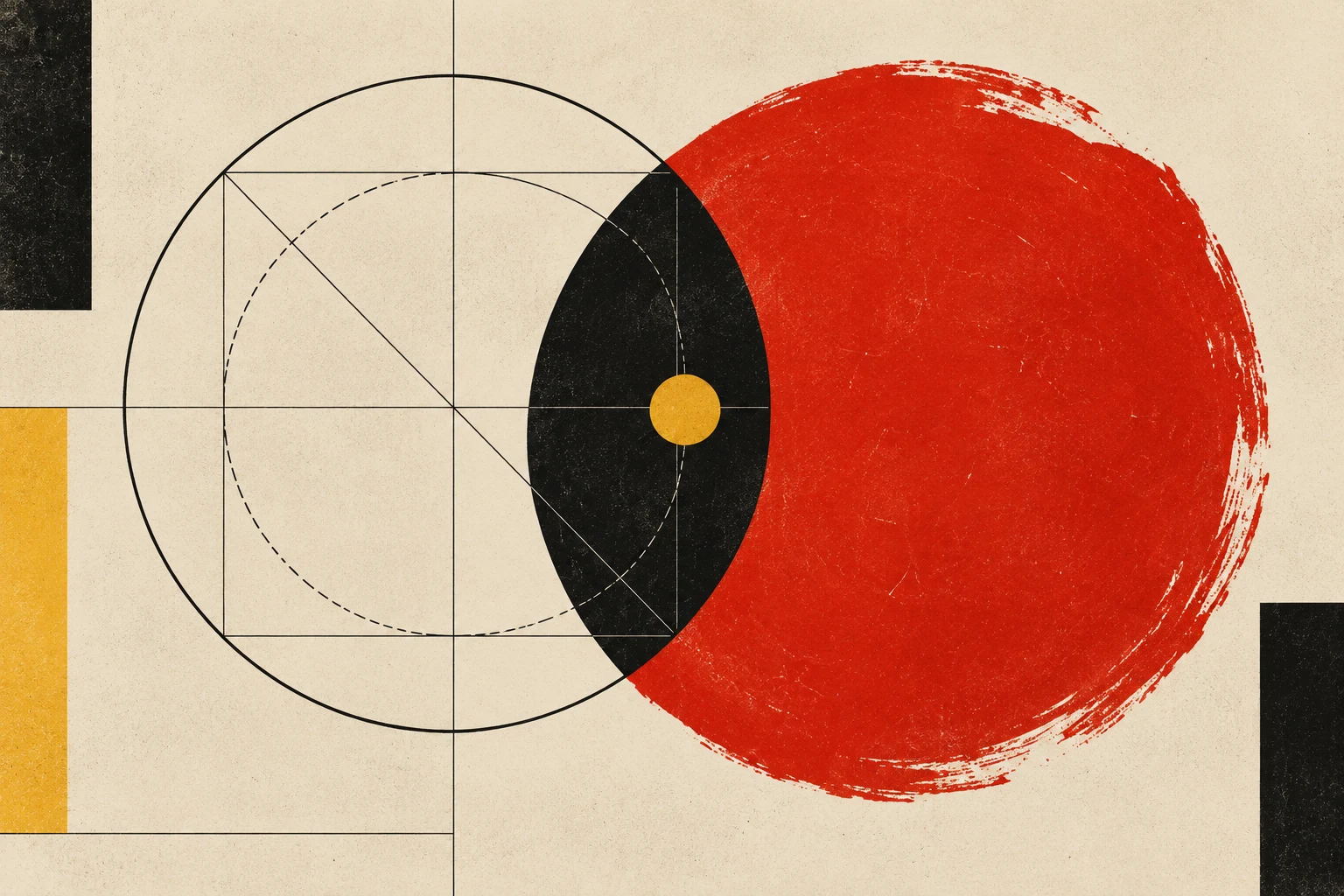
A perfect circle doesn't exist. Except that it does.
Strogatz begins with a wonderfully philosophical understanding of pure mathematics.
Numbers.
Shapes.
Symmetry.
Patterns.
Infinity.
The exploration of structures that don't necessarily exist in perfect form anywhere in the physical universe.
There's no mathematically perfect circle lying around in nature.
We can draw approximations.
We can manufacture increasingly precise objects.
But the actual mathematical circle exists in abstraction.
And yet its properties don't seem to depend on us.
The relationship between a circle's circumference and diameter wasn't invented by Archimedes.
He investigated something that appears to have been true long before anybody knew his name.
This is the fascinating Platonic side of mathematics.
Perhaps mathematical truths exist independently of human minds.
We don't create them.
We discover them.
And if that's the case, why should we care whether a human or a machine makes the discovery?
Surely a new mathematical truth is a new mathematical truth.
We should celebrate it.
Publish it.
Verify it.
Learn from it.
And move on to the next one.
Perfectly reasonable.
Until you remember that mathematicians are human beings.
Mathematics is also something people do
Humans have been exploring mathematical ideas for thousands of years.
And for many people, pure mathematics isn't primarily about building bridges, designing aircraft or improving the efficiency of some industrial process.
It's about intellectual beauty.
Curiosity.
Elegant solutions.
The pleasure of recognising a pattern that nobody else has noticed.
And the extraordinary satisfaction of finally understanding something that seemed completely incomprehensible.
In that sense, mathematics has a great deal in common with music, literature or philosophy.
We don't compose music because the universe has an urgent shortage of melodies.
We do it because creating and experiencing music is part of what makes human life interesting.
Similarly, a mathematician may spend years studying a problem with no obvious practical application.
Not because the work is useless.
But because the work itself is meaningful.
And this is where AI introduces a rather nasty complication.
If the objective is simply to obtain a correct proof, AI may be wonderful.
But if the objective is to spend your life discovering beautiful ideas with other people who share your fascination, the arrival of a machine that can solve your problems in an afternoon is somewhat less delightful.
Especially if you're a graduate student who has just committed the next several years to learning how to do precisely that.
It's one thing to be given a better tool.
It's another to discover that the most enjoyable part of your chosen profession might become something the tool does instead of you.
I recently read a book that made this easier to understand
This summer, I read David Ruelle's The Mathematician's Brain.
The original English edition was published in 2007; the Russian translation appeared in 2012.
Despite its title, I found it less a book about the mechanics of mathematicians' brains and more a portrait of the people and culture surrounding mathematics.
And what an interesting culture it is.
From Ruelle's account, you get the impression of a rather exclusive intellectual club.
People playing extraordinarily sophisticated games.
Games whose rules require years of preparation to understand.
Games that outsiders can barely follow, let alone appreciate.
There are extraordinary personalities, reputations, rivalries, aesthetic preferences and ideas about what constitutes an elegant solution.
Much of the value lies within the community itself.
The practical benefits to the outside world may be enormous, but they aren't always what motivates the players.
I found that fascinating.
And after reading Strogatz, I began thinking about Ruelle's book again.
Because suddenly the reaction of some mathematicians to AI makes much more emotional sense.
Imagine belonging to a community whose identity has been built over centuries around a particular kind of intellectual achievement.
Then somebody introduces a machine that can perform increasingly impressive versions of that achievement.
Without spending twenty years studying the subject.
Without admiring the elegance of a proof.
Without caring whether its colleagues think the result is beautiful.
And without experiencing the slightest personal satisfaction.
I can understand why that might feel unsettling.
Or even devastating.
But understanding the reaction doesn't necessarily mean agreeing with every conclusion drawn from it.
The answer isn't always the understanding
There's another important distinction in Strogatz's essay.
A mathematical problem can have a technically correct solution without immediately producing the kind of understanding mathematicians value.
A proof may establish that something is true.
But why is it true?
What deeper structure does the proof reveal?
Can the argument be simplified?
Does it connect previously unrelated areas of mathematics?
Does it suggest new questions worth investigating?
These are not merely decorative additions to mathematical research.
They're often the reason a result matters.
And a machine-generated proof doesn't automatically settle them.
For example, Strogatz describes mathematician Justin Moore confronting an AI-produced solution to a problem he had worked on for nineteen years.
The emotional contrast is extraordinary.
A machine may have reached an answer.
But human mathematicians still need to examine, understand and evaluate what has been produced.
That distinction matters.
So does the possibility that AI might eventually become good at providing explanations and finding connections, not merely producing formal proofs.
We shouldn't assume those capabilities will remain exclusively human forever.
But neither should we confuse the existence of a proposed solution with a completed process of scientific understanding.
And then a thousand mathematicians decided to say no
Alongside Strogatz's rather thoughtful essay, there's another development.
The Association for Human Mathematics now has more than a thousand members.
Its commitments include refusing to work for commercial AI companies and not publishing mathematical texts generated by AI.
A smaller group within the association goes further, pledging not to use AI in their mathematical research.
According to the association's published membership figures, that stricter group contains 654 of its 1,008 members.
So it's not quite accurate to say that all thousand have promised never to use AI.
The distinction matters.
I can understand several of their concerns.
Universities need to train mathematicians.
Students need opportunities to develop real expertise.
Academic publishing can't simply absorb unlimited quantities of machine-generated papers without careful verification and editorial work.
And AI companies have commercial incentives that don't necessarily align with the interests of the mathematical community.
Those are legitimate questions.
But I'm much less convinced by the strategy of responding to a technological breakthrough primarily through withdrawal.
Mathematical truth isn't a trade association.
If a machine discovers something important, refusing to look at it doesn't make the discovery disappear.
And refusing to cooperate with AI companies may be a coherent ethical position, but it isn't obviously a way to preserve the intellectual conditions that made human mathematics valuable.
It risks becoming a protest against the arrival of the future rather than an attempt to shape it.
Which is especially unfortunate when the people protesting are among those best equipped to understand what that future might contain.
Perhaps mathematics has always been both
I think the supposed choice between mathematics as objective discovery and mathematics as human creativity is slightly misleading.
Why should these things be mutually exclusive?
A composer doesn't invent the laws of acoustics.
But those laws don't make music less creative.
A photographer doesn't invent light.
But photography is still an art.
A mathematician may discover relationships that exist independently of humanity.
But choosing which relationships to investigate, how to interpret them and what makes them interesting involves very human judgments.
AI doesn't erase that distinction simply by producing correct results.
It changes the balance between discovery and interpretation.
And perhaps the most interesting future for mathematics involves making that balance explicit.
Instead of celebrating only the number of problems solved, we might need to value the ability to formulate important questions, construct meaningful explanations and connect discoveries to a broader understanding of the world.
This wouldn't eliminate human creativity from mathematics.
It might change where that creativity is most valuable.
Which, admittedly, isn't much consolation to somebody whose favourite part of the work was solving the problems themselves.
The problem with getting exactly what you asked for
There's a certain irony in all of this.
For centuries, mathematicians have developed methods and tools to solve increasingly difficult problems.
They created formal systems.
Algorithms.
Computers.
Proof assistants.
Techniques for automating parts of mathematical reasoning.
And now a new generation of machines is beginning to perform some of the work that was once considered the highest expression of human mathematical ingenuity.
You could argue that this is an extraordinary success.
You could also argue that it's an existential crisis for the people who made it possible.
Both arguments contain something true.
And that's why I enjoyed Strogatz's essay.
It doesn't offer an easy resolution.
It doesn't pretend that the emotional consequences of technological progress are irrelevant.
And it doesn't require you to believe that mathematical discovery should stop simply because machines are getting good at it.
It asks us to consider what we might lose while gaining something remarkable.
That seems like a far more useful conversation than competing declarations about whether AI will save mathematics or destroy it.
Personally, I'm inclined to welcome new mathematical discoveries, regardless of whether they come from a person, a machine or some combination of the two.
But I also think it would be a mistake to reduce mathematics to a leaderboard of solved problems.
There's a reason humans still play chess even though machines became better at it decades ago.
The game is worth playing.
The experience matters.
And being good at something isn't the only reason to do it.
Mathematics may be far more consequential than chess, but perhaps part of the same principle applies.
The challenge is ensuring that future generations still have meaningful ways to participate in the discovery and understanding of mathematics, even as the machines become extraordinarily capable.
Because finding a mathematical truth is one achievement.
Understanding it is another.
And spending a lifetime enjoying the search is something else entirely.
AI may eventually solve every problem we know how to ask.
I'd be much more worried if we stopped wanting to ask new ones.
Further reading
- David Ruelle — The Mathematician's Brain, Princeton University Press, 2007.